CRE and friends: Q&A

the end of antibiotics_smallI gave the first in a three part webinar series for 3M last night, and you can download the slides here. Also, you can access the recording here (although you will need to register to do so).
The webinar was attended by >200 participants from across the US. I tried to outline the three pronged threat of multidrug-resistant Gram-negative rods (especially CRE) in terms of high levels of antibiotic resistance, stark mortality (for invasive disease) and the potential for rapid spread (including the prospect of establishing a community reservoir). Then, I gave an overview of the US and European picture in terms of CRE prevalence. Finally, I discussed the diagnostic challenges and options.

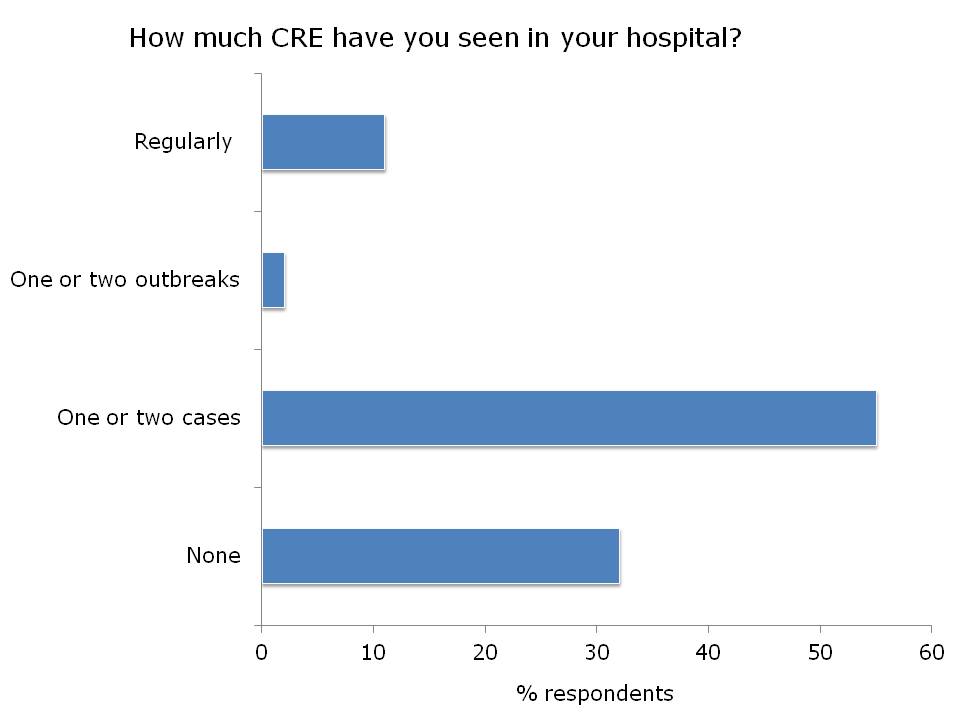
The most interesting part for me was the response to the questions that I threw out to the audience (see Figure below).

Figure: response to the questions from the 200 or so participants.

CRE and friends charts q1

CRE and friends charts q2

CRE and friends charts q3

I was somewhat saddened but not especially surprised that the difference between CRE and CPE was not clear in the minds of most participants. I appreciate that this may be in part due to the fact that ‘CPE’ seems to be used more commonly in Europe than in the US. But this is an international problem, so we need to get our terminology straight in our globalised world.

It was encouraging to hear that most US hospitals have had no CRE, or only one or two cases. However, 11% of the participants see CRE regularly, with cases unconnected to outbreaks. This is a concern, and suggests that CRE has become established in these areas. Indeed, a recent study from 25 Southeastern US community hospitals reports a 5-fold increase in the prevalence of CRE since 2008, suggesting that CRE is becoming established in some parts of the US.

Most participants didn’t know which method was used by their clinical laboratory to detect CRE. I’m not sure whether or not this is a problem. You’d hope that laboratorians to know that they’re doing!

Q&A

The webinar included time for a Q&A from the audience, which covered the following:

  • “How long to resistant Gram-negatives survive on surfaces?” This depends on which Gram-negative you’re talking about. Non-fermenters, especially Acinetobacter baumannnii, have remarkable survival properties measured in months and years. Enterobacteriaceae have a somewhat lower capacity to survive on dry surfaces, but it can still be measured in weeks and months, rather than hours and days.
  • How important is the environment in the transmission of resistant Gram-negatives?” Again, this depends on which Gram-negative you’re talking about. For A. baumannii the answer is probably “very important” whereas for the Enterobacteriaceae the answer is more like “quite important”.
  • “What would you recommend for terminal disinfection following a case of CRE?” I would recommend the hospitals usual “deep clean” using either a bleach or hydrogen peroxide disinfectant, and consideration of using an automated room disinfection system. I would not be happy with a detergent or QAC clean; we can’t afford to leave an environmental reservoir that could put the next patient at risk.
  • “Are antibiotic-resistant Gram-negative bacteria also likely to be resistant to disinfectants” There’s been a lot of discussion on this issue, but the short answer is no. I’d expect an antibiotic-resistant Enterobacteriaceae isolate to be as susceptible to disinfectants as a corresponding antibiotic-susceptible isolate.  
  • “Should patients with CRE be left to the end of surgical lists, and are is special instrument reprocessing required?” There is no need to implement special instrument reprocessing – follow your usual procedures here. Should CRE patients be left to the end of surgical lists? It would be prudent if possible, but don’t lose sleep over it.
  • “Are any special decontamination measures necessary for endoscopes?” A number of outbreaks of CRE have been reported associated with endoscopy. However, usual endoscope reprocessing methods should be sufficient to deal with CRE, provided they are done correctly!
  • “How do you lessen your chances of acquiring CRE?” Healthy individuals lack the risk factors for CRE infection (although CRE can occasionally cause infections in the community). Thus, the personal protective equipment (PPE) specified for contact precautions (gloves and gowns) combined with rigorous hand hygiene are sufficient to protect healthcare workers.
  • “Are toilet seats in India safe?” What a question! I guess we’re talking about an organism with gastrointestinal carriage, so it’s probably that contamination of the toilet seat will occur. It may be prudent to clean or disinfect toilet seats in India before using them. Either that, or squat!
  • “Can you expand on isolation protocols?Firstly, ensure that patients infected or colonized with CRE are assigned a single room (not so relevant in the US, but important in healthcare elsewhere). Then, make sure you have appropriate policy and supply of PPE (principally gloves and gowns). Consider implementing ‘enhanced precautions’, including a restriction of mobile devices. Finally, consider cohorting patients and staff to the extent possible. You can read more about NIH’s approach to isolation here.
  • “Can patients who are colonized with CRE be deisolated?” This is a tricky one, which is basically an evidence free zone and hence an area of controversy. Longitudinal studies show that carriage of CRE can persist for months or even years, so it makes sense to continue isolation for the duration of a hospitalization and not bother with repeated swabbing. At the time of readmission, it makes sense to take a swab to see whether colonization continues. If not, then it may be rational to deisolate them – perhaps after a confirmatory swab. I wish I could be more decisive here, but the evidence is scant.

Do please let me know if you have anything to add to this Q&A!  

Isolation: the enemy of CRE

isolation enemy cre

Pat Cattini (Matron / Lead Specialist Nurse Infection Prevention and Control, Royal Brompton and Harefield NHS Foundation Trust) and I recently teamed up to present a webinar entitled: ‘Introduction to the identification and management of carbapenem-resistant Enterobacteriaceae (CRE)’. You can download our slides here, and here’s the recording:

The webinar covered the following ground:

  • Why the fuss?
  • What are CRE?
  • Who do we screen?
  • How do we screen?
  • What happens if someone is positive?
  • Key questions

CRE represent a combination of anitibiotic resistance, mortality and potential for rapid spread, so we need to be proactive in our approach to the detection and management of carriers. We simply can’t afford for CRE to become established in the same way that MRSA did, so now is the time of opportunity to develop the most effective prevention strategy. The recently published Public Health England Toolkit is useful, but it’s a set of tools to help construct a local policy, not a one-size-fits-all CRE policy. We hope that this webinar will assit you in developing your local CRE policies and plans.

Oh, and look out for the Premiere of ‘ISOLATION: THE ENEMY OF CRE’ (a Pat Cattini film)…

ESCMID MDR-GNR guidelines

ESCMID experts recently released comprehensive guidelines for the control of MDR-GNR. Working with a limited evidence base, the experts managed to compile a coherent set of guidelines with graded recommendations. Given the important differences in the epidemiology of the various species and resistance patterns of MDR-GNR, this is really a 6-for-the-price-of-one set of guidelines, with separate recommendations for: ESBL-producing Enterobacteriaceae, MDR K. pneumoniae, MDR A. baumannnii, MDR P. aeruginosa, Burkholderia cepacia and Stenotrophmonas maltophilia.

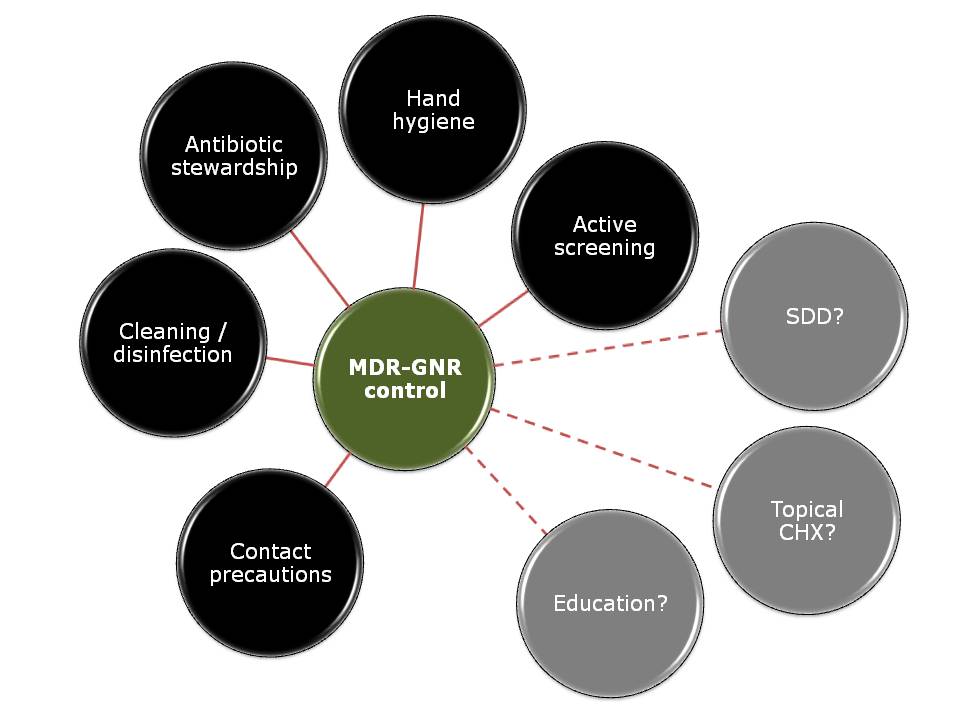
Five key interventions are identified: hand hygiene measures, active screening cultures, contact precautions, environmental cleaning, and antimicrobial stewardship. ‘Selective’ decontamination using antibiotics, topical ‘source control’ using chlorhexidine, and infrastructure / education are also reviewed. Which of these is most important? Most studies included multiple interventions simultaneously, so it’s difficult to tell and it will probably depend on species and setting.

MDR-GNR controlFigure: The cornerstones of MDR-GNR control (but we don’t have enough data to say which is most important, and which are redundant).

A few points for discussion:

  • We still don’t really know what works to control MDR-GNR. Reflecting on my recent blog on influenza transmission, where the relative importance of various transmission routes varies by context, this also seems likely for MDR-GNR. The relative importance of say, environment vs. hands, is likely to vary by setting for a given MDR-GNR species. This makes definitive guidelines difficult to write!
  • The guidelines begin with a useful review of the differing transmission routes for the various MDR-GNR species. This shows that person-to-person spread of Klebsiella species and some other Enterobacteriaceae (such as Enterobacter species and Serratia species) seems to be more important than for E. coli. The non-fermenters A. baumannii and P. aeruginosa have some fundamental differences with one another and with the Enterobacteriace in terms of transmission routes. If I had to rate the importance of patient-to-patient spread vs. other routes for the various MDR-GNR I would say A. baumannii > Klebsiella species > other Enterobacteriaceae > P. aeruginosa > E. coli. But don’t hold me to it!
  • It seems odd that all of the recommendations are ‘strong’ but the evidence is graded mainly as ‘moderate’, ‘low’ or ‘very low’. Perhaps more ‘conditional’ recommendations would be a better fit with the quality of the evidence?
  • The recommendations are stratified by organism-group and setting (endemic or outbreak), which is a workable approach. What you’d do in an outbreak does probably differ from what you’d do in an endemic setting.
  • There’s a useful recommendation for the identification of a new CRE case to prompt contact tracing and enhanced local surveillance, in line with PHE and CDC recommendations.
  • There’s a little fence sitting when it comes to a recommendation for active surveillance cultures in the endemic setting: ‘the implementation of ASC [active surveillance cultures] should be suggested only as an additional measure and not included in the basic measures to control the spread of MDR-GNB in the endemic setting.’ Still not clear whether this is a recommendation for or against ASC in the endemic setting!
  • I was surprised not to see a recommendation to use a disinfectant to help bring A. baumannii outbreaks under control. I appreciate that there is little evidence in endemic settings, but controlling the environmental reservoir does seem to be important in controlling A. baumannii outbreaks.
  • The remit of the guidelines is for adult patients, but what to do on neonatal units and in paediatrics?
  • The guidelines are restricted to hospitalized patients, but what about long-term acute care facilities (that are riddled with CRE in some parts of the world) and long-term care facilities (that have an unknown but probably sizable burden of resistance)?
  • The searches were restricted to MDR bacteria according to ECDC criteria, but what about all those literature on preventing the transmission of resistant (but not multiresistant) and sensitive GNR? If something works to control GNR, there’s no reason why it shouldn’t work to control MDR-GNR (except, perhaps, for antibiotic stewardship).
  • Finally, if all else fails (and only then), consider closing the ward!

In summary, these guidelines are very well written and will provide useful guidance for those on the front line try to deal with endemic and epidemic MDR-GNR. However, above all else, they highlight the need for high-quality studies telling us what works to control MDR-GNR.

Article citation: Tacconelli E, Cataldo MA, Dancer SJ et al. ESCMID guidelines for the management of the infection control measures to reduce transmission of multidrug-resistant Gram-negative bacteria in hospitalized patients. Clin Microbiol Infect 2014; 20 Suppl 1: 1-55.

Inaugural ‘Journal Roundup’ (June 2014)

JHI

I’ve been asked by the Editor of the Journal of Hospital Infection to begin writing a monthly column providing an overview of key updates in the infection prevention and control literature. I’m pleased to say that the first edition (June 2014) is now available on the Journal of Hospital Infection website, and I’m delighted that the Journal Roundup is open access.

I thought it would be useful to outline how I produced this roundup. I began by scanning the tables of contents of the following journals, pulling out articles of interest: AJIC, Ann Intern Med, BMJ, CID, ICHE, JAMA, JAMA Intern Med, JHI, JID, JIP, Lancet, Lancet ID, NEJM. This was easy for the “big five” (Lancet, BMJ, AIM, JAMA and NEJM) because only a handful of articles are directly relevant. It was more tricky for the specialist journals, since all articles are likely to be of interest. I’ve tried to avoid focusing solely on my own research interests, but these doubtless come through. One way to mitigate this in future is for others to provide a Journal Roundup now and then – or at least make some contribution. If you’re interested in this, please do let me know.

Highlights of this inaugural issue include a spike in MERS-CoV cases, coverage of the WHO report on antimicrobial resistance, more evidence that faecal microbiota transplantation works for curing recurrent CDI, the impact of nursing education on patient mortality, individualized antibiotic dosing, CA-MRSA in US Fire Stations, a successful community-based hand hygiene intervention, an outbreak of CRE in Ireland, updated SHEA guidelines for SSI and CDI, the identification of ‘optimum outlier’ (aka ‘positive deviant’) cleaners, a disturbing patient story, an update on the move towards ‘bare below the elbow’ in the US, an overview of the regulatory environment for healthcare apps, conference abstracts from APIC and ECCMID, and the use of Yelp (a customer review website) to identify cases that would otherwise have gone unreported during a foodborne outbreak.

Please feel free to share this with your colleagues, and let me know if you have any thoughts or comments.


What works to control antibiotic-resistant bacteria in the ICU? A two-for-the-price-of-one study

Not content with a single well-planned study to provide information on what works to control multidrug-resistant organisms (MDROs) in the ICU, the MOSAR study group published an interrupted time series and a cluster randomized trial of various interventions in the Lancet ID. This makes the study rather complex to read and follow, but there are a number of important findings.

Interrupted time series – ‘hygiene’ intervention (chlorhexidine and hand hygiene)

Following a 6-month pre-intervention period, a 6-month interrupted time series of a ‘hygiene’ intervention (universal chlorhexidine bathing combined with hand-hygiene improvement) was performed. The key outcomes were twofold: whether there was a change in trend during each phase, and whether there was a step-change between the phases. The hygiene intervention effected a trend change reduction in all MDROs combined and MRSA individually, but not in VRE or ESBLs (Table). However, there was no step-change compared with the baseline period.

Table: Summary of reduced acquisition of all MDROs combined, or MRSA, VRE and ESBLs individually.

Derde table

Cluster RCT – screening and isolation

In the 12-month cluster RCT of screening and isolation, the 13 ICUs in 8 European countries were randomized to either rapid screening (PCR for MRSA and VRE plus chromogenic media for ESBL-Enterobacteriaceae) or conventional screening (chromogenic media for MRSA and VRE only). When analysed together, the introduction of rapid or conventional screening was not associated with a trend or step-change reduction in the acquisition of MDROs (Table).  In fact, there was an increase in the trend of MRSA acquisition. When comparing rapid with conventional screening, rapid screening was associated with a step-change increase in all MDROs and ESBLs.

Discussion

  • The study suggests, prima facie, not to bother with screening and isolation. Indeed, the authors conclude: “In the context of a sustained high level of compliance to hand hygiene and chlorhexidine bathing, screening and isolation of carriers do not reduce acquisition rates of multidrug-resistant bacteria, whether or not screening is done with rapid testing or conventional testing”. However, the major limitation here is that many of the ICUs were already doing screening and isolation during the baseline and hygiene intervention phases! I checked the manuscript carefully (including the supplemental material) to determine exactly how many units were, but it is not disclosed. To make this conclusion, surely the cluster RCT should have been ‘no screening and isolation’ vs. ‘screening and isolation’.
  • The increasing trend of MRSA associated with screening and isolation by either method, and step-change increases in all MDROs and ESBLs associated with rapid screening are difficult to interpret. Is an increase in acquisition due to screening and isolation plausible? Can more rapid detection of carriers really increase transmission (the turnaround time was 24 hours for rapid screening, and 48 hours for chromogenic screening)? The rapid screening arm also included chromogenic screening for ESBLs, whereas the conventional screening arm did not, so perhaps this apparent increase in acquisition is due to improved case ascertainment somehow?
  • Looking at the supplemental material, a single hospital seemed to contribute the majority of MRSA, with an increasing trend in the baseline period, and a sharp decrease during the hygiene intervention. There’s a suspicion, therefore, that an outbreak in a single ICU influenced the whole study in terms of MRSA. Similarly, a single hospital had a sharp increase in the ESBL rate throughout the screening intervention period, which may explain, to a degree, the increasing trend of ESBL in the rapid screening arm.
  • There was an evaluation of length of stay throughout the study phases, with a significant decrease during the hygiene intervention (26%), a significant increase during the rapid screening intervention, and no significant change during the conventional screening intervention. It seems likely that improved sensitivity of rapid screening identified more colonized patients who are more difficult to step down, resulting in an overall increase in length of stay.
  • The carriage of qacA and qacB was compared in the baseline and hygiene intervention phase, finding no difference in carriage rate (around 10% for both). This does not match our experience in London, where carriage rates of qacA increased when we introduced universal chlorhexidine bathing. However, this was restricted to a single clone; the acquisition of genes associated with reduced susceptibility to chlorhexidine seems to be clone-specific.
  • ICUs varied from open plan to 100% single rooms. Whilst the average proportion of patients in single rooms (15-22%) exceeded the average requirement of patients requiring isolation (around 10%), there was no measure of unit-level variation of single room usage. Since the study was analysed by cluster, the lack of single rooms on some units could have been more important than would appear from looking at the overall average. Put another way, a 100% open plan unit would have been forced to isolate all carriers on the open bay, and vice versa for a 100% single room unit.
  • The impact of the various interventions was moderate, even though a ‘high’ MRDO rate was necessary for enrollment (MRSA bacteraemia rate >10%, VRE bacteraemia rate >5%, or ESBL bacteraemia rate >10%). Would the impact of screening and isolation be different on a unit with a lower rate of MDROs? It’s difficult to tell.
  • Some of the microbiology is quite interesting: 8% of MRSA were not MRSA and 49% of VRE were not VRE! Also, 29% of the ESBLs were resistant to carbapenems (although it’s not clear how many of these were carbapenemase producers).

In summary, this is an excellent and ambitious study. The lack of impact on ESBL transmission in particular is disappointing, and may lead towards more frequent endogenous transmission for this group. The results do indicate screening and isolation did little to control MDRO transmission in units with improved hand hygiene combined with universal chlorhexidine. However, we need a ‘no screening and isolation’ vs. ‘screening and isolation’ cluster RCT before we ditch screening and isolation.

Article citation: Derde LP, Cooper BS, Goossens H et al. Interventions to reduce colonisation and transmission of antimicrobial-resistant bacteria in intensive care units: an interrupted time series study and cluster randomised trial. Lancet Infect Dis 2014; 14: 31-39.

Highlights from APIC 2014

APIC 2014I couldn’t make it to APIC this year, but I have picked out a few highlights. More than 300 abstracts were presented so I can only scratch the surface here, but the good news is that they’re all available in an AJIC supplement.

Multidrug-resistant Gram-negative rods

One of the oral presentations was on controlling CRE in Texas (Cifelli et al). The interventions comprised improvements in lab identification and patient electronic tagging, and front-line infection prevention and control practices (dedicated rooms, equipment and staff etc). It’s difficult to know which of these approaches (if any!) made the difference: we still don’t know what works to control CRE.

A group from Louisville explored transmission of CRE in an LTAC (Kelley et al). LTACs have previously been shown to be a hotbed for CRE transmission in some parts of the USA. They found that almost half of patients that acquired CRE were admitted to beds that had been previously occupied by a CRE patient, which brings a new meaning to ‘hotbed!’ This links in with previous studies showing that admission to a room previously occupied by a patient with MDROs is a risk factor for acquisition. It also shows that CRE (K. pneumoniae at least) can survive for long enough on surface to bring indirect transmission via environmental contamination into play.

Definitions and terminology surrounding CRE and MDR-GNR in general are in a state of confusion. Both require urgent clarification. A survey of 79 hospitals by Jadin et al for their definitions of MDR-GNR yielded virtually 79 different definitions! This makes it challenging for facilities to communicate clearly about MDR-GNR, since what qualifies as MDR-GNR may not make the cut in another hospital. And this is not even accounting for variations in lab diagnostics!

A small prevalence survey of CRE carriage in Michigan by Berriel-Cass et al found that 2 (3.8%) of 53 patients were colonized. Neither patient had history of CRE, but one who did have a history of CRE screened negative! It’s difficult to know who is at high risk for CRE carriage, and even more difficult to know how long they will carry it for. However, we probably know enough to conclude that “once positive always positive” is a sensible (if somewhat conservative) approach.

The rest

A fascinating study from Arizona by Sifuentes et al evaluated a hygiene intervention in a LTCF. A number of bacteriophages were used as markers for pathogenic virus transmission and inoculated onto hands and surfaces. The viruses spread rapidly throughout the faculty over a short time period (measured in hours), and a hygiene intervention significantly reduced the level of contamination of hands and surfaces. Most similar work has been performed in the acute setting, so some data from the non-acute setting is particularly welcome. This study illustrates the dynamic interplay between hand and surface contamination. In a way, hands are just another highly mobile fomite that are not disinfected frequently enough!

Jinadatha et al performed a very timely study exploring whether serial passage of bacteria with sub-lethal UV exposure prompts reduced susceptibility to UV. The study demonstrates that 25 serial exposures to UV did not affect bacterial UV susceptibility. However, the study did not explore whether other useful mutations may have occurred in the “survivors”; perhaps this is a job for whole genome sequencing in a follow-up study?

Faecal microbiota transplantation (FMT) is quickly becoming the standard of care for recurrent CDI. A study by Greig et al tells the story of implementing a FMT programme. The literature for FMT are impressive, but the ‘nuts and bolts’ of implementation are challenging. Where do you get the donor stool form? How do you screen the donors? Who performs the procedure? Who pays? Will it work here? Are just some of the questions that need to be negotiated for successfully implementing an FMT programme. The message from this study: it’s worth it – 83% of patients with recurrent CDI had resolved within 30 days.

Finally, I remain rather skeptical that “CA-CDI” is really on the rise. I may have to revise my opinion based on this abstract by Rogers and Rosacker, showing that a community-based educational intervention reduced the rate of CA-CDI!

Perspective from ECCMID 2014 Part II: What to do about MDR-GNR?

 gram neg

I was hoping that the ECCMID 2014 session on ‘Outbreaks of MDR Gram-negative bacteria: what works and what does not work?’ would bring some answers from large, controlled studies to improve the evidence base for MDR-GNR control. I’m sorry to report that most of what was presented only served to highlight the limitations of the evidence base! There’s a bit of a Catch 22 here: in most settings, the problem lies in outbreaks, but the answers lie in large, adequately controlled cluster randomized studies in endemic settings.

  • Dr Weterings from NL provided a rather bleak start to the session, reporting an outbreak of carbapenem-resistant K. pneumoniae in a hospital and nursing home. Environmental cultures regularly grew the outbreak strain (including a shared glucose meter) and the control measures that were effective in the hospital were more challenging to implement in the nuring home.
  • Dr Gonzalez-Galan found a bundle of interventions dramatically effective to reduce the rate of endemic MDR A. baumannii. The bundle comprised surveillance, hand hygiene audit, and a checklist for environmental cleaning and contact precautions compliance. But which element of the bundle worked, and were any elements redundant?
  • Dr Cohen reported an MDR A. baumannii outbreak in Israel affecting 70% of ventilated patients at its peak, which forced colistin as the empiric VAP therapy. Proper disinfection of the ventilators brought the problem under control. Similarly, an endoscoy-associated ESBL K. pneumoniae outbreak in Norway (reminescient of the NDM outbreak in Chigago) was controlled by implementing proper endoscope disinfection.
  • Probably the most useful presentation of the session was from Dr Cataldo preseting a systematic review of interventions for MDR-GNR. Most studies (78% of the 86 included) were in outbreak settings, and plagued by low quality. Nonetheless, bundles were 2x more effective than single interventions (45% vs. 28%). The study struggled to determine convincingly which element of the bundles was most effective, but hand hygiene, contact precations and education came through as the pillars of effective bundles.
  • Dr Dettenkofer showed that an educational intervention improved compliance with standard precautions (especially hand hygiene and to a lesser extent the inappropriate use of examination gloves for some procedures). However, ‘standard precations’ are far from standard, and it seems that you need to go further than standard precautions to control MDR-GNR.
  • Dr Hussein showed that standing over healthcare workers and telling them to wash their hands improved compliance (unsurprisingly!). I venture that hospitals would only take this measure in extreme circumstances, although hand hygiene “enforcers” are not without precedent.
  • Dr Perencevich reported that the Hawthrone effect tends to strike after 15 mins of observation, so hand hygiene observations should be kept short and sweet. (Incidentally, hand hygiene compliance was higher among doctors than nurses in this study; I think it’s the first time I’ve ever seen it this way around!)
  • Dr Hansen presented data from the PROHIBIT collaborative, who found that alcohol based hand rub usage tracks the prevalence of antimicrobial resistance across Europe. However, the rate of red and yellow cards in the Euro 2008 football championships also correlates with antimicrobial resistance rates across Europe, and national consumption of chocolate correlates with the national rate of Nobel laureates: collelation doesn’t necessarily mean causation!
  • Finally, Dr Langelar reported that the Dutch national healthcare inspectorate visits were effective in raising standards. But was this papering the cracks or effecting culture change?
  • I am sure there were lots of good posters on this topic too, but I didn’t get very far with those. Perhaps somebody else did and would like to provide some additional information?

Dr Evelina Tacconnelli gave a thoughtful talk comparing the various international guidelines for MDR-GNR, reflecting on the recently published ESCMID version. The subject is broad, specifically in terms of which MDR-GNR, and in which setting. Guidelines for CRE in a general hospital population would look quite different to guidelines for CRAB in the ICU. Dr Tacconnelli focused on the areas of controvosy: isolation for ESBL carriers, how to prioritise limited side rooms (see useful ‘Lewisham’ isolation prioritization tool in Appendix 6 of these Irish guildelines), selective digestive decontamination, and the need for bundles. Finally, Dr Tacconnelli referenced a neat model for the effectiveness of various infection control interventions for controlling the spread CRKP. This is a clever study, and probably useful, but much like Berta (showing my age), incorrect inputs result in meaningless (or worse, misleading) outputs.

Dr Anna-Pelagia Magiarakos discussed some of the challenges of implementing guidelines, reminiscent of Dr Evonne Curren’s recent talk on a similar subject. One important point is to have some guidelines to implement! Countries lacking guidelines for the control of MDR-GNR tend to have higher rates (ECDC and PROHIBIT data). Once you have some guidelines, barriers to implementation need to be overcome: time, culture, resources, lack of understanding or belief that they will work, competence, habit, routines and “ivory tower” guidelines written by those detacted from the coal-face, to name but a few!

So are we any closer to knowing what works to control MDR-GNR following ECCMID 2014? Bundles are more effective than single interventions, but we still don’t know which elements of the bundle are most important, and this will vary by pathogen and setting. We need more studies like the commendable but complex MOSAR Lancet ID study.

You can view some other ‘Perspectives from ECCMID’ here.

Image credit: Iqbal Osman.

What does lab diagnosis of MDR-GNR have to do with SURFing?

I met the Service Users Research Forum (SURF) yesterday, and they asked me to give a presentation on the emergence and detection of multidrug-resistant Gram-negative bacteria (you can download my slides here). I found these slides by Dr Katie Hopkins (PHE) useful in preparing mine. It was my first interaction with a patient-led research group and I enjoyed the meeting very much. I found the SURF members and their academic support team from the University of West London to be engaged, engaging, knowledgeable and thirsty for knowledge. Their questions were insightful and their suggestions were thought-provoking. Informal discussions on a current research proposal (for enhanced surveillance of carbapenem-resistant Gram-negatives) gave me some useful ideas; researchers can easily lose sight of the patient perspective. I can see why funders such as NIHR now insist on seeing patient involvement in the development of research proposals and I am sure I will be SURFing again in the near future!

I put together the flow chart below to try and summarise the diagnostic approach to the lab detection of MDR-GNR. I would appreciate any thoughts you have on this flow chart…

surf mdrgrn

2014 Spring Update

Easter Bunny

It’s been a busy quarter on the blog; please see below for the blog posts since the Christmas update (which now seems like a long time ago!).

The SHEA and HIS/IPS spring conferences provided much food for thought. Also, I was delighted to host a guest blog from Prof Sally Bloomfield on What do we mean by ‘cleaning’ and ‘disinfection’?, which prompted some fascinating discussion. If you’re interested in contributing a guest blog, these are always welcome, so please let me know.

Thanks as ever for the comments – please do keep them coming.

Regards

Jon

Photo credit: ‘Easter Bunny’ by Jimmy Hilario.

HIS / IPS Spring Meeting: What’s that coming over the hill? It’s a MDR-GNR monster!

HISIPS logos2

The HIS / IPS Spring Meeting was on “What’s That Coming Over the Hill? Rising to the Challenge of Multi-Resistant Gram Negative Rods”. For those unfamiliar with the 2006 hit by the band “The Automatic”, the chorus goes: “What’s that coming over the hill? Is it a monster?”, hence the title to this post in light of the CDC-described “nightmare bacteria”! The full room (>250 delegates) illustrates how topical this issue is in the UK, and, indeed, globally. I enjoyed the day thoroughly, so thanks to all those involved in organizing the meeting.

Global Perspective – Professor Peter Hawkey

Prof Hawkey kicked off the day by considering how globalization has driven globalization in MDR-GNR, focusing mainly on ESBL-producing Enterobacteriaceae. Asia in particular is a hub of population (8/10 global ‘megacities’ are in Asia), antibiotic use (China was already the second largest consumer of imipenem back in 2002), aquaculture (Asia produces 62% of the world’s farmed fish) and travel. Prof Hawkey has been to India twice, and both times he returned colonized with an ESBL-producing Enterobacteriaceae (incidentally, we should probably start calling these ‘EPEs’.) The UK receives almost 3 million international arrivals from India and Pakistan; 80% will carry ESBL-producing bacteria.1 So, since people carry their faeces with them, the global trend of increasing rates of ESBL faecal carriage is concerning.2 Medical tourism is a related and increasingly common risk for the importation of ESBL and carbapenemase producing bacteria.3 The increasing rates of carbapenem usage is largely the consequence of the emergence of ESBL. The CPE picture in the USA is bleak, and perhaps a sign of things to come, where only two states have not yet had confirmed reports.

Controlling a national outbreak of CRE in Israel – Dr Mitchell Schwaber

Dr Schwaber described the impressive and successful national intervention to control CRE in Israel.4 Dr Schwaber began in the beginning (Genesis 1) where the infection control landscape was ‘without form and void’ in Israel; the emergence of CRE changed that. The problems began in 2007 after which CRE spread like wild-fire. Local interventions failed and 22% of K. pneumoniae were carbapenem-resistant at the peak of the epidemic. Long-term and long-term acute care facilities were identified as particular issues, as has been recently reported in the USA.5 CRE carriage was found to be 17% at the height of the epidemic in long-term acute care facilities.6 In these “black-hole” CRE reservoirs, there is little focus on infection prevention and control, and social contact is a necessary part of the rehabilitation process, so complete segregation is unhelpful. Active detection, isolation of carriers, and staff cohorting were cornerstones of the effective intervention, but implementation was challenging and required a “top down” approach. Directives and feedback were administered through hospital chief executives. In Dr Schwaber’s view, Israel began their national programme too late and succeeded by the skin of their teeth. Israel is a small country with a well-funded and connected healthcare system. Will the national programme succeed elsewhere, even if implemented earlier?

Dissecting the Epidemiology of the Enterobacteriaceae and Non-Fermenters – Dr Jon Otter (who he?)

My exploration of the differences in the epidemiology of resistant Enterobacteriaceae and non-fermenters (mainly A. baumannii) was designed to prompt anybody tempted to conflate these two related problems to think twice; not all monsters are created equal. Resistant Enterobacteriaceae and non-fermenters do share the same response to the Gram-stain (more or less) and can be resistant to key antibiotics occasionally through shared mechanisms (principally the carbapenemases). But that’s about it. Otherwise they’re like chalk and cheese. (A. baumannii = chalk, which turns to dust; Enterobacteriaeae = a good cheese, which ultimately ends up in the gut.) You can read more about my talk and download my slides in yesterday’s post.

Infection prevention and control in the acute setting – Sheila Donlon

Sheila Donlon began by describing the low prevalence of MDR-GNR in Ireland. Around 2% of Enterobacteriaceae are carbapenem resistant, according to a recent point prevalence survey. Sheila’s comment that you need to go above and beyond standard precautions to control MDR-GNR resonated with Dr Schwaber’s talk, and with Dr Thom’s assessment from the SHEA meeting last week. Sheila spent the remainder of the talk discussing some of the approaches outlined in the Irish MDRO screening and control guidelines. Is hand hygiene for patients a black spot?7 How do we isolate patients effectively when we only have 20% single rooms? How and when should we cohort staff? What is the appropriate PPE? When should we consider ward closure, environmental screening or hydrogen peroxide vapour disinfection? Can we or should we discontinue contact precautions for CRE carriers?

Getting the message over: strategies for ensuring new guidance is put into practice – Dr Evonne Curran

Dr Curran outlined a frequent gap between theory and practice; guidance written in an ‘ivory tower’ without the correct stakeholders around the table will fail to influence practice. Even if the guidance is carefully crafted with implementation in mind, what happens on the wards will never perfectly reflect the guidance; we need a healthy dose of pragmatism. The addition of ‘adjectives’ don’t add clarity: ‘aggressive’, ‘robust’, ‘effective’, ‘strict’, ‘excellent’ are all vague; guidelines need to be specific.8 Dr Curran’s analysis of the differing definitions of ‘standard precautions’ was outstanding, and illustrates the challenges of local interpretation of international guidelines. We need to speak to front-line staff in a language they understand to implement guidance into practice.9

Dealing with Multidrug-Resistant Acinetobacter and Stenotrophomonas – Dr Beryl Oppenheim

Dr Beryl Oppenheim considered MDR Acinetobacter and Stenotrophomonas. These environmental non-fermenters are more of a niche problem than the resistant Enterobacteriaceae, but tend to be more resistant. Dr Oppenheim spent most of the time considering A. baumannii, which can be considered an “honorary Staphylococcus”; it’s more than a little Gram-positive!10 MDR A. baumannii combine inherent and acquired resistant mechanisms, survive for prolonged periods on dry surfaces and have the ability to produce biofilms.10-12 This makes them ideally suited for survival in the antibiotic-rich ICU environment, where they are most commonly problematic. MDR A. baumannii are also associated with infection following trauma in military hospitals.13 MDR A. baumannii is a problematic pathogen for a number of reasons. The epidemiology of hospital outbreaks can be difficult to dissect, with whole genome sequencing now the gold standard typing method.14 Contact isolation, perhaps even pre-emptive, is a must. Cleaning is critical, but the best approach is not obvious; ‘no-touch’ automated disinfection systems may be warranted sometimes.15 Active screening is rational but practically challenging: which sites to screen (a rectal swab alone is not sufficient) and which methods to use? Dr Oppenheim concluded by reflecting on the patchy prevalence of MDR A. baumannii (and Stenotrophomonas); it’s not a problem everywhere, but it’s a major problem where it rears its monstrous head.

Decontamination of instruments, equipment and the environment – Peter Hoffman

Peter Hoffman in his inimitable style reviewed the risks and environmental interventions specific to MDR-GNR. Contrary to the view of some, you can’t take a “leave them and they’ll die off approach” for Gram-negative rods; they will survive on dry surfaces.16 The issues covered by Peter included:

  • Outbreaks linked to endoscopes (like the recent outbreak of CRE in Illinous).17
  • The problems associated with designating equipment as single-use. Oftentimes only part can feasibly be single-use, meaning that there is a body of the equipment that needs to be decontaminated (and often isn’t). Portable ultrasound machines are a particular challenge. Safe working methods (one hand for the patient, one for the machine) are sound in theory, but challenging in practice (requiring considerable manual dexterity)! Ultrasound gel must be single-use sachets, regardless of cost implications.
  • Don’t rely on privacy curtains with antimicrobial claims; they should be changed between MDR-GNR patients. (I wonder whether disinfection using advanced formulations of liquid hydrogen peroxide may be another option.18)
  • Don’t rely on wipes for disinfecting mattress covers, especially ‘dynamic’ mattresses, which are full of bug-trapping folds. They probably don’t provide enough wetting (amongst other things).
  • Should we invest in single-use pillows?19
  • Water systems require careful management, particularly for P. aeruginosa.20
  • Bed-pan washers represent a real risk for faecally-associated MDR-GNR. Why are they not more often foot pedal operated?
  • Physiotherapy equipment on rehabilitation units is made for physiotherapy, not for effective decontamination. Careful design, with a dose of compromise, is required.
  • Peter rarely believes negative results from environmental sampling due to a high risk of spot contamination.21

Peter’s somewhat provocative conclusion was that “there are no special decontamination requirements to control MDR-GNR.” I think the point here was that the issues outlined above are generic, such that addressing them would improve the safety of all patients, not just those with MDR-GNR. However, I fear that the conclusion could be misinterpreted to mean that increased focus on the potential environmental reservoir is not warranted when dealing with MDR-GNR. This does not concur with Peter’s citation of the surprising survival capacity of MDR-GNR, and Dr Oppenheim’s discussion of the ‘critical’ environmental reservoir for MDR A. baumannii.

Controversy: Decolonization and Staff Screening – Prof Peter Wilson

Prof Wilson began by challenging the feasibility of the recommended PHE screening approach. It would result in a lot of patients being identified for screening, and a high proportion of those held preemptively in contact isolation until confirmed negative. Prof Wilson suggesting prioritizing NDM and KPC producers over OXA-48 producers. Whilst I like this idea in principle, I am not sure that we have enough epidemiological data to support this distinction. The recent ESCMID guidelines are a useful resource on screening approaches, if a little wordy.22 Staff screening should be avoided, unless a member of staff is clearly implicated in transmission; what would you do with a carrier? Peter’s view is that clearance swabs are a waste of time, and advocated a “once positive, always positive” approach to CRE. “Once positive, always positive” works in a low prevalence setting, but comes increasingly unstuck as prevalence increases. Is selective decontamination the answer?23,24 Not really; whilst individual patient mortality is decreased, neither selective oral decontamination (SOD) nor selective digestive decontamination (SDD) decolonize carriers. The potential collateral damage of SOD and SDD when applied to MDR-GNR is clear: hastening the arrival of pan-drug resistance.

Therapeutic Options and Looking to the Future – Prof David Livermore

The resistance profile of MDR-GNR leaves few antibiotic classes left; sometimes only colistin, and colistin-resistance is emerging in both Enterobacteriaceae25 and non-fermenters26. Indeed, a national Italian survey found that 22% of KPC-producing K. pneumoniae were resistant to colistin.27 Leaving aside the risk of nephrotoxicity,28 colistin monotherapy results in the development of colistin resistance.29 Another issue relates to challenges in laboratory testing. Apparent MDR-GNR susceptibility depends on the testing methods used, and may not match clinical outcome:30 the mice who died despite antibiotic treatment in one study would surely query the EUCAST and CLSI breakpoints that defined their K. pneumoniae isolates as susceptible.31 The use of existing and more creative combinations of existing antibiotics can help. Also, a small number of new antibiotics are in development (although we have run out of truly novel targets, meaning that they are modifications of existing classes). A more promising approach is the use of antibiotics combined with β-lactamase inbibitors, but these are currently at a fairly early stage of clinical trial.32

Summary and points for discussion:

  • People carry their faeces with them, so the global trend of increasing rates of carriage of resistant Enterobacteriaceae is concerning.
  • Will the successful national CRE control programme in Israel (a small country with a well-funded, connected healthcare system) be feasible elsewhere?
  • Can we safely ‘de-isolate’ CRE carriers? Israel has managed to do it, but I suspect the answer will depend on your level of prevalence and pragmatism.
  • Do not conflate the epidemiology of resistant non-fermenters and Enterobacteriaceae; they’re like chalk and cheese!
  • Do we have the right stakeholders around the table to write national guidance, and is it written with implementation in mind?
  • How best to address the environmental reservoir for A. baumannii and, to a lesser extent, CRE?
  • We need to carefully consider the likely collateral damage before applying SOD / SDD when applied to MDR-GNR: pan-drug resistance!
  • How far can combinations of existing antibiotics, novel combination and new treatment options go in treating MDR-GNR? Probably not that far; prevention is better than cure.

References

1.       Tham J, Odenholt I, Walder M, Brolund A, Ahl J, Melander E. Extended-spectrum beta-lactamase-producing Escherichia coli in patients with travellers’ diarrhoea. Scand J Infect Dis 2010; 42: 275-280.

2.       Woerther PL, Burdet C, Chachaty E, Andremont A. Trends in human fecal carriage of extended-spectrum beta-lactamases in the community: toward the globalization of CTX-M. Clin Microbiol Rev 2013; 26: 744-758.

3.       Hanefeld J, Horsfall D, Lunt N, Smith R. Medical tourism: a cost or benefit to the NHS? PLoS ONE 2013; 8: e70406.

4.       Schwaber MJ, Carmeli Y. An ongoing national intervention to contain the spread of carbapenem-resistant Enterobacteriaceae. Clin Infect Dis 2014; 58: 697-703.

5.       Lin MY, Lyles-Banks RD, Lolans K et al. The importance of long-term acute care hospitals in the regional epidemiology of Klebsiella pneumoniae carbapenemase-producing Enterobacteriaceae. Clin Infect Dis 2013; 57: 1246-1252.

6.       Ben-David D, Masarwa S, Navon-Venezia S et al. Carbapenem-resistant Klebsiella pneumoniae in post-acute-care facilities in Israel. Infect Control Hosp Epidemiol 2011; 32: 845-853.

7.       Landers T, Abusalem S, Coty MB, Bingham J. Patient-centered hand hygiene: the next step in infection prevention. Am J Infect Control 2012; 40: S11-17.

8.       Rouse W, Fuzzy Models of Human Problem Solving, in Advances in Fuzzy Sets, Possibility Theory, and Applications, Wang P., Editor. 1983, Springer US. p. 377-386.

9.       Pronovost PJ, Berenholtz SM, Needham DM. Translating evidence into practice: a model for large scale knowledge translation. BMJ 2008; 337: a1714.

10.     Wagenvoort JH, Joosten EJ. An outbreak Acinetobacter baumannii that mimics MRSA in its environmental longevity. J Hosp.Infect 2002; 52: 226-227.

11.     Strassle P, Thom KA, Johnson JK et al. The effect of terminal cleaning on environmental contamination rates of multidrug-resistant Acinetobacter baumannii. Am J Infect Control 2012; 40: 1005-1007.

12.     Espinal P, Marti S, Vila J. Effect of biofilm formation on the survival of Acinetobacter baumannii on dry surfaces. J Hosp Infect 2012; 80: 56-60.

13.     Scott P, Deye G, Srinivasan A et al. An outbreak of multidrug-resistant Acinetobacter baumannii-calcoaceticus complex infection in the US military health care system associated with military operations in Iraq. Clin Infect Dis 2007; 44: 1577-1584.

14.     Lewis T, Loman NJ, Bingle L et al. High-throughput whole-genome sequencing to dissect the epidemiology of Acinetobacter baumannii isolates from a hospital outbreak. J Hosp Infect 2010; 75: 37-41.

15.     Otter JA, Yezli S, Perl TM, Barbut F, French GL. Is there a role for “no-touch” automated room disinfection systems in infection prevention and control? J Hosp Infect 2013; 83: 1-13.

16.     Kramer A, Schwebke I, Kampf G. How long do nosocomial pathogens persist on inanimate surfaces? A systematic review. BMC Infect Dis 2006; 6: 130.

17.     Centers for Disease C, Prevention. Notes from the Field: New Delhi metallo-beta-lactamase-producing Escherichia coli associated with endoscopic retrograde cholangiopancreatography – Illinois, 2013. MMWR Morb Mortal Wkly Rep 2014; 62: 1051.

18.     Rutala WA, Gergen MF, Sickbert-Bennett EE, Williams DA, Weber DJ. Effectiveness of improved hydrogen peroxide in decontaminating privacy curtains contaminated with multidrug-resistant pathogens. Am J Infect Control 2014; 42: 426-428.

19.     Reiss-Levy E, McAllister E. Pillows spread methicillin-resistant staphylococci. Med J Aust 1979; 1: 92.

20.     Loveday HP, Wilson J, Kerr K, Pitchers R, Walker JT, Browne J. Pseudomonas infection and healthcare water systems – a rapid systematic review. J Hosp Infect 2014; 86: 7-15.

21.     Lerner A, Adler A, Abu-Hanna J, Meitus I, Navon-Venezia S, Carmeli Y. Environmental contamination by carbapenem-resistant Enterobacteriaceae. J Clin Microbiol 2013; 51: 177-181.

22.     Tacconelli E, Cataldo MA, Dancer SJ et al. ESCMID guidelines for the management of the infection control measures to reduce transmission of multidrug-resistant Gram-negative bacteria in hospitalized patients. Clin Microbiol Infect 2014; 20 Suppl 1: 1-55.

23.     Price R, MacLennan G, Glen J. Selective digestive or oropharyngeal decontamination and topical oropharyngeal chlorhexidine for prevention of death in general intensive care: systematic review and network meta-analysis. BMJ 2014; 348:

24.     Daneman N, Sarwar S, Fowler RA, Cuthbertson BH, Su DCSG. Effect of selective decontamination on antimicrobial resistance in intensive care units: a systematic review and meta-analysis. Lancet Infect Dis 2013; 13: 328-341.

25.     Bogdanovich T, Adams-Haduch JM, Tian GB et al. Colistin-Resistant, Klebsiella pneumoniae Carbapenemase (KPC)-Producing Klebsiella pneumoniae Belonging to the International Epidemic Clone ST258. Clin Infect Dis 2011; 53: 373-376.

26.     Agodi A, Voulgari E, Barchitta M et al. Spread of a carbapenem- and colistin-resistant Acinetobacter baumannii ST2 clonal strain causing outbreaks in two Sicilian hospitals. J Hosp Infect 2014; 86: 260-266.

27.     Giani T, Pini B, Arena F et al. Epidemic diffusion of KPC carbapenemase-producing Klebsiella pneumoniae in Italy: results of the first countrywide survey, 15 May to 30 June 2011. Euro Surveill 2013; 18:

28.     Drekonja DM, Beekmann SE, Elliott S et al. Challenges in the Management of Infections due to Carbapenem-Resistant Enterobacteriaceae. Infect Control Hosp Epidemiol 2014; 35: 437-439.

29.     Lee GC, Burgess DS. Treatment of Klebsiella pneumoniae carbapenemase (KPC) infections: a review of published case series and case reports. Ann Clin Microbiol Antimicrob 2012; 11: 32.

30.     Weisenberg SA, Morgan DJ, Espinal-Witter R, Larone DH. Clinical outcomes of patients with Klebsiella pneumoniae carbapenemase-producing K. pneumoniae after treatment with imipenem or meropenem. Diagn Microbiol Infect Dis 2009; 64: 233-235.

31.     Mimoz O, Gregoire N, Poirel L, Marliat M, Couet W, Nordmann P. Broad-spectrum beta-lactam antibiotics for treating experimental peritonitis in mice due to Klebsiella pneumoniae producing the carbapenemase OXA-48. Antimicrob Agents Chemother 2012; 56: 2759-2760.

32.     Drawz SM, Papp-Wallace KM, Bonomo RA. New beta-Lactamase Inhibitors: a Therapeutic Renaissance in an MDR World. Antimicrob Agents Chemother 2014; 58: 1835-1846.