Preventing carbapenem-resistant Salmonella or E.coli in foods

AMS test

We welcome another guest post from Prof Peter Collignon (bio below) on the risk of antibiotic resistance in the food chain…

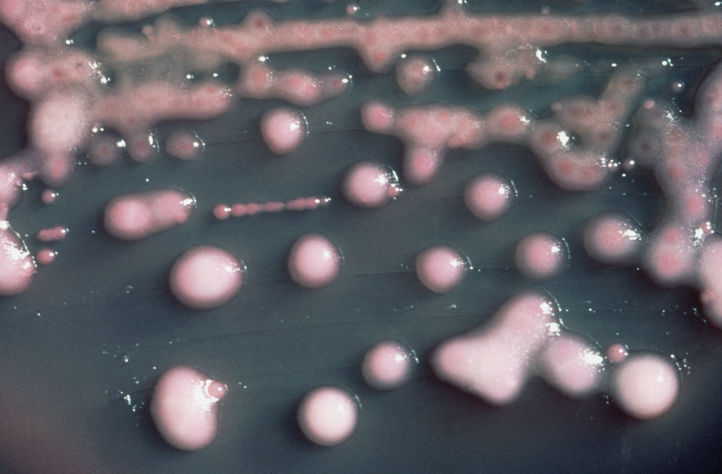
Codex has recently announced they are doing more work on antimicrobial resistance.  This is an opportunity get Codex to have a couple of standards to better protect public health from one of the worst types of antibiotic resistance that might develop in the next few years or decade. Specifically to help prevent carbapenem-resistant bacteria transferring to people via the food chain including via imported foods into countries (some useful background on this issue from European Food Safety Authority (EFSA) here).
Continue reading

Balancing risk and resource for CPE screening

Klebsiella_pneumoniae_01

The PHE Toolkit recommends pre-emptive isolation for patients who meet one of the risk-factor triggers for CPE screening. Furthermore, the pre-emptive isolation recommended in the Toolkit should be continued until three negative screens are obtained, each separated by 48 hours. In what is best described as a data-based thought experiment, colleagues from Imperial tested the impact of various CPE screening strategies on the burden of contact precautions generated.

Continue reading

It’s time to ban colistin in food animals

Guest blogger, Prof Peter Collignon (bio below) writes…

EU proposals on colistin use in food animals are just restrictions. Why not a ban?

We are now in a situation around the world where rising levels of resistance means that for many life-threatening infections with Gram-negative bacteria such as E.coli, the only effective antibiotic is now IV colistin. Colistin (polymyxin E) is an old drug that has been resurrected for use because there are no other alternatives available – even though it has major renal and neural toxicities.

Continue reading

The first International Conference on Clinical Metagenomics (ICCMg)

logo_test_twitter

Guest blogger Dr Etienne Ruppé (bio below) writes about a new conference in the emerging field of ‘Clinical Metagenomics’. I suspect we are all beginning to dip our toes into this challenging new arena, so I am sure this conference will be useful…   Continue reading

Hand hygiene in healthcare (or the lack of it)

Schermafbeelding 2016-05-19 om 12.01.35I had posted about Sanjay Saint’s great TED talk. He now wrote an article for the general public – based on his talk: “Hand washing stops infections, so why do health care workers skip it?”

While I am a big fan of hand rubbing (we don’t have the time to hand wash) I still feature his picture he included in his article. Have fun reading his article:
https://theconversation.com/hand-washing-stops-infections-so-why-do-health-care-workers-skip-it-58763

Counting the cost of HCAI outbreaks

There’s surprisingly little literature published on the cost of HCAI outbreaks. In this context, a useful Dutch study in PLoS ONE counts the cost of 7 HCAI outbreaks.

Continue reading

Review on AMR: final report

AMR review - ipc

The final report from Jim O’Neill’s Review on AMR is published today. The report summarises the key findings of the reports published by The Review. The key interventions outlined in the report are:

  • A global public awareness campaign
  • Preventing the spread of infection
  • Reducing unnecessary use of antibiotics, and controlling their environmental dissemination
  • Improving surveillance of resistance and consumption
  • Improving diagnostics
  • Explore vaccines
  • Improve remuneration for people working in ID (here here)
  • Develop a global innovation fund for anti-infective drug development
  • Incentivise anti-infective drug development

Not a great deal on infection prevention in the report – but this was covered in detail in a previous report. Some more excellent infographics, and an impressive Review. Well worth a read.

Urine – not to be sniffed at – or is it?

crotchjpgDogs are recognised to have the keenest of noses and have been used for detecting illicit drugs, early stage cancer and even C. difficile including an outbreak (possibly a cheaper option than PCR for screening – I should have used this in my debate with Jon). Now a new study finds that trained dogs can reliably detect significant bacteriuria.

Continue reading

Survey: infection prevention practices for VRE

Vancomycin-Resistant_Enterococcus_01

Guest post from Prof Dale Fisher (bio below). Please help Dale out by completing this survey. I found it interesting (and more importantly, quick)…

Continue reading

HIS Spring Meeting: ‘Contaminated surfaces: the missing link’

HIS_Spring_Meeting_2016

Thought I’d share some key points from the 2016 HIS Spring Meeting.

Outlining the problem(s)

Prof Gary French kicked off the meeting with a (sic) historical perspective, describing how the perceived importance of the environment in transmission has oscillated from important (in the 40s and 40s) to unimportant in the 70s and 80s to important again in the 2000s. Gary cited a report from the American Hospital Association Committee on Infections Within Hospitals from 1974 to prove the point: ‘The occurrence of nosocomial infection has not been related to levels of microbial contamination of air, surfaces and fomites … meaningful standards for permissible levels of such contamination do not exist.’ Gary covered compelling data that contaminated environmental surfaces make an important contribution to the transmission of Gram-positive bacteria and spores, highlighting that C. difficile in particular is a tricky customer, not helped by the fact that many ‘sporicides’ are not sporicidal!

Continue reading