Do we need new models of hand hygiene for anaesthetists?

anaesthetists

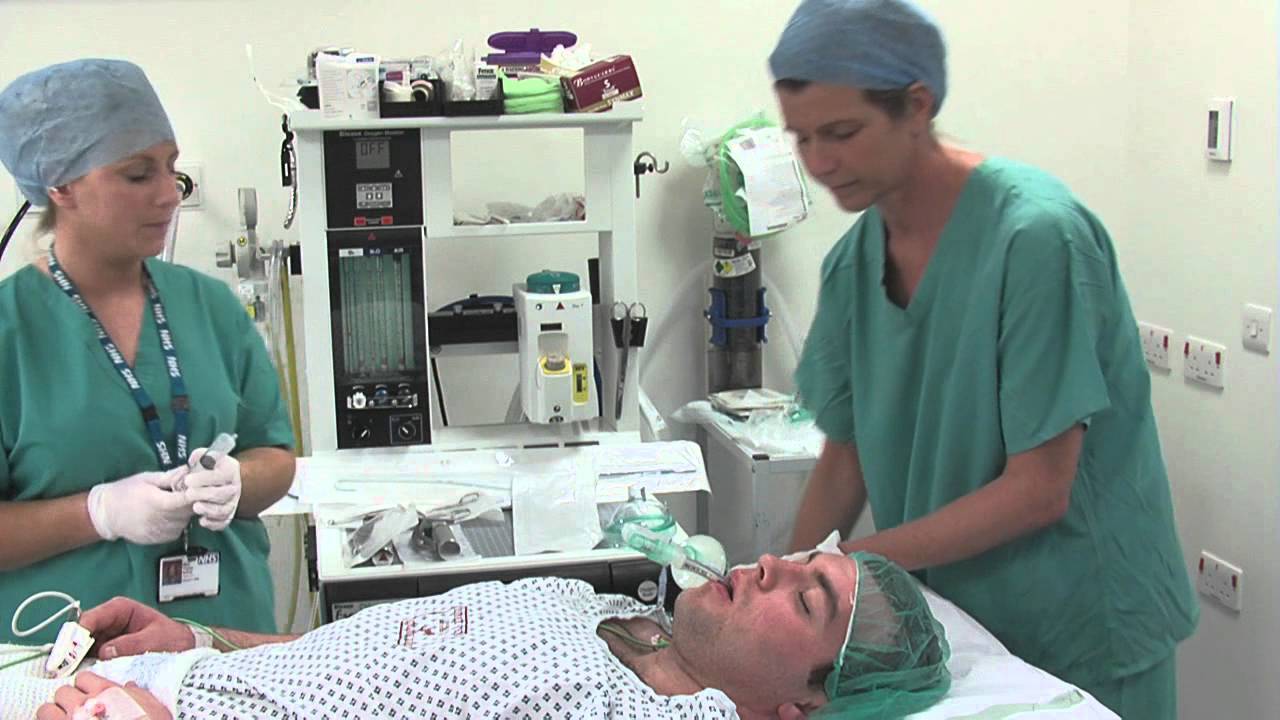
In honour of #safesurgicalhands day, I thought I would highlight a shocking fairly recent study of hand hygiene compliance among anaesthetists. The study identified a huge number of hand hygiene opportunities during the delivery of anaesthesia (149 per hour on average) – in fact, it would have consumed more than an hour of each anaesthetists time! Importantly, the observation was done via video camera, so is probably a better reflection of actual compliance. It is little surprise then that the hand hygiene compliance rate was so low (a dire 2.9%). So, before berating our anaesthetic colleagues, we may need to think of some new models of defining critical control points related to hand hygiene for this specialist group. And then berate them (with love and support) for failing to meet them!

Image credit: youtube.
Course in Healthcare Epidemiology and Infection Control

Schermafbeelding 2016-04-30 om 22.13.56

In the mood to up your epi skills?  This is the new ESCMID-SHEA course that was given for the first time in Australia last year (at least the first two tracks). It consists of a plenary part and 3 separate tracks. The first track is a practical exercise how to analyze a high rate of surgical site infections. Based on the results you have to draw conclusions and decide on an intervention. Finally you will determine if this has been effective.

The second track is a practical exercise how to analyze a possible outbreak with Clostridium difficile. Based on the results you will identify possible risk factors and routes of transmission. Finally you will take control measures and determine the effects.

The first two parts will require the use of a laptop with SPSS (for at least some of the participants) as participants will actually solve the problems. Don’t worry help is around, data-sets cleaned and the syntax is (just in case) written. It is actually a great way to get back into SPSS use.

The third track consists of four interactive master-classes. Faculty members will show some practical situations, which they have encountered during their careers. It will include outbreaks, high endemic rates of healthcare related infections, infections in the operating theatre and other topics.

Have a look at the folder:  Training Course in Healthcare Epidemiology and Infection Control. While part of the faculty, Eli and I will probably not be around this year, as we transfer the old course (October 2016, Vietnam) to a new faculty of (even) younger colleagues.

PPE for preventing highly infectious diseases

Schermafbeelding 2016-04-27 om 15.32.54

The use of PPE and the protection of HCWs against highly infectious diseases was (and is) a topic of major importance, around the globe. The recent Cochrane review by Verbeek et al. was probably hoping to offer this “vital” information.

Unfortunately, they found no studies on the effects of goggles, face shields, long-sleeved gloves or taping on the risk of contamination. All they found was very low quality evidence, with high risk of bias and uncertain estimates of effect, that:

  • More breathable types of PPE offer more comfort without increasing the risk of contamination
  • Double gloving and CDC doffing guidance appear to decrease the risk of contamination, and
  • Active more than passive training in PPE use may reduce PPE and doffing errors.

Their conclusions are obvious: we need high-quality studies of the materials, their use and protective effects, safe ways of doffing, and the most adequate training to achieve safe use of PPE for HCWs in the presence of highly infectious diseases or those (even less infectious) that may cause severe harm to HCWs.

But what to do until than? My personal opinion is that we should only use PPE, we are used to and know how to use. First-time users, even if supplied with the best available products, will inevitably fail to remove the PPE without error. Consequently, institutions should have a stable selection of PPE, and in the case of preventing highly infectious diseases, a selected group of HCWs with continuous active training, as it is too late to start when the next epidemic is hitting our healthcare centers.

Schermafbeelding 2016-04-27 om 14.47.06

Should we start admission screening for C. difficile carriage? A Kiernan vs. Otter pro-con debate!

debate

Both Martin and Jon wanted to post a blog about the same article, so thought we’d put our hands together, so to speak, into a pro-con format! We hope you find it useful.

Continue reading

Hand hygiene – social norms and compassion

Schermafbeelding 2016-04-26 om 21.00.15

I just saw Sanjay Saint’s TEDx UofM-talk and have to say that I was impressed. The message is clear, the characters portrayed recognizable, and the conclusion something we all have to agree with. I “love” his final thoughts (and if you watch the talk to the end you know why I used “love”) and I share his views on compassion. Intentionally we branded our campaign for better infection control as “iCare”.Schermafbeelding 2016-04-26 om 21.02.03

Hope you enjoy Sanjay’s talk as much as I did: http://www.youtube.com/watch?v=U3MtvvNjUR4&sns=em

LA-MRSA: The Never-ending Sequel

Over the last years, we have been getting used to the fact, that commercial pig, veal, and chicken farms, as well as horse breeding, is associated with a risk of animal to human transmission of livestock-associated Methicillin-resistant Staphylococcus aureus (LA-MRSA). In the line of suspects, chicken were the last to be conformed as true source of LA-MRSA. Van Duijkeren et al (J Antimicrob Chemother 2016;71:58-62) investigated addition feathered suspects, namely dugs and turkeys.

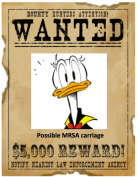
Schermafbeelding 2016-04-23 om 16.20.16First of all lets get Donald & friends of the list of suspects. In only one of 10 duck farms that were investigated, MRSA was found in the samples from the animals and duck houses. None of the humans living or working on duck farms, nor any part of their residence, was MRSA-positive. It therefore seems save to conclude that ducks pose no danger for transmission of LA-MRSA.
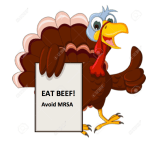
 

Schermafbeelding 2016-04-23 om 16.16.27Unfortunately, the story about turkeys seems to be different. Overall, 3 of the 10 turkey farms harbored MRSA. In addition, MRSA was found in 16% of the humans and 31% of the farmhouse samples. The highest risk was seen among the turkey farmers themselves (45.5% MRSA-positive), but employees and family members (6.3%) weren’t free of risk, either. Significant risk factors found by the investigators were: having physical contact with the animals and visiting poultry houses.

In 2 out of 3 frams in which MRSA was found among the animals and the humans, whole genome mapping showed >95% homology, corroborating the strong evidence for animal-to-human transmission of MRSA on turkey farms.

Are hand dryers safe for clinical settings?

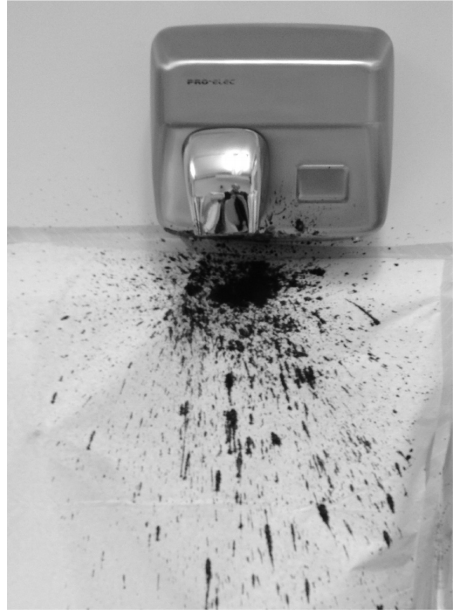
paint splatter

I edited a paper for Journal of Hospital Infection a few years ago on the potential risk of warm air dryers and especially jet air dryers compared with paper towels in spreading microbial contamination via the air. The paper showed that hands dipped in a concentrated bacterial suspension resulted in fairly widespread bacterial contamination of the air; jet air dryers were the worst culprit, followed by warm air dryers, with paper towels resulting in markedly less contamination. They also did some cool paint splatter experiments to visualize potential contamination routes (see image above, from the paper).

Continue reading

Preventing UTI: Could probiotics help?

24142960319_9117fccedc_zA study protocol has caught my eye this week, a trial of oral probiotics vs placebo as prophylaxis for UTI in spinal cord patients, a very high risk group for these infections and  associated complications. It will be a multi-site randomised double-blind double-dummy placebo-controlled factorial design study running over 24 weeks conducted in New South Wales, Australia. Probably about as robust as it gets scientifically. Continue reading

Reflections from ECCMID: the pink, the blue, and the new

eccmid2016

I’ve recently returned from an enjoyable few days in Amsterdam for ECCMID. I’ve not been to a conference of this scale for a few years; there was a lot of good stuff to choose from so I’ve tried to stick to key updates for the purposes of this reflection!

Continue reading

Social media survey for healthcare professionls: the results

I gave a presentation at ECCMID today on social media use by healthcare professionals (you can download my slides here). Since there isn’t a great deal of data around social media use by healthcare professionals, I thought I’d generate some! I put out this survey a few weeks ago. I was delighted that 749 healthcare professionals took the survey; thanks to everybody who took part.

Continue reading