A month ago (April 11) I blogged on the difficulties in predicting the presence of ESBL-producing bacteria as a cause of infection at the time antibiotics must be started. Wouter Rottier (PhD student) developed 2 prediction rules (for community-onset and hospital-onset infection), that seem to do better than current guideline recommendations (especially for reducing unnecessary carbapenem use). Another PhD student (Tim Deelen) now wants to validate these rules, globally. The “crowd-funding study approach” worked and sites across the world joined us…. Continue reading
Everybody needs good neighbours (for sharing CPE)

BMC Medicine have recently published a study from researchers in Oxford, PHE, and Manchester illuminating the importance of referral networks in the transmission of CPE. The bottom line is that regional referral networks seem to be the most important driver of CPE spread, such that a small CPE problem close to home is more of a threat than a larger CPE problem in a distant referral network!
Fluoroquinolone use and C. difficile infections: The English miracle (not) yet explained? (part 2)
Two months ago I blogged on the reduction of fluoroquinolone-resistant but not fluoroquinolone-susceptible C. diff infections (CDI) in English hospitals, coined as “the English C. diff miracle”. A very simple model challenged the conclusion that this was caused by a reduction in fluoroquinolone use in hospitals. A debate on the assumptions of the model now provides the perfect outline for a PhD thesis. Continue reading
Money makes the AMR bugs go round in Europe? A reflection from ECCMID 2017
If you pick an AMR bacterium of your choice, go to EARS-Net and plot prevalence across Europe, in most cases you’ll see a rough ‘north-south’ divide, with northern European countries doing better than southern European countries in terms of AMR rates (e.g. see below for antibiotic-resistant K. pneumoniae). What is driving this difference in AMR rates? A session at this year’s ECCMID asked just that question, hypothesising that weather / climate, economics, patient mix, or culture explain the difference. It was a fascinating session, so I thought I’d share some highlights!
The decreasing importance of the Impact Factor
Earlier today, ARIC’s (www.aricjournal.com) publisher (BioMed Central) signed the San Francisco Declaration on Research Assessment (DORA).
Eighteen years ago, when the start of open access changed the world of scientific publishing and distribution of research, the “new” open access journals continued to rely on a “quality measure” of their journals that is in place since 1975; the Impact Factor (IF). A measure based on the number of citations over the number of citable articles.
Many academic institutions judge(d) the academic merit of their researchers by IF points gathered, rather than the quality of their work. Consequently, researchers select a journal for their submission by the IF. Still, as BMC stated in todays announcement: “over-reliance on the IF has never felt right to us. No one metric should be the be-all-and-end-all”. Therefore, many journals including ARIC, include Altmetrics on their articles, based on downloads, Twitter, blog posts and other (social) media use. By the way, Preeti Malani explained Altimetrics nicely in the meet-the-expert session at ECCMID we gave together. Other metric scores are presently implemented by Elsevier.
BMC wants to go further by signing the San Francisco Declaration on Research Assessment and thereby pledging to “greatly reduce emphasis on the journal Impact Factor as a promotional tool by presenting the metric in the context of a variety of journal-based metrics”. For all those still relying on IF scores for their academic career, don’t worry, BMC will not entirely cease promoting the IF, but look forward to see more and new metric scores.
Promiscuous plasmids: a rapid reflection from ECCMID 2017
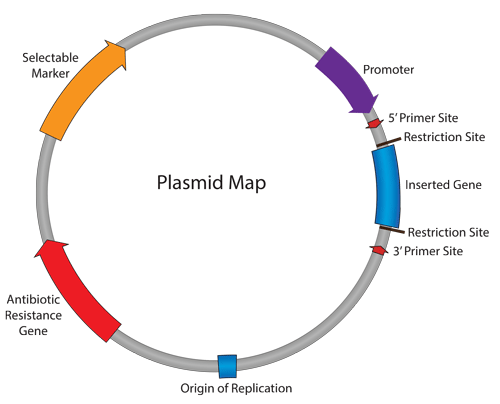
I came to ECCMID 2017 with a very specific question: do we need to think beyond ‘same-bug-same-gene’ horizontal transmission from a practical IPC view point in order to address the threat of IPC? The answer, unfortuantely, is yes!
ECCMID2017: new kids on the blog & UK pearls
Three “new antibiotics” and two chapters in our textbooks that need to be rewritten. Six slam-dunk top publications, that was all (!) in the clinical trials late-breaker session at ECCMID2017. The “antibiotics” are a beta-lactamase that inactivates cephalosporins in the gut to prevent C. difficile infection (CDI), and two drugs with activity against CPE: a new aminoglycoside (plazomicin) and a ciderophore cephalosporin (cefiderocol). The antibiotic pipeline starts dripping again. Continue reading
On antibiotic resistance, “complex systems” and tipping points
This morning I chaired the session “Which mathematical models for antimicrobial resistance?” at ECCMID2017. Three excellent talks, making one thing more crystal clear (to me, at least) than before. Antibiotic resistance epidemiology should be considered as a “complex system”. What does that mean? Continue reading
Can we halve Gram-negative BSIs by 50% by 2021? The crowd say “No”

Most of those casting their vote supported Martin’s (somewhat pessimistic) view that we can’t halve Gram-negative BSI by 2021 (see the figure, below). Let me first give you my own, unspoiled opinion (written before the results of this survey were known). I was intending to vote for option 3 (the English can’t, the Dutch might) but I am not even sure of that; actually, I believe that neither the English nor the Dutch can.
CPE: a good reason to avoid surgery in Spain!
A clear simple study has a stark headline: 16% of admissions to a Spanish surgical ICU carry CPE. This sort of carriage prevalence is at a ‘practice-affecting’ level: the empiric antibiotic choices may be altered and you begin to wonder what is left when the first signs of infection develop in almost 1 in every 5 patients…
 Reflections on Infection Prevention and Control