SHEA 2014 Spring Conference: Out with contact precautions. In with faecal transplantation

shea 2014

The organizing committee of SHEA should be congratulated for putting together an interesting and engaging agenda for their Spring Meeting, based around the recent ICHE special edition. Sadly, I was only able to make it for ‘From MRSA to CRE: Controversies in MDROs’ at the tail end of the meeting.

Global perspective on CRE evolution – Dr Arjun Srinivasan

Dr Srinivasan kicked off with a frankly frightening status update on the ‘nightmare bacteria’. KPC and NDM-producing Enterobacteriaceae have spread globally and rapidly since 2006.1 The prevalence of carbapenem-resistant K. pneumoniae in the US has risen from 1% in 2001 to a whopping 10% in 2011.2 More worryingly, the prevalence of CRE colonization in long-term acute care hospitals (LTACHs) in Illinois was 30% in a recent point prevalence survey.3 Arjun gave some useful perspectives on the mortality associated with CRE. The odds ratio for mortality attributable to CRE was remarkably similar in studies from Israel and the US at around 4 (which is approximately twice that of MRSA).4-6

Arjun made the point that 10% of CRE reported to the CDC are “community-acquired”. I find this hard to believe and I suspect they’d be healthcare-associated if you searched hard enough for risk factors. The picture would be different in areas of really high prevalence like New Delhi or Greece, but I don’t think the US is quite there yet.

Arjun highlighted some practical limitations of implementing strategies to control CRE, in particular around staff cohorting. “Today you’re assigned to work on the unit dedicated to patients with the nightmare bacteria”; not a popular message to our staff.

The key questions from Arjun’s viewpoint are: the focus has been on K. pneumoniae and E. coli, but should Enterobacter be in the mix? Are we doing enough to control CRE (or possibly, too much)? What are the right policy solutions in terms of reporting and guidelines? And finally, can we control CRE? An updated national report from Israel suggests yes.7 But uncontrolled spread elsewhere (e.g. Greece and increasingly Italy) suggest no.

Lab Identification & Surveillance for MDROs – Dr Daniel Diekema

Dr Diekema gave a timely and thoughtful overview of lab diagnostics for MDROs. One problem hampering clear lab diagnosis and surveillance is how to define an MDRO, and MDR-GNR in particular. Do we go by phenotype or by genotype? Clearly, there are arguments either way; there’s a tendency for clinicians to gravitate towards phenotype and scientists towards genotype I think, so we need to look out for our own biases.

The keynote was “don’t throw away the agar plates just yet”. Molecular diagnostics has a role, but it does not replace agar plates. Molecular diagnostics are great, but do not deal with changing epidemiology; struggle with target variability; are expensive; rely on validation of carriage sites; do not tell you about phenotypic susceptibility; have a limit of detection often around a couple of logs; and need to manage shared resistance genes between species, especially for MDR-GNR. Dan concluded by questioning whether molecular diagnostics remain the realm of reference, referral and research labs!

CRE in LTCF, LTACH, Regional Control – Drs Kerri Thom & Michael Lin

Dr Thom gave a rather disturbing overview of the involvement of long-term care facilities (LTCFs) and LTACHs as reservoirs for the spread of CRE. She began by providing evidence, albeit from outbreaks, that standard hand hygiene focus and contact precautions do not control CRE spread.8,9 You need to do more: active surveillance cultures plus cohorting has worked in a number of studies.8,10,11 Several studies suggest a significant LTCF / LTACH reservoir.3,12-14 A study from 2011 carefully studying regional spread of CRE through analysis of inter-facility “social networks” suggests that a connected regional approach to control is required.12

Dr Lin, working in the “CRE battleground of Illinois”3 continued the theme for a regional approach by presenting a regional collaborative to register CRE carriers: the XDRO registry. Dr Lin referred to a successful CRE LTACH bundle, which was presented at ID Week 2013, and provides some hope that CRE can be controlled in LTACHs.

Posters and oral presentations

The SHEA Spring Meeting had some posters for the first time, which was a welcome addition. The highlights from the posters were:

  • Dr Lesho: 75 million person years of surveillance in US military yields 300 CRE cases; 1 per 100,000 person years.
  • Dr Mann: Sharklett pattern surfaces performed better than copper for reducing bacterial persistence and transfer.
  • Southard: Pulsed-xenon UV disinfection of ICU rooms following ALL discharges associated with 20 v 6 cases of unit-attributable CDI.
  • Nicole Kenny: If your microfiber is too absorbent, you can forget about a 10 minute contact time.

Four impressive submitted abstracts were presented:

  • Dr Assadian performed an RCT of antimicrobial surgical gloves, demonstrating an impressive microbiological reduction – but will this translate to clinical benefit?
  • Dr Cluzet found that recurrent MRSA colonization occurred in 40% of 200 patients with uncomplicated MRSA skin and soft tissue infection in the community, and was associated with colonized household contacts and some antibiotics.
  • Dr Decker found that CRE colonization duration was a mean 241 days (range 38-649). Worrying, a few patients followed a ‘pos-neg-pos’ colonization pattern, which supports a “once colonized, always colonized” approach.
  • Dr Kwon performed a beautiful RCT of Lactobacillus probiotics, but sadly found that it did not reduce GI MDRO colonization or acquisition.

Contact Isolation Precautions: Unanswered Questions – Dr Daniel Morgan

Dr Morgan gave a very balanced and data-led overview of the pros and cons of contact isolation precautions. On the one hand, gloves and gowns are frequently contaminated with MDROs (which would be hands and clothes if no gloves and gowns).15 On the other hand, the somewhat equivocal findings of the BUGG study do not exactly provide resounding support for contact isolation precautions.16 Also, patients under contact precautions have less contact with healthcare personnel, delayed discharge, an increased risk of adverse events, potential for psychological problems, and reduced patient satisfaction. Dr Morgan’s conclusion was complex (matching the data), with a graded approach to contact isolation precautions advocated: CRE > C. difficile > MRSA > VRE.

Success Stories in MRSA Control – Drs Sarah Haessler, Michael Edmond, Steven Gordon and Jeffrey Stark.

This session was not quite what I was expecting. It turns out that all four speakers have stopped using contact precautions for MRSA colonized patients, so this became a collective justification for this practice. The arguments are compelling: none of the speakers’ MRSA rates skyrocketed when they stopped isolating MRSA patients. The alternative approach to traditional contact precautions seems to be a ‘syndromic approach’: basically, only isolate them if they’re oozing. I can see the logic here, but there may be exceptions. For example, MRSA colonized patients with respiratory viruses can enter a “super-spreader” state and would most certainly not be obviously oozing.17 Also, I wonder whether the faculty would feel differently about contact precautions if they were working outside the US in a healthcare system that is mainly composed of 4 and 6 bed bays (like most NHS hospitals)?

Top 10 MDRO Papers – Drs Susan Huang & Ebbing Lautenbach

Dr Huang selected:

  • Sivert NHSN data, demonstrating high rates of carbapenem resistance in CLABSI: 23% of Klebsiella, 26% of Pseudomonas and 65% of Acinetobacter.18
  • Rutala study showing that reflective paint results in rapidly reduced UVC cycle times and thus improves feasibility.19 (I think there’s probably two views on this study. Either the reflective paint resulted in more reflective bouncing of the UVC around the room and genuinely improved things. Alternatively, the reflective paint could have reflected the UVC directly back to the sensor more rapidly and actually reduced the dose delivered to the microbes on the surfaces.)
  • Harris BUGG study, which is testament to securing big funding for definitive studies (though with frustratingly equivocal results).16
  • Huang etc universal intervention studies.20-22 Universal chlorhexidine bathing: YES (provided resistance is monitored). Universal mupirocin decolonization: NO!

Dr Lautenbach chose:

  • van Nood faecal transplant for preventing C. difficile recurrence.23 ‘Transpoosions’ work, but we need to work on finding the right synthetic bug mix. Dr Lautenbach described the findings of the faecal transplant study as a “penicillin moment”; it’s a concept that could transform medicine.
  • Eye Oxfordshire C. difficile whole genome sequencing study: how much CDI is hospital-acquired?24 The study did not consider asymptomatic carriers or environmental contamination and 25% of patient isolates were not available for analysis. So, there was a pretty large potential burden from which hospital-acquisition could have occurred.
  • Lin LTACH CRE colonization study.3 30% of patients carried CRE; this figure was 55% in one of the facilities included in the survey.
  • Daneman selective decontamination study.25 I can’t help thinking that ‘selective decontamination’ is misnamed: it’s not very selective at all. Perhaps ‘scorched earth decontamination’ would be more accurate. My view is that, regardless of efficacy, we should be giving faecal transplantation before a cocktail of antibiotics. Let’s save the antibiotics for treating infections.
  • Gerber community-based antibiotic stewardship cluster RCT, which showed an impressive reduction in broad spectrum antibiotic prescribing.26

Fecal Transplant for C. difficile Infection – Dr Michael Edmond

Dr Edmond gave a passionate and first-hand case for the effectiveness and value of faecal transplantation for recurrent CDI. It’s not a new concept: ‘faecal therapy’ was documented in Chinese medicine in 300AD; the first modern use was in 1957, with impressive results.27 Faecal microbiota transplantation (FMT) cures recurrent CDI by complementing reduced microbiota diversity.28 Indeed, a recent systematic review of FMT reported an overall cure rate of 91% for recurrent CDI.29 The regulatory position is in flux currently, meaning that purchasing carefully tested stool from the ‘brown cross’ (www.openbiome.org) may be more challenging in future. (Indeed, it may even come to DIY FMT, which is possible: first you collect it, then you blend it and then you stick it…) The bottom line is that fresh or frozen, yours or somebody else’s, stool bank or lab donor, NG tube or enema: FMT works for recurrent CDI. The only question is whether it could be a front-line treatment for CDI.  

The Microbiome and Its Role in Infection Prevention – Dr Clifford McDonald

Dr McDonald gave a mind-bending talk on the hugely underestimated role of the microbiome in human disease. The gut microbiome is dominated by the Bacteroidetes or Firmicutes, depending on diet; coliforms are surprisingly minor players.30 Antibiotic therapy results in profound disruption of the gut microbiome;31 thus we need to carefully tend the microbiome.32 We need to consider ways to manipulate the gut microbiome for good, using perhaps ‘advanced’ probiotics or modulating bacterial inter-cell communication. Cliff finished with a thought-proving vision of the future involving extensive testing of the patient’s microbiome, a “tending” consultation and treatment with a course of the appropriate advanced probiotic therapy.

Pro-Con: Should We Be Bare Below the Elbows? Drs Michael Edmond & Neil Fishman

The recently published SHEA guidelines on attire provide some useful background.33 Dr Edmond began with the pro position: clothing becomes contaminated with MDROs, which can be transmitted from clothing in laboratory studies; white coats are rarely washed; there is limited evidence but potential benefit. When evidence is limited, we need to avoid ‘methodolatry’, the worship of the hallowed RCT. It seems that a doctor’s appearance is the least important performance measure from a patient’s viewpoint.34 They are much more concerned with whether their doctor knows their stuff. Perhaps the most powerful argument of all for the pro is that Dr Edmond recently won an award for the best beside manner whilst dressing down.

Dr Fishman began his con in entertaining fashion: by undressing to bare below the elbow and replacing his neck tie for a fetching bow-tie. His argument was: unattractive bingo wings; bug-trapping hairy arms; may be some unintended harm; reduced patient experience; is it consistent when you consider policies for hand-held electronics; and, of course, no evidence.

The UK has been bare below the elbow for several years now. There has been some resistance: in fact, the debate reminded me of a London surgeon going apoplectic when the Prime Minister’s camera crew were not bare below the elbow during a hospital visit. So, should we be bare below the elbow? In my view, yes; it makes it easier to wash your hands. However, the manner in which you interact with you patient is far more important than what you wear.

Key issues

  • Can we control CRE and, if so, how?
  • Related to this, how to deal with the (apparently sizable) CRE reservoir in LTACHs?
  • Do molecular diagnostics remain the realm of reference, referral and research labs?
  • Has our focus on CRE taken our eye off multidrug-resistant non-fermenters (particularly A. baumannii), which are a greater ‘clear and present danger’ for many facilities?
  • Can we risk abandoning contact precautions for MRSA patients? In a US hospital with 100% single rooms, perhaps. In the NHS composed of 4 and 6 bed bays, no.
  • FMT works for recurrent CDI and regulators should not block access to it.
  • Could FMT work as a front-line treatment for CDI?
  • How can we modify the gut microbiome most effectively to confer infection prevention and control benefits?
  • Is microbiome modulation more effective than antibiotic ‘selective decontamination?

References

1.       Molton JS, Tambyah PA, Ang BS, Ling ML, Fisher DA. The global spread of healthcare-associated multidrug-resistant bacteria: a perspective from Asia. Clin Infect Dis 2013; 56: 1310-1318.

2.       Centers for Disease C, Prevention. Vital signs: carbapenem-resistant Enterobacteriaceae. MMWR Morb Mortal Wkly Rep 2013; 62: 165-170.

3.       Lin MY, Lyles-Banks RD, Lolans K et al. The importance of long-term acute care hospitals in the regional epidemiology of Klebsiella pneumoniae carbapenemase-producing Enterobacteriaceae. Clin Infect Dis 2013; 57: 1246-1252.

4.       Cosgrove SE, Sakoulas G, Perencevich EN, Schwaber MJ, Karchmer AW, Carmeli Y. Comparison of mortality associated with methicillin-resistant and methicillin-susceptible Staphylococcus aureus bacteremia: a meta-analysis. Clin Infect Dis 2003; 36: 53-59.

5.       Patel G, Huprikar S, Factor SH, Jenkins SG, Calfee DP. Outcomes of carbapenem-resistant Klebsiella pneumoniae infection and the impact of antimicrobial and adjunctive therapies. Infect Control Hosp Epidemiol 2008; 29: 1099-1106.

6.       Borer A, Saidel-Odes L, Riesenberg K et al. Attributable mortality rate for carbapenem-resistant Klebsiella pneumoniae bacteremia. Infect Control Hosp Epidemiol 2009; 30: 972-976.

7.       Schwaber MJ, Carmeli Y. An ongoing national intervention to contain the spread of carbapenem-resistant enterobacteriaceae. Clin Infect Dis 2014; 58: 697-703.

8.       Palmore TN, Henderson DK. Managing Transmission of Carbapenem-Resistant Enterobacteriaceae in Healthcare Settings: A View From the Trenches. Clin Infect Dis 2013; 57: 1593-1599.

9.       Kochar S, Sheard T, Sharma R et al. Success of an infection control program to reduce the spread of carbapenem-resistant Klebsiella pneumoniae. Infect Control Hosp Epidemiol 2009; 30: 447-452.

10.     Agodi A, Voulgari E, Barchitta M et al. Containment of an outbreak of KPC-3-producing Klebsiella pneumoniae in Italy. J Clin Microbiol 2011; 49: 3986-3989.

11.     Ben-David D, Maor Y, Keller N et al. Potential role of active surveillance in the control of a hospital-wide outbreak of carbapenem-resistant Klebsiella pneumoniae infection. Infect Control Hosp Epidemiol 2010; 31: 620-626.

12.     Won SY, Munoz-Price LS, Lolans K et al. Emergence and rapid regional spread of Klebsiella pneumoniae carbapenemase-producing Enterobacteriaceae. Clin Infect Dis 2011; 53: 532-540.

13.     Marquez P, Terashita D. Editorial commentary: long-term acute care hospitals and carbapenem-resistant Enterobacteriaceae: a reservoir for transmission. Clin Infect Dis 2013; 57: 1253-1255.

14.     Marchaim D, Perez F, Lee J et al. “Swimming in resistance”: Co-colonization with carbapenem-resistant Enterobacteriaceae and Acinetobacter baumannii or Pseudomonas aeruginosa. Am J Infect Control 2012; 40: 830-835.

15.     Morgan DJ, Liang SY, Smith CL et al. Frequent multidrug-resistant Acinetobacter baumannii contamination of gloves, gowns, and hands of healthcare workers. Infect Control Hosp Epidemiol 2010; 31: 716-721.

16.     Harris AD, Pineles L, Belton B et al. Universal glove and gown use and acquisition of antibiotic-resistant bacteria in the ICU: a randomized trial. JAMA 2013; 310: 1571-1580.

17.     Sheretz RJ, Reagan DR, Hampton KD et al. A cloud adult: the Staphylococcus aureus-virus interaction revisited. Ann Intern Med 1996; 124: 539-547.

18.     Sievert DM, Ricks P, Edwards JR et al. Antimicrobial-resistant pathogens associated with healthcare-associated infections: summary of data reported to the National Healthcare Safety Network at the Centers for Disease Control and Prevention, 2009-2010. Infect Control Hosp Epidemiol 2013; 34: 1-14.

19.     Rutala WA, Gergen MF, Tande BM, Weber DJ. Rapid hospital room decontamination using ultraviolet (UV) light with a nanostructured UV-reflective wall coating. Infect Control Hosp Epidemiol 2013; 34: 527-529.

20.     Climo MW, Yokoe DS, Warren DK et al. Effect of daily chlorhexidine bathing on hospital-acquired infection. N Engl J Med 2013; 368: 533-542.

21.     Milstone AM, Elward A, Song X et al. Daily chlorhexidine bathing to reduce bacteraemia in critically ill children: a multicentre, cluster-randomised, crossover trial. Lancet 2013; 381: 1099-1106.

22.     Huang SS, Septimus E, Kleinman K et al. Targeted versus Universal Decolonization to Prevent ICU Infection. N Engl J Med 2013; 368: 2255-2265.

23.     van Nood E, Dijkgraaf MG, Keller JJ. Duodenal infusion of feces for recurrent Clostridium difficile. N Engl J Med 2013; 368: 2145.

24.     Eyre DW, Cule ML, Wilson DJ et al. Diverse sources of C. difficile infection identified on whole-genome sequencing. N Engl J Med 2013; 369: 1195-1205.

25.     Daneman N, Sarwar S, Fowler RA, Cuthbertson BH, Su DCSG. Effect of selective decontamination on antimicrobial resistance in intensive care units: a systematic review and meta-analysis. Lancet Infect Dis 2013; 13: 328-341.

26.     Gerber JS, Prasad PA, Fiks AG et al. Effect of an outpatient antimicrobial stewardship intervention on broad-spectrum antibiotic prescribing by primary care pediatricians: a randomized trial. JAMA 2013; 309: 2345-2352.

27.     Eiseman B, Silen W, Bascom GS, Kauvar AJ. Fecal enema as an adjunct in the treatment of pseudomembranous enterocolitis. Surgery 1958; 44: 854-859.

28.     Chang JY, Antonopoulos DA, Kalra A et al. Decreased diversity of the fecal Microbiome in recurrent Clostridium difficile-associated diarrhea. J Infect Dis 2008; 197: 435-438.

29.     Sha S, Liang J, Chen M et al. Systematic review: faecal microbiota transplantation therapy for digestive and nondigestive disorders in adults and children. Aliment Pharmacol Ther 2014; in press.

30.     De Filippo C, Cavalieri D, Di Paola M et al. Impact of diet in shaping gut microbiota revealed by a comparative study in children from Europe and rural Africa. Proc Natl Acad Sci U S A 2010; 107: 14691-14696.

31.     Dethlefsen L, Relman DA. Incomplete recovery and individualized responses of the human distal gut microbiota to repeated antibiotic perturbation. Proc Natl Acad Sci U S A 2011; 108 Suppl 1: 4554-4561.

32.     Tosh PK, McDonald LC. Infection control in the multidrug-resistant era: tending the human microbiome. Clin Infect Dis 2012; 54: 707-713.

33.     Bearman G, Bryant K, Leekha S et al. Healthcare personnel attire in non-operating-room settings. Infect Control Hosp Epidemiol 2014; 35: 107-121.

34.     Aitken SA, Tinning CG, Gupta S, Medlock G, Wood AM, Aitken MA. The importance of the orthopaedic doctors’ appearance: a cross-regional questionnaire based study. Surgeon 2014; 12: 40-46.

Considering the burden of enhanced CRE screening

swabs

The recent PHE CPE toolkit advocates implementing targeted screening and isolation of carriers. Reading the guidelines in a little more detail, the ‘triggers’ for screening a patient for CPE are, in the last 12 months: (a) an inpatient in a hospital abroad or (b) an inpatient in a UK hospital which has problems with spread of CPE (if known) or (c) a ‘previously’ positive case. Patients who screen positive should be placed in contact isolation; patients who screen negative should be placed in contact isolation until a further two consecutive negative screens have been taken. It’s important to note that the negative screens must be at least 48 hours apart. So, for patient who turns out to be negative will be in contact isolation for around 6 days (screens collection on days 0, 2 and 4, and a further day for the final negative screen result).

The number of patients who will meet the trigger for screening is currently unknown, but I have heard whispers of 25-50% of all admissions. This will place a considerable burden on already over-stretched isolation facilities, and bear substantial cost implications.

Single rooms in the NHS are already in very short supply. Indeed, recent press and commentary highlights the implications of running out of single rooms: patients shunted around “like parcels” in the middle of the night to relieve bed pressures.

Now, you could argue that patients who screen negative for CPE but are awaiting their confirmatory negative screens do not need to be isolated in a single room; they can be isolated in a bay. But if 25-50% of patients suddenly begin contact precautions, you’d quickly run into problems. Patients on contact precautions take longer to care for, and tend to get less attention than other patients resulting in more adverse events, as illustrated by a couple of recent Controversies blogs. Also, I fear you may begin to see ‘isolation fatigue’, where the procedure loses its impact if it has to be applied so broadly. And then there’s the cost. A recent US study calculated that contact precautions cost around £23 ($35) per patient day (not including the cost of disposal for all that additional waste!). If 25% of the 100,000 patients admitted to a London hospital Trust met the trigger for CPE screening and turned out to be negative, the price tag for isolation alone would be pushing £3.5m.

I support the PHE guidelines and agree that we need to “search and destroy” CPE above all else before it becomes endemic. However, are they feasible to implement in their current form?

Image: ‘Swabs’ by Frank Carey.

Busy hospitals, contaminated surfaces and the acquisition of Acinetobacter baumannii

acinetobacterPhoto: Acinetobacter on MacConkey by Iqbal Osman.

Guest bloggers Dr. Rossana Rosa and Dr Silvia Munoz-Price write: The relationship between patients and their hospital environment is obvious yet intangible. What do we mean by environment? We are talking about the room, and objects within the room such as bedside tables, bedrails and IV pumps. In our study, which was published in the recent ICHE special edition, we found when patients are exposed to rooms contaminated with Acinetobacter baumannii they have an increased risk of acquiring this organism during their index admission. This association remained strong even after controlling for other variables.

In a previous study1, we addressed the other side of the equation, and reported the high degree of contamination detected in the rooms of A. baumannii positive patients. We found that the paired isolates had similarity by PFGE of at least 94.8% with each other, thus suggesting a direct contamination of the environment from the A. baumannii positive patient occupying the room. Put in perspective, the results of these two studies highlight how close, dynamic and interactive is the association between patients and the hospital environment.

Interestingly, we found two variables to be ‘effect modifiers’. An effect modifier is a variable that differentially modifies the observed association between an exposure and an outcome. Despite finding a very strong association between exposure to a contaminated environment and acquisition of A. baumannii in the whole cohort, this association was rendered non-significant when evaluated in sub-groups admitted either to a unit with high colonization pressure or admitted to the trauma intensive care unit. This is relevant because colonization pressure has been shown to play a role in the horizontal transmission of CRE2, as well as VRE3, MRSA4 and C. difficile5. This poses the question of whether contamination of the environment could be primarily a result of the colonization pressure within a unit, to the extent of reaching a threshold after which most of the surfaces in a unit will be contaminated.

The good news is that the exposure to a contaminated environment should be a modifiable risk factor for the acquisition of CRE and MDRO. Active surveillance cultures can be performed to screen for carriers, colonization pressures can then be estimated for each unit, and high touch surfaces can be determined and targeted for cleaning.

References

1. Munoz-Price LS, Namias N, Cleary T, et al. Acinetobacter baumannii: association between environmental contamination of patient rooms and occupant status. Infect Control Hosp Epidemiol 2013;34:517-520.

2. Swaminathan M, Sharma S, Poliansky Blash S, et al. Prevalence and risk factors for acquisition of carbapenem-resistant Enterobacteriaceae in the setting of endemicity. Infect Control Hosp Epidemiol. 2013;34:809-817.

3. Bonten MJ, Slaughter S, Ambergen AW, et al. The role of “colonization pressure” in the spread of vancomycin-resistant enterococci: an important infection control variable. Arch Internal Med 1998;158:1127-1132.

4. Merrer J, Santoli F, Appere de Vecchi C, Tran B, De Jonghe B, Outin H. “Colonization pressure” and risk of acquisition of methicillin-resistant Staphylococcus aureus in a medical intensive care unit. Infect Control Hosp Epidemiol 2000;21:718-723.

5. Lawrence SJ, Puzniak LA, Shadel BN, Gillespie KN, Kollef MH, Mundy LM. Clostridium difficile in the intensive care unit: epidemiology, costs, and colonization pressure. Infect Control Hosp Epidemiol 2007;28:123-130.

Bios

TICU_photo1_031914Photo key: from left to right: Dr. Nicholas Namias, Dr. Silvia Munoz-Price, Dr. Rossana Rosa and Dr. Daniel Kett. Location: Trauma Intensive Care Unit.

Dr. Silvia Munoz-Price is an Associate Professor of Clinical Medicine at the University of Miami. Dr. Rossana Rosa is currently an Internal Medicine Resident at Miami Miller School of Medicine and an incoming fellow of Infectious Diseases at the same institution. She hopes to continue developing her career in Hospital Epidemiology and Infection Control.

CRE can survive on dry surfaces for longer than you may expect

If I was to perform a straw-poll of microbiologist on how long Enterobacteriaceae could survive on dry surfaces, I suspect that most answers would be measured in hours and days rather than weeks and months. However, a lab study that I performed in collaboration with Nancy Havill and John Boyce at Yale New Haven Hospital demonstrated that CRE are able to survive on dry surfaces for over a month.

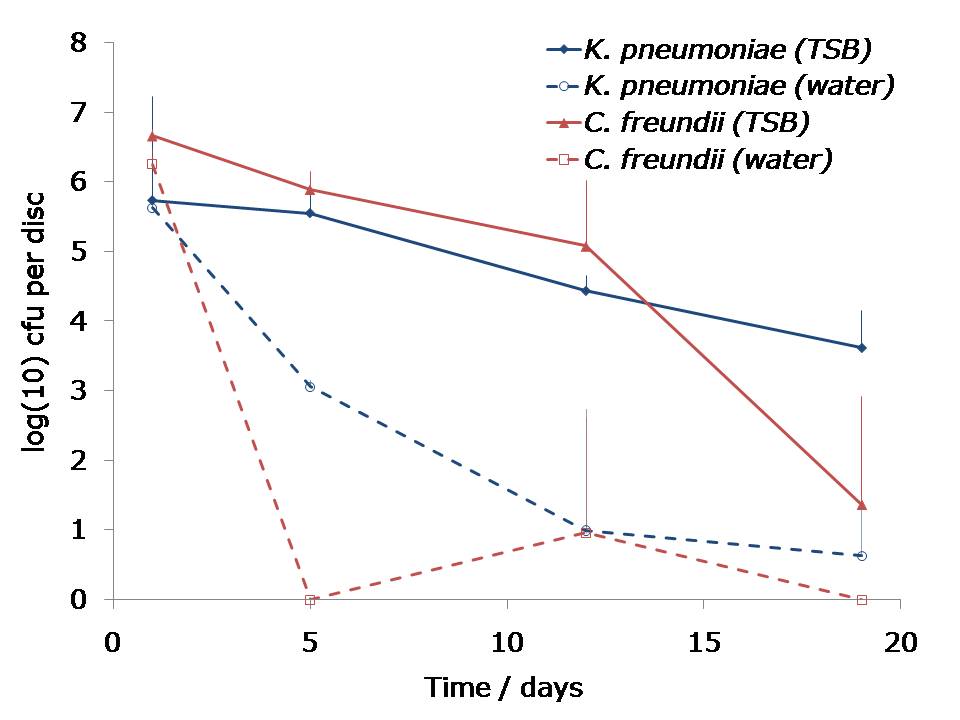
For the study, which is published in the recent ICHE special edition on CRE and MDROs, we took two clinical isolates of CRE (Klebsiella pneumoniae and Citrobacter freundii) and dried them onto metal discs either in a water or TSB suspension. Discs were then enumerated every few days over a 19 day period. Both K. pneumoniae and C. freundii were able to survive for more than two weeks, and all but C. freundii dried in water survived to the end of the testing period (day 19) (Figure 1). In addition, K. pneumoniae and C. freundii dried in TSB survived for more than 40 days in an additional set of experiments.

CRE survival 1Figure 1. Survival of K. pneumoniae and C. freundii on dry surfaces dried on metals discs in either water or TSB; error bars represent +1 standard deviation on a mean of three replicates at each time point.

We shouldn’t be surprised by these findings. Previous drying studies of Enterobacteriaceae have demonstrated a range of survival times, from hours to months depending on the species, strain and testing conditions. Whist it is plausible that carbapenem-resistance imposes a fitness burden on Enterobacteriaceae that may curtail their survival time, the CRE that we studied seemed to exhibit survival times in the same range as carbapenem-susceptible Enterobacteriaceae. Furthermore, a previous study from my lab identified a stark difference in the survival times of three different K. pneumoniae strains (Figure 2). One of the three strains tested was dead by three weeks, whilst another survived for more than 6 weeks with a minimal log reduction.

CRE survival 2Figure 2. Survival of three different strains of K. pneumoniae dried on metal discs; error bars represent +1 standard deviation on a mean of three discs at each time point.

It seems that CRE can survive for long enough on surfaces to be potentially involved in transmission. However, recent studies by Nseir et al, and Ajao et al. have failed to identify an increased risk associated with admission to a room occupied by a patient infected or colonized with resistant Enterobacteriaceae, in contrast with other bacteria including Acinetobacter baumannii. I suspect part of this is due to the fact that the Enterobacteriaceae are such a diverse family. A number of studies have identified large differences in the rate of contamination when comparing ESBL-producing E. coli vs. K. pneumoniae. If the prior room occupancy studies had been stratified and powered according to species within the Enterobacteriaceae family, I’d expect to see the increased risk from the prior room occupant for K. pneumoniae but not for E. coli. Also, the substantial variation in survival times amongst K. pneumoniae strains has clear implications for outbreaks of K. pneumoniae: are you dealing with a strain that is a “survivor” on surfaces? If so, more attention to cleaning and disinfection may be required.

In summary, CRE are able to survive on dry surfaces for weeks to months, which is long enough to be potentially involved in transmission; this justifies the advice for enhanced cleaning and disinfection to control the spread of CRE.

Article citation: Havill NL, Boyce JM, Otter JA. Extended survival of carbapenem-resistant Enterobacteriaceae on dry surfaces. Infect Control Hosp Epidemiol 2014;35:445-447.

ICHE special edition on CRE and MDROs

CRE medium

Infection Control and Hospital Epidemiology have once again excelled themselves in putting together a fine special edition on CRE and MDROs. Around this time last year I posted an article on the ICHE special edition on the role of the environment, and this special edition is equally important. I strongly recommend that you read the special edition from cover to cover, but I’ve picked out a few of my personal highlights below:

  • A thoughtful editorial by Drs Lautenbach and Perencevich sets the scene. They reflect on our ‘woeful unpreparedness’ to address both current and future MDROs.
  • A number of articles provide updates on surveillance and prevalence. Brennan et al. report findings from a 6-month CRE point-prevalence survey based on voluntary reporting in the state of Michigan, finding a crude rate of 1.07 cases per 10,000 patient days. Interestingly, this rate was almost 3 cases per 10,000 patient days in long-term acute care facilities. Isolates were not collected and analyzed, so carbapenemase genes were not confirmed; the fact that close to 10% of isolates were susceptible to meropenem suggests that a good number of the CRE were not carbapenemase producers. Indeed, another state-level point-prevalence survey (Pfeiffer et al., from Oregon) found that only 3 of the 60 CRE isolates reported were carbapenemase producers. Another state-level survey of CRE (Johnson et al., from Michigan) identified regional clustering of CRE colonization of mechanically ventilated patients in the central region of the state.
  • Analysis through the SHEA Research Network found that contact isolation policies for multidrug-resistant Gram-negative rods (MDR-GNR) are surprisingly variable. Worryingly, almost 20% of facilities surveyed did not isolate patients infected or colonized with MDR Pseudomonas or Acinetobacter, and 6% do not isolate patients with CRE. Policies for de-escalation of contact precautions were equally variable. Contact isolation policies seem to be even more lax in long-term care facilities based on data from Pfeiffer et al., reporting that only half of patients colonized with MDROs are placed on contact precautions.
  • A number of studies evaluated risk factors for CRE. For example, Bhargava et al. identified high acute morbidity score, immunosuppression, presence of indwelling medical devices and prior antimicrobial exposures to be consistent risk factors for CRE in the various patient populations they evaluated.
  • A survey of the kitchen in a Swiss hospital identified ESBL-producing Enterobacteriaceae in 92% of raw chicken and 6% of rectal samples from food handlers.
  • The efficacy of chlorhexidine bathing for MDR-GNR has been questioned, so data from Lin et al. on this issue are particularly welcomed. In a study of 62 patients in a long-term acute care facility, daily chlorhexidine gluconate (CHG) bathing halved the chances of culturing CRE from the body sites analyzed. However, it’s worth noting that the measured CHG skin concentration (15-312 mg/L before the daily bath and 78-1250 mg/L after the daily bath) was much lower than the applied CHG concentration (10,000 mg/L). This potentially brings the subtly reduced susceptibility to CHG reported in MRSA into play.
  • Several studies evaluated the potential for environmental contamination with MDR-GNR. Rosa et al. found that exposure to surfaces contaminated with MDR A. baumannii increased the risk of acquisition by almost 3-fold. Although the design of the study was fundamentally different, it is interesting to note that the increased risk from admission to a room previously occupied by a patient with MDR A. baumannii was also around 3-fold in a previous study. Havill et al. reported that the survival time for CRE (including K. pneumoniae) on dry surfaces is measured in weeks not days. Rock et al. carefully observed 220 unique interactions between healthcare workers (HCW) and patients with KPC or non-KPC producing K. pneumoniae, finding that HCW gloves or gowns became contaminated during 14% of the 220 interactions, and 26% of 43 environmental samples were positive. There was no significant difference between HCW or environmental contamination rates for KPC vs. non-KPC producing K. pneumoniae.
  • There was not much on therapy for CRE – perhaps because there is little to say for pan-drug resistant CRE! An article discussing the challenges of managing CRE infections by Drekonja et al. through surveying the CDC funded Emerging Infections Network highlighted the common problems due to toxicity from using “last-line” antimicrobials colistin and tigecycline.

It seems that the prevalence of CRE is patchy in the USA at present, and that long-term care, and long-term acute facilities are an integral part of the story. Given the limited evidence base, interventions need to cover all bases: active surveillance, rapid and accurate diagnostics, environmental (and perhaps food) hygiene, contact isolation and perhaps antiseptic decolonization, all combined with facility-wide education and communication initiatives. The most effective – and cost-effective – interventions to prevent and control the spread of CRE and other MDR-GNR are controversial so to this end I am looking forward to the SHEA ‘From MRSA to CRE: Controversies in MDROs’ and joint HIS / IPS ‘What’s that coming over the hill: rising to the challenge of resistant Gram-negative rods’ Spring meetings next month!

Photo credit: Enterobacter cloacae NDM-1 growing on Oxoid Brilliance CRE Agar by Nathan Reading.

A postcard from São Paulo, Brazil: thank goodness for the NHS

sao paulo traffic mediumI recently had the opportunity to spend a week in São Paulo, Brazil, to meet with some infection control and infectious diseases folks. I came away feeling pretty disturbed and very grateful for the NHS.

Brazil is a massive country, with almost 200m inhabitants. São Paulo is Brazil’s largest city, with more than 20m inhabitants making it the 7th largest city in the world. I have lived in London and close to New York, and spent quite some time in Tokyo but nothing comes close to the traffic in São Paulo. It took me 3 hours to travel the 30km from the airport to the hotel, not because it was the middle of the rush hour or because there was a problem, just because the volume of traffic is too big for the infrastructure to handle.

Brazil has around 7000 hospitals; 70% are private with a healthcare insurance system for those who can afford it. The public hospitals are the only option for those who cannot afford healthcare insurance. I visited a number of public and private hospitals and was struck by the following:

  • Rates of antibiotic resistance are eye-wateringly high. Around 40% of healthcare-associated Klebsiella pneuomoniae are carbapenem-resistant and of these, around 20% are colistin-resistant. More than 50% of K. pneumoniae produce ESBLs. The situation with Acinetobacter baumannii is even worse, with >80% resistant to carbapenems. Whilst there is usually some treatment option left, pan-drug resistant Gram-negative bacteria are a daily reality on the ICUs. To top it off, around 60% of S. aureus are MRSA, 80% of E. faecium are VRE and C. difficile is chronically under-reported due to lack of testing infrastructure and limited awareness about sending specimens. There’s an excellent 2011 review on antibiotic resistance in Brazil here, although a lot has happened since 2011.
  • The public hospitals are chronically overcrowded. This is best illustrated by a quick visit to the Emergency Department, where patients on stretchers line the corridors as far as the eye can see. These patients usually stay for days, not hours. The problem is so endemic that ICUs have been established in the ED. The wards are crowded too, with very small distances between beds. Plus, there are not enough staff to cover their beds, especially during nights and weekends. Following one meeting at a very large public hospital (2000 beds), we literally could not leave the building due to the sheer volume of patients trying to get in. Just like the roads, the volume of patients is too high for the infrastructure to handle.
  • The contrast between public and private hospitals is stark. Instead of being met by patients on stretchers when you arrive at public hospitals, you’re met by glass fronted healthcare insurance offices.

So, what can be done? The various strategies to curb the growing threat of antibiotic resistance are as relevant in Brazil as elsewhere: prevention is better than cure; reduce antibiotic use; improve accurate and timely diagnosis; perform surveillance for action; embrace novel solutions; highlight the financial burden; and develop new antibiotics. Some progress has been made, for example, antibiotics are no longer available without prescription over-the-counter. The commitment and enthusiasm of the infection control and infectious diseases folks that I have met here is inspiring. However, they are limited by poor healthcare infrastructure, virtually no investment in microbiology laboratory facilities, lack of national reporting, the widespread availability of poor-quality antibiotics and extensive use of antibiotics in the veterinary sector, which makes progress difficult.

Next time you have the misfortune of visiting an Accident & Emergency Department in an NHS hospital, rather than moan if you have to wait a few hours to access world-leading healthcare free at the point of care, instead be thankful for the NHS.

Photo credit: Fred Inklaar.

What can outbreaks of Salmonella from the 1950s tell us about CRE?

I recently came across a fascinating review article published in 1963 mainly about outbreaks of Salmonellosis during the 1950s. The review focuses on epidemics that were traced to contaminated surfaces, including ingested, contact and inhaled transmission routes. A number of interesting epidemics stand out:

  • An outbreak linked to contaminated neonatal respirators.
  • An outbreak linked to a contaminated chopping board (see Figure). In this outbreak, one of the investigators apparently contracted Salmonellosis after touching the chopping board during sampling and then having a cigarette before washing his hands.
  • An outbreak (of microbial endotoxin syndrome) linked to a contaminated mouthpiece of SCUBA equipment. Here, the outbreak occurred in naval diving academy and the pattern of lessons and cases was so regular, that the epidemiologist could predict precisely when to visit to see the next case.

chopping board 2

Figure: A chopping board at risk of persistent microbial contamination due to surface damage. 

Although most outbreaks covered in the review relate to ancient catering-related outbreaks of Salmonella, there may be some useful learning for hospital epidemiology today, specifically CRE. It’s rare although not unheard of to find Salmonella carrying a carbapeneamase (i.e. Salmonella CRE). However, Salmonella is a member of the Enterobacteriaceae, so the involvement of contaminated surfaces during outbreaks of Salmonella suggests that contaminated surfaces may also be important during outbreaks of CRE.

It’s interesting that even back in the 1960s contaminated surfaces were recognized as potentially important in epidemics, whereas by the 1980s, the role of contaminated surfaces in endemic transmission was considered negligible. It’s difficult to know whether experts of the 1960s (perhaps there are some reading this?) would have considered contaminated surfaces important in both epidemic and endemic transmission? I suspect so, and we just lost sight of that in the 1980s and 90s.

Article citation: Sanborn WR. The relation of surface contamination to the transmission of disease. Am J Public Health Nations Health 1963;53:1278-1283.

Image: Ben Hosking.

An overview of the options for antimicrobial surfaces in hospitals

surfaces

I’ve been asked to write a chapter providing an overview of options for antimicrobial surfaces in hospitals for a Springer book. As a result of the preliminary literature reviews for this chapter, I’ve summarized the various available options for antimicrobial surfaces in hospitals in this post.

A number of different interventions aimed at improving environmental hygiene have been evaluated. Switching from one disinfectant to a product with superior microbiological efficacy in particular has been shown to reduce transmission.1-6 However, one of the problems with available disinfectants is the lack of residual effect, meaning that recontamination occurs quickly.7,8 An attractive option is to somehow make surfaces antimicrobial to exert a continuous reduction in the level of contamination. A recent review by Prof Hilary Humphreys provides a useful overview of the various approaches to antimicrobial surfaces.9 There are several approaches to making a hospital surface ‘antimicrobial’:

  • Permanently ‘manufacture in’ an agent with antimicrobial activity (e.g. copper or a chemical).
  • Periodically apply an agent with antimicrobial activity (e.g. copper containing liquid agents, or chemical disinfectants with residual activity).
  • Physically alter the properties of a surfaces to make it less able to support microbial contamination or easier to clean (e.g. antibiofilm surfaces).

The table below provides an overview of the various options available to make a hospital surface antimicrobial.

Candidate Application Pros Cons
Metals
Copper Manufactured in / liquid disinfectant Rapidly microbicidal; large evidence-base; evidence of reduced acquisition. Sporicidal activity equivocal; cost, acceptability and durability may be questionable.
Silver Manufactured in / liquid disinfectant Broadly microbicidal. ? sporicidal; tolerance development; relies on leaching so surface loses efficacy over time.
Chemicals
Organosilane Liquid disinfectant Easy to apply. Limited microbicidal activity; questionable “real-world” efficacy.
Light-activated (e.g. titanium dioxide or photosensitisers) Manufactured in / liquid disinfectant Broadly microbicidal; can be activated by natural light. ? sporicidal; requires light source for photoactivation (some require UV light); may lose activity over time.
Quaternary ammonium compound based Liquid disinfectant Easy to apply. Limited microbicidal activity; largely untested real-world activity.
Triclosan Manufactured-in / liquid disinfectant Already adopted in some consumer markets. Resistance / tolerance development; relies on leaching so surface loses efficacy over time.
Polycationic e.g. polyhexamethylene biguanide, PHMB Liquid disinfectant Easy to apply. Limited microbicidal activity; questionable “real-world” efficacy.
Physical alteration of surface properties
“Liquid glass” (silicon dioxide) Liquid application Reduces deposition; improves ‘cleanability’. Not microbicidal; some evidence of reduced contamination; unknown required frequency of application.
Sharklet pattern Manufactured-in Reduces deposition; reduced. biofilms. Not microbicidal; not feasible to retrofit.
Advanced polymer coatings (e.g. polyethylene glycol PEG, superhydrophobic/philic, zwitterionic) Manufactured-in Reduces deposition; some can be ‘doped’ with copper or silver. Not microbicidal; may be expensive; scale up to large surfaces questionable; not feasible to retrofit.
Diamond-like carbon (DLC) films Manufactured-in Reduces deposition; can be ‘doped’ with copper or silver. Not microbicidal; likely to be expensive; feasibility of scale up to large surfaces questionable; not feasible to retrofit.

There are some other options not listed in the table, that could be considered candidates for antimicrobial surfaces, although they are currently at an early stage of development, including:

There is an impressive and rapidly emerging evidence-base for copper surfaces.13 The implementation of copper high-touch surfaces, which have a continuous biocidal action, results in a reduction in contamination and may reduce transmission.14-16 However, copper is expensive, difficult to retrofit and durability may be questionable.13,17 Thus, an effective disinfectant with a residual activity that does not compromise staff or patient safety or promote the development of reduced susceptibility is desirable. Several candidate disinfectants that have residual activity with a variety of active chemicals have emerged.18-22 These can be delivered through pre-existing cleaning and disinfection arrangements at little or no extra cost. However, there is very little published data on the microbiological or clinical impact of disinfectants with residual activity. A number of recent study suggest that promising in vitro activity may not translate into “real-world” impact: a recent study by Boyce et al. found that two organosilane products simply did not work as intended when applied to surfaces in a US hospital.22

During my research for this post, I came across a very useful presentation by Peter Hoffman from Public Health England, which can be downloaded here. Taking some of his ideas, plus a few of my own, the following points for discussion emerge:

  • Which is the optimal deployment mode – antimicrobial agents that are manufactured in or periodically applied, or ways to make the surface physically less able to support contamination or easier to clean?
  • If periodic application is selected, how frequently is a fresh application required (i.e. how durable is the antimicrobial coating)?
  • Which surfaces should be made antimicrobial? It’s probably not feasible to do them all, particular for antimicrobial options that need to be manufactured in.
  • Surfaces in hospitals are often dirty (obviously); it’s not clear how much the presence of organic matter would interfere with the activity of antimicrobial surfaces. Clearly, antimicrobial surfaces do not obviate the need for careful attention to hospital cleaning and disinfection. In fact, their continued effectiveness depends on it.
  • The deposition of contamination and potential acquisition of contamination through contact with surfaces often occurs in quick succession, so antimicrobial surfaces with a contact time measure in minutes (rather than seconds) may be too slow to be useful.
  • C. difficile spores represent a real challenge to antimicrobial surfaces. Copper seems to get closest to demonstrating inactivation, but even here data are somewhat equivocal.23 Could introducing an antimicrobial surface that is not effective against C. difficile “squeeze the balloon” and provide a selective advantage to C. difficile?
  • How effective will antimicrobial surfaces that rely on an active agent leaching from surfaces be in a dry environment?
  • How do we test – and compare efficacy – of antimicrobial surfaces? A standardized test has been proposed,24 but not yet adopted widely. Importantly, this methodology specifies an aerosol deposition of microbes whereas other proposed methodologies specify the deposition of microbes in a liquid suspension. Testing the ‘wet’ deposition of microbes may overestimate the antimicrobial potential of the surfaces, which would usually be challenged with dry deposition in the real world.
  • Much of the literature for antimicrobial surfaces is published in materials science journals, as illustrated in this useful review by Page et al.25 I, for one, find this pretty difficult to access; as a healthcare scientist, it’s a new and daunting language to learn.
  • The cost, and cost-effectiveness of implementing antimicrobial surfaces in the healthcare setting has not been rigorously assessed.

There’s a plethora of potential options and approaches to make a hospital surface ‘antimicrobial’. Copper is leading the way as a candidate, although other options are available. Making a surface less able to support contamination in the first place, and / or easier to clean is another tempting option, particularly if this can be combined with a level of antimicrobial activity. Finding and evaluating the optimal antimicrobial surface will require a multidisciplinary approach, requiring industrial partners, materials scientists, healthcare scientists and epidemiologists to refine and test the available options. More studies in the clinical setting, ultimately including those with a clinical outcome, are required.

Photo credit: Benjamin Hall.

References

1.       Mayfield JL, Leet T, Miller J, Mundy LM. Environmental control to reduce transmission of Clostridium difficile. Clin Infect Dis 2000; 31: 995-1000.

2.       Donskey CJ. Does improving surface cleaning and disinfection reduce health care-associated infections? Am J Infect Control 2013; 41: S12-19.

3.       McMullen KM, Zack J, Coopersmith CM, Kollef M, Dubberke E, Warren DK. Use of hypochlorite solution to decrease rates of Clostridium difficile-associated diarrhea. Infection Control and Hospital Epidemiology 2007; 28: 205-207.

4.       Boyce JM, Havill NL, Otter JA et al. Impact of hydrogen peroxide vapor room decontamination on Clostridium difficile environmental contamination and transmission in a healthcare setting. Infect Control Hosp Epidemiol 2008; 29: 723-729.

5.       Orenstein R, Aronhalt KC, McManus JE, Jr., Fedraw LA. A targeted strategy to wipe out Clostridium difficile. Infect Control Hosp Epidemiol 2011; 32: 1137-1139.

6.       Hayden MK, Bonten MJ, Blom DW, Lyle EA, van de Vijver DA, Weinstein RA. Reduction in acquisition of vancomycin-resistant enterococcus after enforcement of routine environmental cleaning measures. Clin Infect Dis 2006; 42: 1552-1560.

7.       Hardy KJ, Gossain S, Henderson N et al. Rapid recontamination with MRSA of the environment of an intensive care unit after decontamination with hydrogen peroxide vapour. J Hosp Infect 2007; 66: 360-368.

8.       Otter JA, Cummins M, Ahmad F, van Tonder C, Drabu YJ. Assessing the biological efficacy and rate of recontamination following hydrogen peroxide vapour decontamination. J Hosp Infect 2007; 67: 182-188.

9.       Humphreys H. Self-disinfecting and Microbiocide-Impregnated Surfaces and Fabrics: What Potential in Interrupting the Spread of Healthcare-Associated Infection? Clin Infect Dis 2013;

10.     Shepherd SJ, Beggs CB, Smith CF, Kerr KG, Noakes CJ, Sleigh PA. Effect of negative air ions on the potential for bacterial contamination of plastic medical equipment. BMC Infect Dis 2010; 10: 92.

11.     Pangule RC, Brooks SJ, Dinu CZ et al. Antistaphylococcal nanocomposite films based on enzyme-nanotube conjugates. ACS Nano 2010; 4: 3993-4000.

12.     Markoishvili K, Tsitlanadze G, Katsarava R, Morris JG, Jr., Sulakvelidze A. A novel sustained-release matrix based on biodegradable poly(ester amide)s and impregnated with bacteriophages and an antibiotic shows promise in management of infected venous stasis ulcers and other poorly healing wounds. Int J Dermatol 2002; 41: 453-458.

13.     O’Gorman J, Humphreys H. Application of copper to prevent and control infection. Where are we now? J Hosp Infect 2012; 81: 217-223.

14.     Salgado CD, Sepkowitz KA, John JF et al. Copper surfaces reduce the rate of healthcare-acquired infections in the intensive care unit. Infect Control Hosp Epidemiol 2013; 34: 479-486.

15.     Schmidt MG, Attaway HH, Sharpe PA et al. Sustained reduction of microbial burden on common hospital surfaces through introduction of copper. J Clin Microbiol 2012; 50: 2217-2223.

16.     Rai S, Hirsch BE, Attaway HH et al. Evaluation of the antimicrobial properties of copper surfaces in an outpatient infectious disease practice. Infect Control Hosp Epidemiol 2012; 33: 200-201.

17.     Weber DJ, Rutala WA. Self-disinfecting surfaces. Infect Control Hosp Epidemiol 2012; 33: 10-13.

18.     Keward J. Disinfectants in health care: finding an alternative to chlorine dioxide. Br J Nurs 2013; 22: 926, 928-932.

19.     Hedin G, Rynback J, Lore B. Reduction of bacterial surface contamination in the hospital environment by application of a new product with persistent effect. J Hosp Infect 2010; 75: 112-115.

20.     Baxa D, Shetron-Rama L, Golembieski M et al. In vitro evaluation of a novel process for reducing bacterial contamination of environmental surfaces. Am J Infect Control 2011; 39: 483-487.

21.     Brady MJ, Lisay CM, Yurkovetskiy AV, Sawan SP. Persistent silver disinfectant for the environmental control of pathogenic bacteria. Am J Infect Control 2003; 31: 208-214.

22.     Boyce JM, Havill NL, Guercia KA, Schweon SJ, Moore BA. Evaluation of two organosilane products for sustained antimicrobial activity on high-touch surfaces in patient rooms. Am J Infect Control 2014;

23.     Wheeldon LJ, Worthington T, Lambert PA, Hilton AC, Lowden CJ, Elliott TS. Antimicrobial efficacy of copper surfaces against spores and vegetative cells of Clostridium difficile: the germination theory. J Antimicrob Chemother 2008; 62: 522-525.

24.     Ojeil M, Jermann C, Holah J, Denyer SP, Maillard JY. Evaluation of new in vitro efficacy test for antimicrobial surface activity reflecting UK hospital conditions. J Hosp Infect 2013; 85: 274-281.

25.     Page K, Wilson M, Parkin IP. Antimicrobial surfaces and their potential in reducing the role of the inanimate environment in the incidence of hospital-acquired infections J Mat Chem 2009; 19: 3819-3831.


What do we mean by ‘cleaning’ and ‘disinfection’?

clean definition 2

We urgently need to decide what we mean when we use the terms “clean” and “cleaning”.

In the last few years, the accumulated microbiological and epidemiological data (and prolonged heated debate) has lead us to conclude that  environmental surfaces need to be considered alongside hands, laundry etc so on, as part of a multibarrier approach to infection prevention and control in healthcare settings, and hygiene at home. Set against this however, our current approach of “what do we do to these surfaces to break the chain of infection transmission?” is both unscientific, and also highly misleading to the people we need to communicate with.  This part of the equation is fast becoming the weak link, preventing us from maximising health benefits from infection prevention and control measures.  This really hit home on reading the different contributions to the excellent 2013 AJIC supplement by Rutala and Webber which, on one hand showed just how much our thinking about environmental surface risks  has developed, but in many papers “environmental cleaning” was used interchangeably with “environmental disinfection” which made it confusing to know what the writer really meant.

From our IFH experience of home hygiene, we know what happens when advising consumers (or equally, hospital cleaning staff) to “clean” a surface e.g. after preparing raw poultry. They will clean until the visible dirt is gone – and we know that this is not necessarily enough.  For the home, we have data showing that after cleaning kitchen surfaces with soap and water following preparation of a chicken (in the UK 60% are contaminated with Campylobacter),  surfaces may LOOK squeaky clean, but the Salmonella or Campylobacter is now spread everywhere (and in numbers up to 103 or more).   We have similar data for surfaces contaminated with norovirus-containing faecal matter from an infected person (for which the infectious dose may be very small).

As a start, we need a term to advise/communicate “this surface needs to be cleaned to a level that breaks the chain of infection” and we currently have NO way to do this.   If we accept that the term “clean” means absence of visible dirt/soil, we need a term to describe “microbiologically safe clean”, not just for consumers or hospital cleaning professionals, but also for communicating with each other as scientists.

There is also another common misconception. Some people work on the basis that “clean” means visibly clean, and “microbiologically safe clean” means a chemical or thermal disinfectant has been used.  But then how can we communicate that hand washing can make hand surfaces microbiologically safe” without need for a disinfectant.  There is a notion that “cleaning” is hygienically inferior to disinfection – but data now shows that the log reduction by handwashing with soap can be equivalent to that achieved by alcohol handrubs if done properly, and you have access to running water.  We put much effort into hand hygiene compliance, but relatively little into stressing that handwashing technique to deliver hands which are “fit for purpose” is equally important.

We need to go back to the simple principles of what we are trying to achieve – namely to break the chain of onwards transmission of pathogens by treating surfaces (hands or environmental) to reduce germs to an “acceptable level” i.e. make a surface “fit for purpose”.  This can be done in 2/3 ways – removing them, inactivation, or a combination of both. For the last 14 years, IFH has successfully used the word “hygienically clean” to mean “microbiolgically safe”, and “hygienic cleaning”  to describe the process to achieve this – which could be soap and water with rinsing – or cleaning disinfection, or a combination of both.

Guest Blogger Bio

SBPHOTO

Dr Sally Bloomfield is an Honorary Professor at the London School of Hygiene and Tropical Medicine. She is also is the Chairman and Member of the Scientific Advisory Board of the International Scientific Forum on Home Hygiene (IFH).  Through these roles Professor Bloomfield continues to develop her work in raising awareness of the importance of home hygiene in preventing the transmission of infectious disease, and developing and promoting home hygiene practice based on sound scientific principles. She is also working to develop understanding of “hygiene issues” such as the “hygiene hypothesis” and “antimicrobial resistance”.

Professor Bloomfield’s background is in healthcare and infectious disease. She has a degree in Pharmacy, and PhD in Pharmaceutical Microbiology from the University of Nottingham. Sally was previously a Senior Lecturer in Pharmaceutical Microbiology at Kings College London (1995 – 1997) and a Hygiene Liaison manager at Unilever Research Port Sunlight UK (1997 – 2001).  She has published 100 research and review papers on the subject of home hygiene and the action and mode of action role of antimicrobial agents.

How much patient-to-patient spread of S. aureus occurs? Apparently, not much

I recently posted an article on surprising finds of a study suggesting that horizontal transmission of C. difficile from known symptomatic cases may be less common that we thought. A group of researchers from Oxford, Brighton and London in the UK applied similar methodology to Staphylococcus aureus transmission with similar findings: only a fifth of S. aureus acquisitions could be attributed to patient-to-patient transmission.

All patients admitted to a 16 bed ICU in Brighton were screened on admission and weekly to detect S. aureus colonization and acquisition. Each isolate was typed by spa and whole genome sequencing (WGS). The number of acquisitions that could be linked using conventional methods (spa typing combined with an analysis of overlapping stays) vs. WGS was evaluated.

Overall, 185 (16.7%) of 1109 admissions carried S. aureus; 59 carried MRSA (5.3%). 680 patients were on the unit for long enough to have a weekly screen and hence were eligible for assessing acquisition. Of these, 44 S. aureus (22 MRSA) acquisitions were detected in 41 patients. 35 of these acquisitions were in patients who were screen-negative on admission and 9 were acquisitions of different strains in patients who were already colonized on admission.

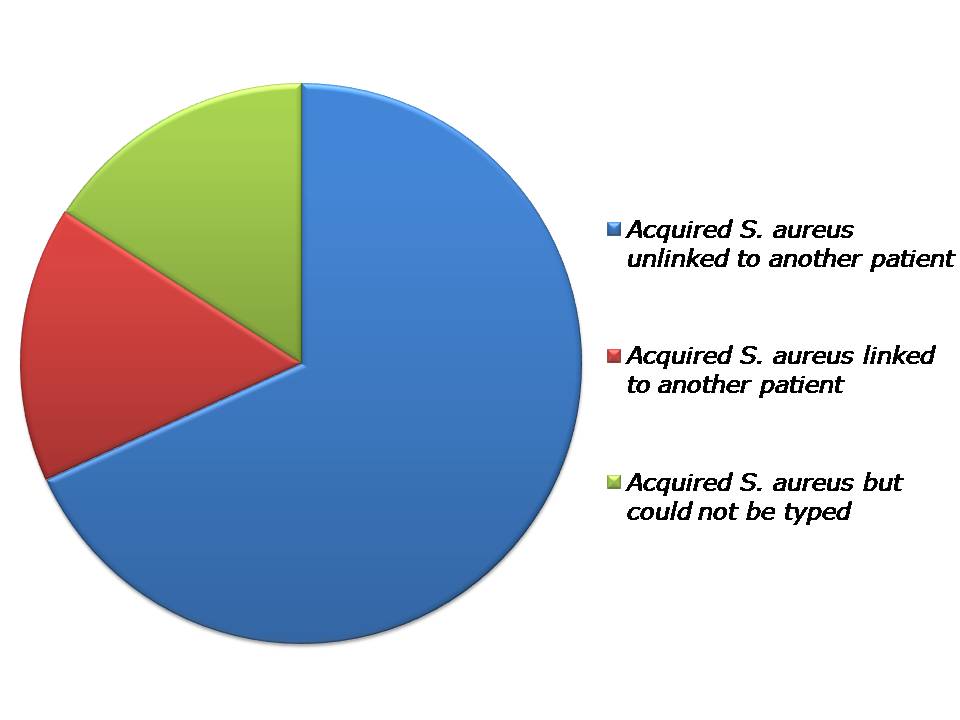
Only 14% (5/36) of the acquisitions available for typing were of the same spa type as another patient on the unit at the same time. All of these were MRSA. WGS discounted three of these apparent occurrences of patient-to-patient transmission, confirmed two and identified a further five (3 MRSA, 2 MSSA). So, in total, 7 / 36 (19%) of acquired isolates (5 MRSA and 2 MSSA) were linked to isolates from other patients (Figure).

Price MRSA WGSFigure: Source of S. aureus acquisitions identified through WGS.

The paper raises some interesting questions:

  • Principally, if almost 80% of patients did not acquire their S. aureus from other patients on the unit, where on earth did they acquire them from? In the C. difficile study, unrecognized importation of diverse strains from the community that would not be detected on admission since admission screening was not performed represents a plausible explanation for the surprisingly low incidence of horizontal transmission from known cases. This is not the case in this study, where all patients were screened on admission for S. aureus. So where were the diverse isolates acquired from? Staff carriers? Contaminated surfaces? S. aureus has the capacity to survive on surfaces for very long periods (more than 1 year), so an ancient environmental reservoir is possible. Furthermore, there was no ‘lead in’ period to the study, so it could be that S. aureus on the unit in the months before the study left an environmental reservoir that led to acquisition in some cases, which would not have been captured by this study. The fact that 4/7 patient-to-patient transmissions acquired the same strain of S. aureus without sharing time on the ICU together supports this, although could also be explained by staff carriers. It was a shame that 16% of the 329 S. aureus isolates (including 16% (7/44) of the acquired isolates) were not available for sequencing, which represents a substantial reservoir from which patient-to-patient transmission likely occurred in some cases.
  • It was interesting that some 20% (9/44) acquisitions that were detected occurred in patients who were already colonized on admission; these would have been missed altogether if molecular typing was not performed. I wonder how much ‘silent’ acquisition of this type occurs?
  • Assuming temporal relationship between strains assumes a constant mutation rate. The ‘speed of the mutation clock’ was assessed in this study through repeated sampling of the same patient. This exercise demonstrated minimal diversity, as was the case for C. difficile.
  • WGS is rapidly becoming the gold standard for transmission mapping. In this study, the conventional approach of evaluating spa typing with overlapping stays lacked both sensitivity and specificity for identifying transmitted isolates.

In summary, the major finding is that only 20% of patients who acquired S. aureus appeared to acquire it through horizontal spread from other patients. The next frontier of transmission mapping must be a more comprehensive evaluation of other potential sources: contaminated surfaces, contaminated air, nurses, doctors, cleaners, tea-tray deliverers and the list goes on…

Article citation: Price JR, Golubchik T, Cole K, Wilson DJ, Crook DW, Thwaites GE, Bowden R, Walker AS, Peto TE, Paul J, Llewelyn MJ. Whole-genome sequencing shows that patient-to-patient transmission rarely accounts for acquisition of Staphylococcus aureus in an intensive care unit. Clin Infect Dis 2014. Jan 9. [Epub ahead of print].