Do you know your CRE from your CRAB?

I gave a talk today at a meeting on combating carbapenem-resistant organisms. My angle was to clearly differentiate the epidemiology of the Enterobacteriaceae (i.e. CRE) from the non-fermenters (most importantly carbapenem-resistant A. baumannii – CRAB), and you can download my slides here.

I’ve blogged before about how confusing the terminology surrounding multidrug-resistant Gram-negative rods has become. Non-expert healthcare workers have little chance in distinguishing CRE from CPE from CRO from CPO. So we need to help them by developing some clear terminology, given the gulf in epidemiology between CRE and CRAB (see below).

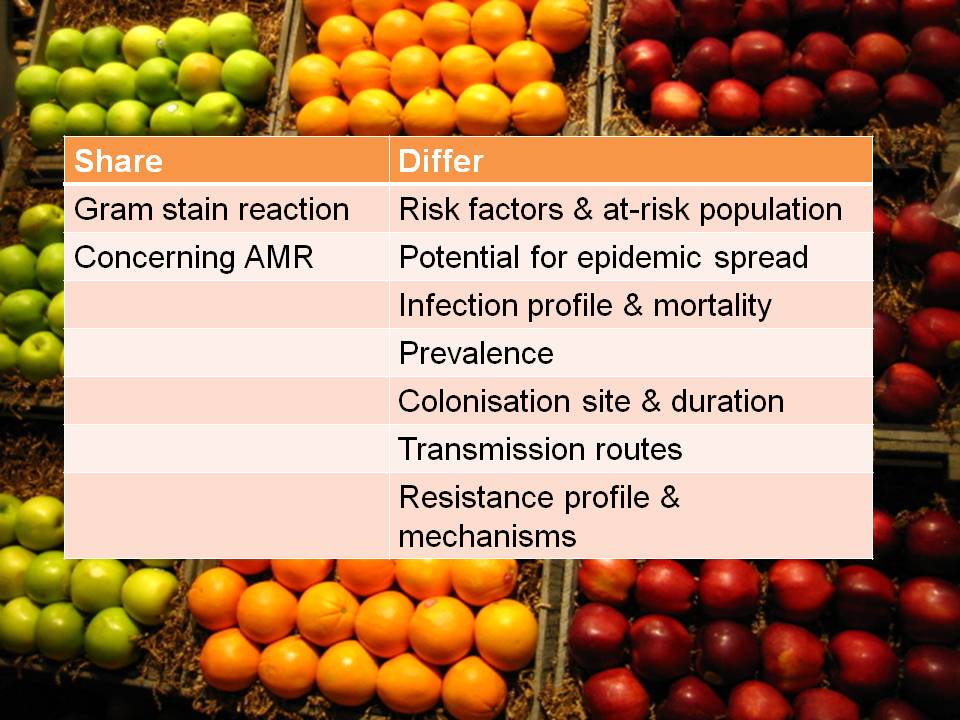
CRE and CRAB are like apples and pears: they share some basic microbiology but that’s about where the comparison ends!CRE CRAB

So, I think we should talk in terms of CRE (and CPE for confirmed carbapenemase carriers), and CRNF (or CRAB for A. baumannii and CRPA for P. aeruginosa). I don’t think that CRO is a useful term – in fact, I find it rather confusing. Carbapenem resistance in Enterobacteriaceae (CRE) and A. baumannii (CRAB) are both emerging problems, but they are not the same problem.

CRE diagnosis: current status

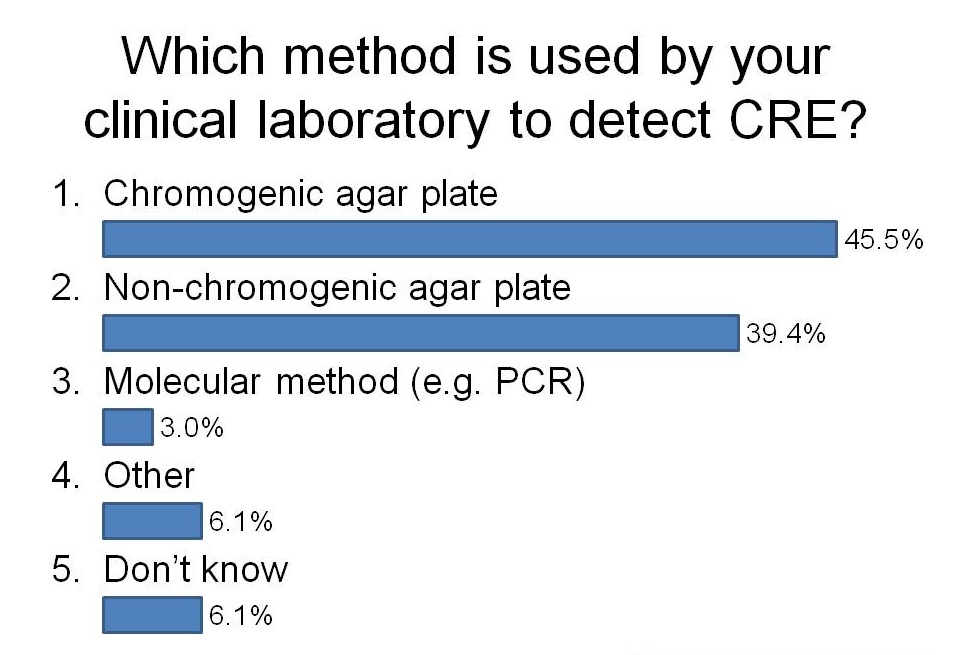
I had the opportunity to ask the audience how they were detecting CRE in their diagnostic clinical labs during a talk last week. It was an audience of around 50 laboratory and clinical folk, mainly from the UK but a few from continental Europe. And here’s what I found:

CRE diagnosis which method

I was a little surprised that more labs have switched to using chromogeneic agar plates than use non-chorogeneic agar plates. In the case of our lab in London, we are currently using non-chromogenic media for clinical samples, but in the process of evaluating chromogenic media. Although the purchase costs of chromogenic media are higher, they are more sensitive and substantially reduce the amount of time required to confirm a negative or positive culture, so I suspect they actually work out cheaper when you factor in labour costs.

I was not surprised that so few labs are using PCR. The costs are considerably higher but turnaround time is faster and they are more sensitive. There are now a number of PCRs on the market for the detect of CRE direct from rectal swabs (e.g. Checkpoints and Cepheid). We are currently in the process of evaluating the Checkpoints assay and after sharing our preliminary data, this was the feeling in the room about using PCR to detect CRE:

CRE diagnosis_PCR

I think I’ll leave it there for now…

Diagnosis of CRE: time to throw away those agar plates?

CRE are an emerging threat to healthcare systems worldwide. Most guidelines recommend screening and isolation of carriers. But relying on conventional agar-based culture presents a dual threat of poor sensitivity (depending on which method is used) and slow turnaround time, with a minimum overnight incubation before a presumptive positive result. PCR solves both of these problems – but at a cost. I gave a talk today at a BD seminar considering whether it’s time to switch to PCR diagnostics for the detection of CRE. You can download my slides here. (The title of the talk “Time to throw away those agar plates” was inspired by a talk by Dr Dan Diekema at a recent SHEA conference.)

There are a number of options for CRE screening, summarized in the flow chart below:

Flow chart: Overview of laboratory methods for the diagnosis of CRE. (To be precise, throughout the blog I really mean CPE most of the time, but I’m using CRE for consistency with other blogs…)CPE diagnosis

Continue reading

Does chlorhexidine bathing work for Gram-negative bacteria?

CHGThe idea of “source control” – using chlorhexidine to reduce the amount of bacteria on a patient’s skin – makes a lot of sense. There’s mounting evidence that chlorhexidine daily bathing works for Gram-positive pathogens, especially in the ICU.1 For example, one of the first thorough studies of chlorhexidine gluconate (CHG) daily bathing showed that the amount of VRE on the skin, in the environment and transmitted to others were all reduced by implementing CHG daily bathing.2 A number of more recent high-quality studies have provided evidence that CHG daily bathing in the ICU setting helps to prevent the transmission of Gram-positive bacteria (see Table below – although note that studies have not been universally positive for CHG).

Table: Studies evaluating the impact of chlorhexidine daily bathing (with or without other interventions) including data on Gram-negative bacteria.

Study Setting Design Intervention Results
Noto 2015 3 ICU Cluster RCT Daily CHG No significant reduction in HCAI (composite measure including CLABSI, CAUTI, VAP and CDI)
Derde 2014 4 ICU Time series analysis Daily CHG plus hand hygiene Reduction in all MDROs and MRSA (but not VRE or ESBLs)
Seyman 2014 5 ICU Before-after Weekly CHG ‘douche’ Reduction in BSI but not CLABSI; slight reduction in Gram-negative BSI (n too small for statistical analysis)
Hayden 2014 6 LTAC Before-after Bundle (including daily CHG) Acquisition of CRE fell from 4 to 2 per 100 patient weeks
Martínez-Reséndez 2014 7 ICU Before-after Daily CHG plus hand hygiene Reductions in all infections, and in A. baumannii VAP rate
Apisarnthanarak 2014 8 ICU Before-after Bundle (including daily CHG) Reductions in a. baumannii infection and colonization
Climo 2013 9 ICU Cluster RCT Daily CHG Reductions in MRSA / VRE acquisition and all BSI; BSI mainly CoNS (no significant reduction in Gram-negative BSI or CLABSI)
Milstone 2013 10 Paed ICU Cluster RCT Daily CHG BSI reduced; mainly CoNS (no significant reduction in Gram-negative BSI or CLABSI)
Munoz-Price 2010 11 LTAC Before-after Bundle (including daily CHG) CRE carriage prevalence fell from 21% to 0%
Evans 2010 12 ICU Before-after Daily CHG Rate of CLABSI reduced; A. baumannii colonisation reduced but not significantly
Popovich 2009 13 ICU Before-after Daily CHG Rate of CLABSI reduced; A. baumannii infection rate reduced but not significantly
Bleasdale 2007 14 ICU Cross-over Daily CHG Number of Gram-negative BSI in each arm too small for analysis
Gould 2007 15 ICU Before-after Daily CHG + mupirocin Number of Gram-negatives too small for analysis
Camus 2005 16 ICU RCT Daily CHG + mupirocin Number of Gram-negative acquisitions similar in intervention vs. control groups

The question of whether CHG is effective for the prevention and control of Gram-negative bacteria is rather more complicated. The main issue is that Gram-negative bacteria are less susceptible to CHG than Gram-positive bacteria.17 In theory, this shouldn’t be a problem because the amount of CHG applied to skin (10,000 mg/L) is much higher than the minimum inhibitory concentration (MIC) of most Gram-negative bacteria.17 However, it’s worth noting that the concentration of CHG measured on the skin of patients being treated with CHG in one study was considerably lower than the amount applied (15-312 mg/L before the daily bath and 78-1250 mg/L after the daily bath).18 Nonetheless, in this same study, CHG was found to be effective in reducing the skin burden of CRE on patients in a long-term acute care hospital (see Figure, below).18 So, should CHG bathing be applied to combat MDR-GNR?

Figure: Impact of chlorhexidine gluconate (CHG) daily bathing on skin colonization with KPC-producing K. pneumoniae in 64 long-term acute care patients (difference is statistically significant, p=0.01).Lin CHG

A number of studies have implemented CHG as part of a bundle of interventions to control various MDR-GNR. For example, a team from Thailand found that an intervention aimed at improving environmental hygiene combined with CHG brought an outbreak of A. baumannii under control.8 The National Institute of Health Clinical Center19 has included CHG bathing as a component of a successful CRE control bundle, and the same goes for long-term acute care hospitals.6,11 Meanwhile, a Dutch study found that implementing CHG bathing combined with improving hand hygiene failed to reduce the acquisition rate of ESBL Enterobacteriaceae.4 A Mexican study implemented CHG bathing combined with improved hand hygiene and reported a significant reduction in VAP due to A. baumannii.7 However, in all of these studies, it is not possible to tell whether it was the CHG or another element of the bundle that made the difference (or not, in the case of the Dutch study).

No study has been designed specifically to evaluate the impact of CHG daily bathing alone on the rate of Gram-negative bacteria infection or colonization, although rate of Gram-negative bacterial infection or colonization has been reported in several studies of CHG. A small number of high-quality studies that have evaluated CHG as a single intervention including randomization have failed to demonstrate a reduction on Gram-negative BSIs and CLABSIs (see the Climo9, Mlistone10 and Camus16 data from the Table above). Also, a non-randomised before-after study in a trauma ICU reported a non-significant reduction in Acinetobacter species colonization.12 Several other studies mention the rate of Gram-negative infection or colonization in passing, but the numbers are too small for meaningful statistical analysis (see Seyman,5 Popovich13, Bleasdale,14 and Gould15). Although these studies do not provide convincing evidence that CHG works for Gram-negative bacteria, it’s important to remember that they were not powered to evaluate the impact of CHG on Gram-negative bacteria.

One final point to consider is the potential for the development of CHG resistance. Units using CHG universally have reported an increase in the presence of bacteria with reduced CHG susceptibility.20-22 However, the actual degree of reduced susceptibility is moderate, meaning that the clinical importance of this reduced susceptibility is debatable. It is true to say, though, that the potential for meaningful reduced susceptibility is greater in Gram-negative bacteria than in Gram-positive bacteria due to their higher baseline MIC and manifold mechanisms of resistance to biocides and antibiotics.17

So, does CHG bathing work for Gram-negative bacteria? Based on current data, we simply don’t know.

References:

  1. Derde LP, Dautzenberg MJ, Bonten MJ. Chlorhexidine body washing to control antimicrobial-resistant bacteria in intensive care units: a systematic review. Intensive Care Med 2012; 38: 931-939.
  2. Vernon MO, Hayden MK, Trick WE et al. Chlorhexidine gluconate to cleanse patients in a medical intensive care unit: the effectiveness of source control to reduce the bioburden of vancomycin-resistant enterococci. Arch Intern Med 2006; 166: 306-312.
  3. Noto MJ, Domenico HJ, Byrne DW et al. Chlorhexidine Bathing and Health Care-Associated Infections: A Randomized Clinical Trial. JAMA 2015 in press.
  4. Derde LP, Cooper BS, Goossens H et al. Interventions to reduce colonisation and transmission of antimicrobial-resistant bacteria in intensive care units: an interrupted time series study and cluster randomised trial. Lancet Infect Dis 2014; 14: 31-39.
  5. Seyman D, Oztoprak N, Berk H, Kizilates F, Emek M. Weekly chlorhexidine douche: does it reduce healthcare-associated bloodstream infections? Scand J Infect Dis 2014; 46: 697-703.
  6. Hayden MK, Lin MY, Lolans K et al. Prevention of Colonization and Infection by Klebsiella pneumoniae Carbapenemase-Producing Enterobacteriaceae in Long Term Acute Care Hospitals. Clin Infect Dis 2014 in press.
  7. Martinez-Resendez MF, Garza-Gonzalez E, Mendoza-Olazaran S et al. Impact of daily chlorhexidine baths and hand hygiene compliance on nosocomial infection rates in critically ill patients. Am J Infect Control 2014; 42: 713-717.
  8. Apisarnthanarak A, Pinitchai U, Warachan B, Warren DK, Khawcharoenporn T, Hayden MK. Effectiveness of infection prevention measures featuring advanced source control and environmental cleaning to limit transmission of extremely-drug resistant Acinetobacter baumannii in a Thai intensive care unit: An analysis before and after extensive flooding. Am J Infect Control 2014; 42: 116-121.
  9. Climo MW, Yokoe DS, Warren DK et al. Effect of daily chlorhexidine bathing on hospital-acquired infection. N Engl J Med 2013; 368: 533-542.
  10. Milstone AM, Elward A, Song X et al. Daily chlorhexidine bathing to reduce bacteraemia in critically ill children: a multicentre, cluster-randomised, crossover trial. Lancet 2013; 381: 1099-1106.
  11. Munoz-Price LS, Hayden MK, Lolans K et al. Successful control of an outbreak of Klebsiella pneumoniae carbapenemase-producing K. pneumoniae at a long-term acute care hospital. Infect Control Hosp Epidemiol 2010; 31: 341-347.
  12. Evans HL, Dellit TH, Chan J, Nathens AB, Maier RV, Cuschieri J. Effect of chlorhexidine whole-body bathing on hospital-acquired infections among trauma patients. Arch Surg 2010; 145: 240-246.
  13. Popovich KJ, Hota B, Hayes R, Weinstein RA, Hayden MK. Effectiveness of routine patient cleansing with chlorhexidine gluconate for infection prevention in the medical intensive care unit. Infect Control Hosp Epidemiol 2009; 30: 959-963.
  14. Bleasdale SC, Trick WE, Gonzalez IM, Lyles RD, Hayden MK, Weinstein RA. Effectiveness of chlorhexidine bathing to reduce catheter-associated bloodstream infections in medical intensive care unit patients. Arch Intern Med 2007; 167: 2073-2079.
  15. Gould IM, MacKenzie FM, MacLennan G, Pacitti D, Watson EJ, Noble DW. Topical antimicrobials in combination with admission screening and barrier precautions to control endemic methicillin-resistant Staphylococcus aureus in an Intensive Care Unit. Int J Antimicrob Agents 2007; 29: 536-543.
  16. Camus C, Bellissant E, Sebille V et al. Prevention of acquired infections in intubated patients with the combination of two decontamination regimens. Crit Care Med 2005; 33: 307-314.
  17. Stickler DJ. Susceptibility of antibiotic-resistant Gram-negative bacteria to biocides: a perspective from the study of catheter biofilms. J Appl Microbiol 2002; 92 Suppl: 163S-170S.
  18. Lin MY, Lolans K, Blom DW et al. The effectiveness of routine daily chlorhexidine gluconate bathing in reducing Klebsiella pneumoniae carbapenemase-producing Enterobacteriaceae skin burden among long-term acute care hospital patients. Infect Control Hosp Epidemiol 2014; 35: 440-442.
  19. Palmore TN, Henderson DK. Managing Transmission of Carbapenem-Resistant Enterobacteriaceae in Healthcare Settings: A View From the Trenches. Clin Infect Dis 2013; 57: 1593-1599.
  20. Horner C, Mawer D, Wilcox M. Reduced susceptibility to chlorhexidine in staphylococci: is it increasing and does it matter? J Antimicrob Chemother 2012; 67: 2547-2559.
  21. Otter JA, Patel A, Cliff PR, Halligan EP, Tosas O, Edgeworth JD. Selection for qacA carriage in CC22 but not CC30 MRSA bloodstream infection isolates during a successful institutional infection control programme. J Antimicrob Chemother 2013; 68: 992-999.
  22. Suwantarat N, Carroll KC, Tekle T et al. High prevalence of reduced chlorhexidine susceptibility in organisms causing central line-associated bloodstream infections. Infect Control Hosp Epidemiol 2014; 35: 1183-1186.

Image: John Loo.

CRE “trafficking” plasmids through hospital surfaces

A team from the NIH Clinical Center in the US present a fascinating study, exploring the transmission of carbapenemase-encoding plasmids in unprecedented detail. The intro does a good job of introducing the ‘triple threat’ from CRE: pan-drug resistance, sharply increasing prevalence, and the potential for the horizontal transfer of carbapenemase genes between Enterobacteriaceae species. They introduce the idea of “plasmid trafficking”, which evokes images of shady bacteria dealing in antibiotic resistance genes (a la the infamous cartoon below):

File written by Adobe Photoshop? 4.0

NIH is a hospital that takes CRE seriously, after being stung by an outbreak in 2011. A quick look at who they screen for CRE illustrates just how seriously they take the threat:

  • ICU / high-risk patients screened twice weekly.
  • All patients screened monthly.
  • Admissions from other hospitals screened for CRE…twice (and given pre-emptive contact precautions until negative cultures are confirmed, for good measure).

They also performed some environmental sampling and recovered several CRE from the hospital environment. This will surprise some, but Enterobacteriaceae do have the potential to survive on surfaces for longer than you may expect.

Surveillance cultures identified 10 patients with KPC-producing Enterobacteriaceae and environmental surveillance identified 6 KPC-producing Enterobacteriaceae. They combined these with several historic isolates from the 2011 outbreak, and a couple of imported isolates to give a sample size of 20 isolates. They wanted to dig deeper into these isolates to explore whether or not they shared any plasmids. And here’s where it gets rather complicated. Conventional whole genome sequencing produces many short reads (100-500 bp) but these cannot distinguish between plasmids and chromosome-encoded genes. Therefore, the authors used a technique called single-molecule, real-time (SMRT) to generate longer reads (around 1000 bp) that make it possible to distinguish between plasmids and chromosome-encoded genes. [I know that I’ve over-simplified this clever genomics massively – but I’ll quickly get out of my depth otherwise!]

The report presents a picture of rare patient-to-patient nosocomial transmission (only 1 of 10 patients were thought to be in-hospital acquisitions), continual importation of diverse CRE, and a complex network of even more diverse plasmids. To illustrate the diversity, one strain of CRE contained no fewer than three distinct KPC-encoding plasmids!

The authors find some evidence of environmental spread of carbapenemase-encoding plasmids, with the carbapenemase-encoding plasmid from a patient matching plasmids recovered from different species of Enterobacteriaceae found in the patient’s environment. What the authors did not demonstrate is transmission of carbapenemase-encoding plasmids from the environment to patients – but I wouldn’t want to be admitted to a room with CRE lurking in the hospital environment!

There’s quite a bit of science around the horizontal transmission of plasmids within biofilms. Combine this with the recent finding of biofilms on dry hospital surfaces, and you have a concerning new angle on how CRE may be transmitted in hospitals.

Image credit. Nick Kim, with permission.

Article citation: Conlan S, Thomas PJ, Deming C et al. Single-molecule sequencing to track plasmid diversity of hospital-associated carbapenemase-producing Enterobacteriaceae. Sci Transl Med 2014; 6: 254ra126.

We need new antibiotics for Gram-negative, not Gram-positive bacteria

gram stain pos and neg

The threat from antibiotic resistance is more pink than purple. You probably need to be a microbiologist to get this: Gram-positive bacteria (such as MRSA and C. difficile) stain purple in the Gram stain, whereas Gram-negative bacteria (such as Klebsiella pneumoniae and Acinetobacter baumannii*) stain pink. All of the international concern surrounding antibiotic resistance from the WHO, CDC, PHE and others have focused our mind on one threat in particular: carbapenem-resistant Enterobacteriaceae (CRE). The Enterobacteriaceae family of bacteria are all Gram-negative, so we need to focus our drug discovery towards the Gram-negatives rather than the Gram-positives.

I blogged last week on the fanfare surrounding the discovery of Teixobactin. Whilst it looks promising, it’s still a long way from the pharmacy shelves, is most certainly not “resistance-proof” and, most importantly, only active against Gram-positive bacteria. I’ve received some useful comments in response to the blog pointing me in the direction of another novel antibiotic, Brilacidin.

Brilacidin is a novel antibiotic class that is in many ways more promising than Teixobactin, not least due to its activity against both Gram-positive and Gram-negative bacteria. Furthermore, it’s much closer to the pharmacy shelves, having undergone promising Phase 2b clinical trials (showing broadly comparable efficacy to daptomycin for the treatment of acute bacterial skin and skin structure infections).

Brilacidin is not without its problems though. Firstly, it is not active against A. baumannii. This is important, since multidrug-resistant – especially carbapenem-resistant – A. baumannii is a serious problem in ICUs around the world. Secondly, although the antibiotic is truly novel (working on the principle of ‘defensin-mimetics’), manufacturer claims that resistance is ‘unlikely’ are as fanciful as the “resistance-proof” claims associated with Teixobactin. Every class of antibiotics was novel once. And resistance has developed to them all!

There are some other emerging options for the antimicrobial therapy of multidrug-resistant Gram-negative bacteria. A number of beta-lactamase inhibitors combined with existing antibiotics are currently at various phases of the clinical trials process (for example, avibactam and MK-7655). Again though, although promising, beta-lactamase inhibitors have limitations, the most important being their specificity. For example, these inhibitors are effective against only some beta-lactamases (and have a blind spot for the metallo beta-lactamases such as NDM-1).

So, there is no silver bullet coming through the pipeline. And there will be no silver bullet. However clever we are in discovering or designing new antibiotics, some bacteria will always find a way to become resistant. It would be naive to think otherwise. Drug discovery is one part of our response to the rising threat of antibiotic resistance, but we ultimately need to focus on prevention over cure.

* Actually, A. baumannii is a bit “Gram-variable” so is somewhat pinky-purpley – but let’s not get too hung up on that. 

Image credit and caption: Marc Perkins. ‘Gram stain demonstration slide. A slide demonstrating the gram stain. On the slide are two species of bacteria, one of which is a gram positive coccus (Staphylococcus aureus, stained dark purple) and the other a gram-negative bacillus (Escherichia coli, stained pink). Seen at approximately 1,000x magnification.’

Who's harbouring CRE?

carbapenemase

Many of us are in the process of developing policies of who to screen for CRE carriage. I’ve recently reviewed the literature for studies of CRE carriage (Table, summarising studies evaluating faecal carriage rate of CRE, below).

Author Year Location Setting n patients n carriers % carriers
Adler1 2015 Israel CRE carriage in post-acute hospitals, 2008 1147 184 16.0
CRE carriage in post-acute hospitals, 2013 1287 127 9.9
Mack 2014 London ‘High-risk’ inpatients and admissions. 2077 7 0.3
Rai2 2014 East Delhi, India Outpatients 242 24 9.9
Zhao3 2014 Fujian, China Stool samples from hospitalized patients 303 20 6.6
Birgand4 2014 Paris, France Patients repatriated or recently hospitalized in a foreign country 132 9 6.8
Kim5 2014 Seoul, Korea ICU admissions 347 1 0.3
Girlich6 2014 Morocco Hospitalized patients 77 10 13.0
Lin7 2013 Chicago, USA Long term acute care hospitals 391 119 30.4
Short stay hospital ICU 910 30 3.3
Villar8 2013 Buenos Aires, Argentina Non-hospitalized individuals 164 8 4.9
Kothari9 2013 New Delhi, India. Healthy neonates 75 1 1.3
Day10 2013 Pakistan Patients attending a military hospital 175 32 18.3
Swaminathan11 2013 New York All admissions to 7 units, including ICU, of 2 hospitals 5676 306 5.4
Nüesch-Inderbinen12 2013 Zurich, Switzerland Healthy community residents and outpatients 605 0 0.0
Armand-Lefèvre13 2013 Paris, France ICU patients 50 6 12.0
Wiener-Well14 2010 Jerusalem, Israel Hospitalized patients 298 16 5.4
The most important question to consider when reviewing these data are whether these are CRE or CPE? The rate of carriage of Enterobacteriaceae that are resistant to some carbapenemens by mechanisms that don’t involve carbapenemase will be higher than CPE. Some studies did not report whether they checked for carbapenemase production, and those that did reported a much lower rate of CPE. For example, Armand-Lefèvre et al.13 reported a 12% carriage rate of imipemen-resistant (i.e. carbapenem-resistant) Enterobacteriaceae in ICU patients but none of these carried a carbapenemase.A number of studies report shockingly high rates of carriage. A point-prevalence study of long-term acute care hospitals in Chicago found that 30% of patients carried CRE.7 High rates of carriage were also found in long-term acute care hospitals in Israel, but a national intervention reduced the rate of carriage from 16% in 2008 to 10% in 2013.1 Perhaps even more concerning are signs that there is a substantial community burden of carriage in the Indian Subcontinent. For example, 18% of patients attending a military hospital in Pakistan carried NDM-1 producing Enterobacteriaceae,10 and 10% of Enterobacteriaceae in stool specimens from 123 outpatients in East Delhi produced a carbapenemase.2

In contrast, most studies from Europe report very low rates of carriage, particular in community residents. For example, a Swiss study failed to identify a single carbapenemase producer in a sample of 605 community residents and outpatients.12 Similarly, data published from the Royal Free in London found that only 0.3% of 2077 ‘high-risk’ patients carried CRE.

So, where does this leave us in developing our CRE screening policies? These data mean that your approach will depend where you are. If you are in the middle of New Delhi, then your approach will be different to those of us in London. It seems that CRE is currently rare in most parts of Europe but the surprisingly high CRE carriage rates in some parts of the US are particularly troubling, and should serve to keep us all on our toes.

Image: ‘OXA-48 like carbapenemase.’

References

  1. Adler A, Hussein O, Ben-David D et al. Persistence of Klebsiella pneumoniae ST258 as the predominant clone of carbapenemase-producing Enterobacteriaceae in post-acute-care hospitals in Israel, 2008-13. J Antimicrob Chemother 2015; 70: 89-92.
  2. Rai S, Das D, Niranjan DK, Singh NP, Kaur IR. Carriage prevalence of carbapenem-resistant Enterobacteriaceae in stool samples: A surveillance study. Australas Med J 2014; 7: 64-67.
  3. Zhao ZC, Xu XH, Liu MB, Wu J, Lin J, Li B. Fecal carriage of carbapenem-resistant Enterobacteriaceae in a Chinese university hospital. Am J Infect Control 2014; 42: e61-64.
  4. Birgand G, Armand-Lefevre L, Lepainteur M et al. Introduction of highly resistant bacteria into a hospital via patients repatriated or recently hospitalized in a foreign country. Clin Microbiol Infect 2014; 20: O887-890.
  5. Kim J, Lee JY, Kim SI et al. Rates of fecal transmission of extended-spectrum beta-lactamase-producing and carbapenem-resistant Enterobacteriaceae among patients in intensive care units in Korea. Ann Lab Med 2014; 34: 20-25.
  6. Girlich D, Bouihat N, Poirel L, Benouda A, Nordmann P. High rate of faecal carriage of extended-spectrum beta-lactamase and OXA-48 carbapenemase-producing Enterobacteriaceae at a university hospital in Morocco. Clin Microbiol Infect 2014; 20: 350-354.
  7. Lin MY, Lyles-Banks RD, Lolans K et al. The importance of long-term acute care hospitals in the regional epidemiology of Klebsiella pneumoniae carbapenemase-producing Enterobacteriaceae. Clin Infect Dis 2013; 57: 1246-1252.
  8. Villar HE, Baserni MN, Jugo MB. Faecal carriage of ESBL-producing Enterobacteriaceae and carbapenem-resistant Gram-negative bacilli in community settings. J Infect Dev Ctries 2013; 7: 630-634.
  9. Kothari C, Gaind R, Singh LC et al. Community acquisition of beta-lactamase producing Enterobacteriaceae in neonatal gut. BMC Microbiol 2013; 13: 136.
  10. Day KM, Ali S, Mirza IA et al. Prevalence and molecular characterization of Enterobacteriaceae producing NDM-1 carbapenemase at a military hospital in Pakistan and evaluation of two chromogenic media. Diagn Microbiol Infect Dis 2013; 75: 187-191.
  11. Swaminathan M, Sharma S, Poliansky Blash S et al. Prevalence and risk factors for acquisition of carbapenem-resistant Enterobacteriaceae in the setting of endemicity. Infect Control Hosp Epidemiol 2013; 34: 809-817.
  12. Nuesch-Inderbinen M, Zurfluh K, Hachler H, Stephan R. No evidence so far for the dissemination of carbapenemase-producing Enterobactericeae in the community in Switzerland. Antimicrob Resist Infect Control 2013; 2: 23.
  13. Armand-Lefevre L, Angebault C, Barbier F et al. Emergence of imipenem-resistant gram-negative bacilli in intestinal flora of intensive care patients. Antimicrob Agents Chemother 2013; 57: 1488-1495.
  14. Wiener-Well Y, Rudensky B, Yinnon AM et al. Carriage rate of carbapenem-resistant Klebsiella pneumoniae in hospitalised patients during a national outbreak. J Hosp Infect 2010; 74: 344-349.

Filling the gaps in the guidelines to control resistant Gram-negative bacteria

I gave the third and final installment of a 3-part webinar series on multidrug-resistant Gram-negative rods for 3M recently. You can download my slides here, and access the recording here.

During the webinar, I provided an overview of the available guidelines to control CRE and other resistant Gram-negative bacteria. I then identified gaps in the guidelines, in terms of definitions of standard precautions, outbreak epidemiology and who should be on the guidelines writing dream team. Finally, I discussed some controversial areas in terms of effective interventions: patient isolation, staff cohorting and selective digestive decontamination.

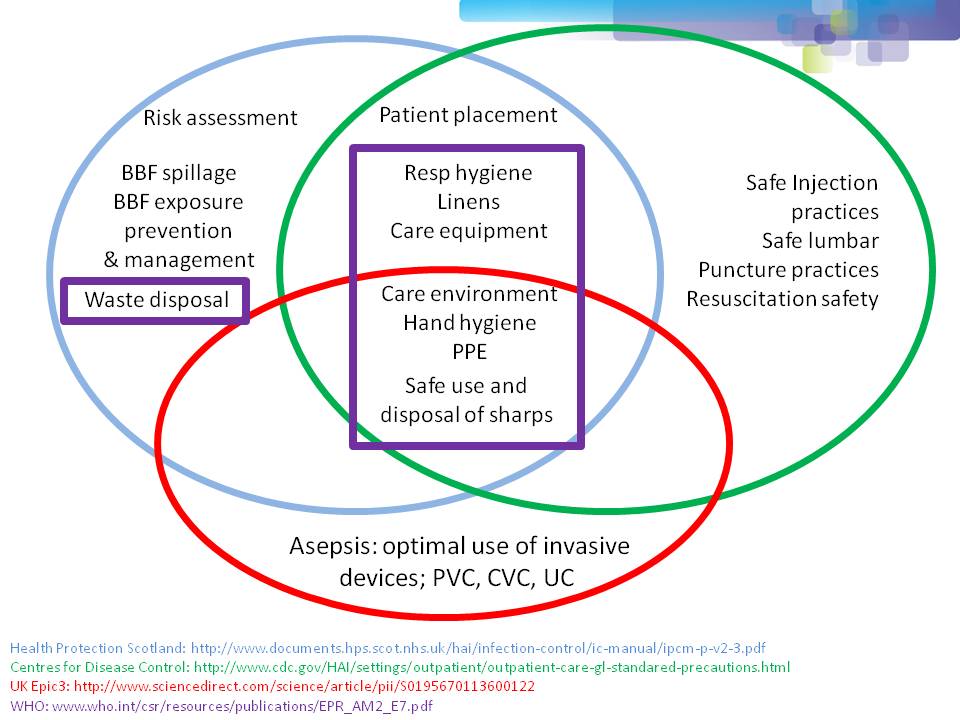
One of the most important points when considering infection prevention and control guidelines is the issue of ‘standard precautions’. What do we apply to every patient, every time? As you can see from Figure 1 below, ‘standard precautions’ is far from standardized. This is problematic when developing and implementing prevention and control guidelines.

Figure 1: differences in the definition of ‘standard precautions’.

filling gaps std precautions

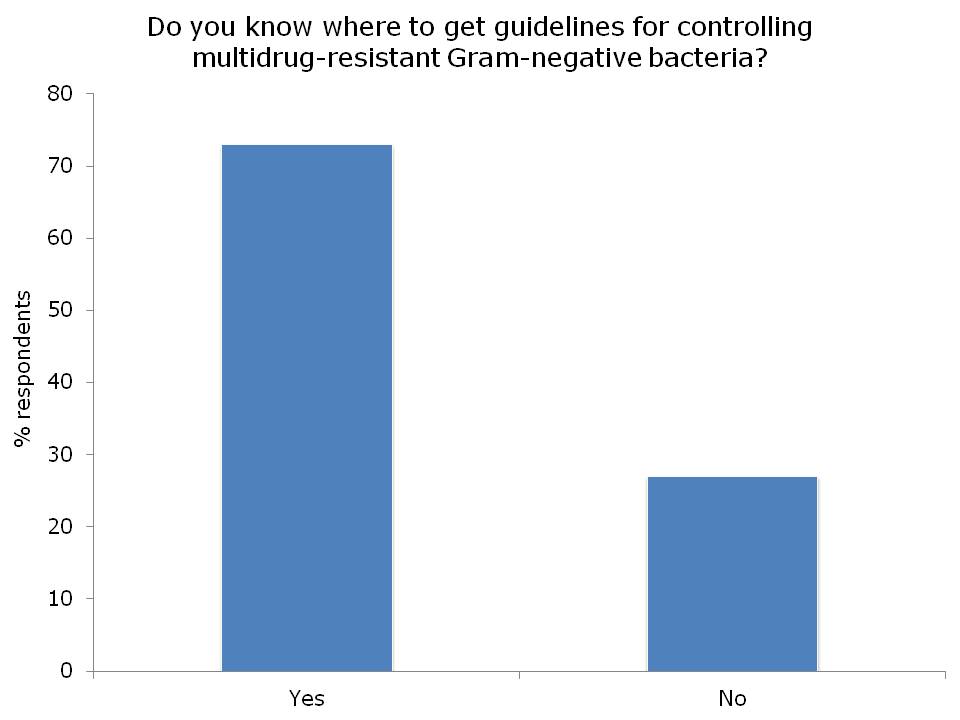
I had the opportunity to ask the webinar audience a few questions throughout the webinar, which are outlined in Figure 2.

Figure 2: response to the questions from the 120 or so participants.

filling the gaps1 filling the gaps2 filling the gaps3

I was somewhat concerned but not that surprised that more than a quarter of the audience did not know where to access control guidelines for MDR-GNR. I suppose this means that we need to do a better job of signposting the location of the various guidelines available. Here’s a non-exhaustive list for starters:

There was a fairly even split between active and passive surveillance to detect outbreaks. The problem with relying on passive surveillance (i.e. clinical cultures) is that there’s a good chance that the ‘horse will have bolted’, and you have a large outbreak on your hands, before a problem is detected. For this reason, I favour active surveillance.

But who to screen? In the case of CRE, I was pleased to see that virtually nobody said nobody. There was a pretty even split between everybody, high-risk individuals or all individuals in high-risk specialties. Accurately identifying individuals who meet screening triggers is operationally challenging, as outlined by the “backlash” to the UK toolkit, so I think screening all patients in high-risk specialties (e.g. ICU) makes most sense.

So, what works to control MDR-GNR transmission? We don’t really know, so are left with a “kitchen sink” (aka bundle approach) (more on this in my recent talk at HIS). We need higher quality studies providing some evidence as to what actually works to control MDR-GNR. Until then, we need to apply a healthy dose of pragmatism!

Carbapenem-resistant Enterobacteriaceae (CRE): so what should an infection prevention and control team do now?

kleb pneumoGuest blogger Dr Evonne Curran (bio below) writes…

Jon asked me to write on his blog about our column (‘#15: Carbapenemase-producing Enterobacteriaceae’). As he kindly accepted my offer to co-write a column, I accept his to write this blog. I am calling this blog (which contains only my personal views): ‘Carbapenem-resistant Enterobacteriaceae (CRE): so what should an infection prevention and control team do now?’.

The problems with CRE are numerous, and the different actions needed to control or at least delay its endemnicity are likewise legion; the task can seem insurmountable. The approach being taken at national and international level covers much of what is needed. The question for individual infection prevention and control teams (IPCTs) is this: where do you begin to protect a healthcare system that has little capacity (and in some cases little will) to start to solve a problem that essentially has yet to arrive, that has at least 6 names (none of which can be spelt with confidence) and is absent from the CEO’s performance monitoring agenda? The additional challenge for IPCTs is this: it will be difficult for those working in clinical areas to believe that for all the improvement in infection prevention and control that reduced MRSA and C. difficile, still more is required for this new microbiological-kid on the block.

If I were still part of a hospital based IPCT this is where I would start…..

  1. Give it a name and stick to it in all correspondence / education / awareness sessions;
  2. Succinctly provide the reasons as to why this should be on everyone’s radar;
  3. Take a high-reliability approach to strengthening your healthcare system;
  4. Involve patient advocates.

1)      Give it a name and stick to it…

As mentioned in the column (and many times by Jon) there needs to be a name that we can a) all agree on and b) conveys to non-microbiology people the problem and its seriousness. We have to stop fighting about what it is: CPE, CRO, CPE etc, etc.  I don’t know who is on (or how you get on) the micro-organism naming committee, but I am beginning to think they need to make it more democratic and involve people who don’t understand microbiology. There is no perfect name that will keep all microbiologists happy, so let’s stop trying to find one. It’s important that IPCTs have a short name that denotes this big problem and makes this consistent in all documentation. (See this previous blog by Jon for more info on nomenclature surrounding this issue.)

2)      Succinctly provide the reasons as to why this should be on everyone’s radar

I offer the following as a succinct summary for why this should be on everyone’s radar:

  • These resistant organisms inactivate commonly used antibiotics. For any infected patient there are Few Treatment Options and there will eventually be No Treatment Options.
  • They are spread Person to Person by touch, splash or contaminated equipment / environments.
  • The resistance mechanisms are spread between different species of bacteria.
  • They are difficult to detect when people are screened.
  • They cause outbreaks, which are also difficult to detect and very costly to manage.
  • Spread across the world makes at least some transmission here inevitable.

3)      Take a ‘high-reliability’ approach to the problem in your area…

I am not going to regurgitate what is in existing guidelines but offer some high-reliability characteristics.

Sensitivity to operations: Given your patient/client population, consider how and why your healthcare system is vulnerable; share this information within your organisation.

Deference to expertise: Identify who you would go to for expert advice within and outwith your organisation should an incident arise. Keep contact details accessible.

Preoccupation with failure: Consider in which clinical areas you most likely to have an outbreak – visit these clinical areas and see if there can be changes to ways of working that would make outbreaks less likely.

Reluctance to simplify: Look for and don’t dismiss alert signals – this could be data that suggests you may have cases, cross-transmission, that you are insufficiently looking for possible cases or that your antibiotic prescribing data could make your healthcare system more vulnerable.

Commitment to resilience: Good as you and your team are – consider how you can make your systems better at preparedness, prevention and management of outbreaks.

High-reliability theory provides a framework to achieve mindfulness. Google ‘High-Reliability Theory’ and ‘Weick’ for some very useful information.

4)      Involve patient advocates

Patient advocates only really knew about MRSA and Clostridium difficile infection when the media told them. Letting patient advocates know that your team is alert to this emerging threat and that you are taking actions to prevent outbreaks may help. They can also lobby for leaders to take further action if required.

Here ends my first blog! Happy I think to receive comment, suggestions or improvements. Thanks for reading. Of note: Outbreak column 17 is on Cognitive Errors in Outbreak Prevention, Preparedness and Management.

Dr Evonne Curran bio:

curran cropped

Evonne is a practicing infection control nurse (since 1987) and a Doctor of Nursing (since 2010). She is the editor of the Outbreak column in the Journal of Infection Prevention (since 2011).
A postcard from Portugal: “Some days we don’t have any needles on the ICU”

portugal stamp

Most of us know that Portugal is facing a dual threat: high rates of antibiotic-resistant bacteria and financial difficulties. This results in a vicious cycle: there’s no money to address antibiotic resistance, so transmission continues unabated and the antibiotic resistance problem gets worse. You can understand the dilemma from the hospital administrators’ viewpoint: I met an intensivist who confessed that “some days we don’t have any needles”. In this situation, is it better to buy some needles or invest in another infection preventionist?

I recently attended a national infection control meeting in Portugal, where I participated in a forum on “International experiences with HCAI”. You can download my slides here.

MRSA first emerged as a problem in the 1980s in Europe. It became a major problem in many European countries in the 1990s and 2000s so that recent data from ECDC shows high rates of meticillin resistance in S. aureus invasive isolates, especially in some southern European countries; the contrast between the rate of MRSA in the UK and Portugal is stark. In the early 2000s, the rate of MRSA was higher in the UK than in Portugal whereas now, it is much lower in the UK (Figure 1).

Figure 1: Rates of meticillin-resistance in invasive S. aureus in the UK and Portugal. Data from EARS-Net.mrsa uk vs portugal earsnet

Greece, Italy and Portugal are especially affected, with 25 to >50% of invasive S. aureus isolates resistant to methicillin. In the UK, a national strategy has yielded a dramatic reduction in the number of MRSA bloodstream isolates reported to the government in a mandatory reporting scheme (Figure 2).

Figure 2: Dramatic reductions in MRSA bacteraemia in England. But what has made the difference? mrsa bacteraemia whats made the differecnce

Since the national intervention in England was multifactorial, it is not clear what made the most impact, and it seems likely that more than one intervention contributed to the decline. Interventions included increased attention to intravenous line care, cleaning and disinfection of the environment, improved diagnostics (including the introduction of chromeagar and rapid PCR) and a national hand hygiene campaign. Perhaps the single most important intervention was the introduction of MRSA reduction targets, which were very controversial at the time, but put the issue of MRSA higher on the priority list for the hospital administration.

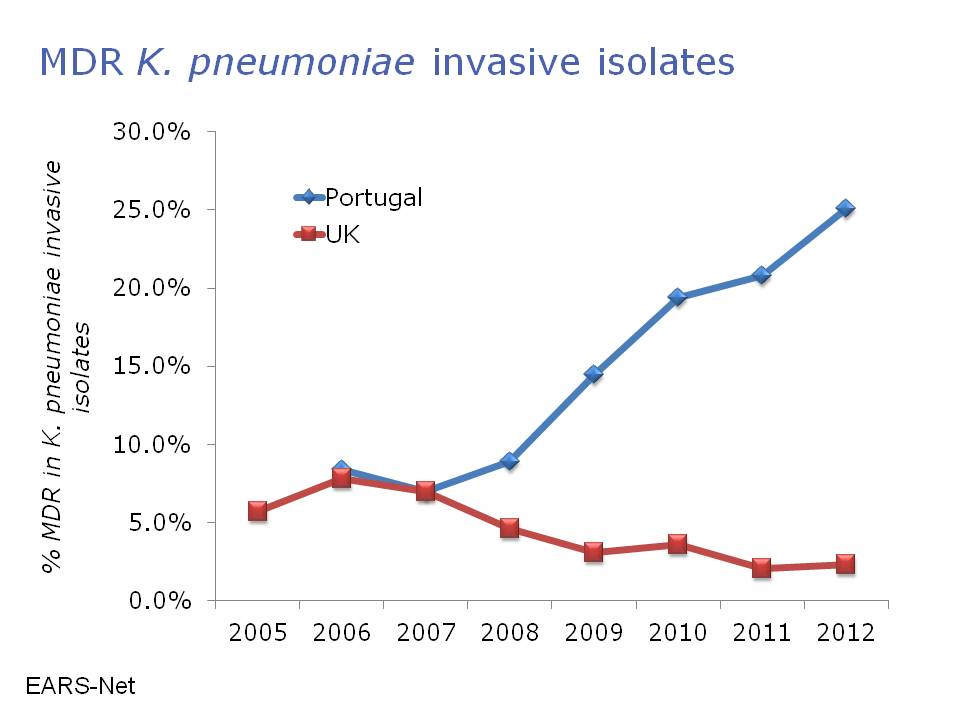
And this issue is not restricted to MRSA. In fact, the threat of the resistant Gram-negatives is even greater than MRSA in many ways. Carbapenem-resistant Enterobacteriaceae are rare currently in Portugal, accounting for 1-5% of invasive K. pneumoniae isolates. However, you get the feeling that it’s only a matter of time: carbapenem-resistant Acinetobacter baumannii are now endemic on many Portugese ICUs, and carbapenem use in Portugal is some of the highest in Europe, with >45% of patients on an antibiotic and >5% of patients on a carbapenem according to the ECDC point prevalence survey. Indeed, there has been a disturbing increase in multidrug-resistant K. pneumoniae in Portugal in recent years (Figure 3).

Figure 3: Disturbing emergence of multidrug-resistant Klebsiella pneumoniae in Portugal. Data from EARS-Net.

mdr kleb uk vs portugal ears net

The reason for these differences between the UK and Portugal is not clear, but may include infection control staffing, antibiotic usage and lower prioritisation by hospitals. Some progress is being made in Portugal with the recent launch of a national strategy to control healthcare-associated infection. However, the financial climate and somewhat fragmented healthcare system (compared with the NHS) will make implementation challenging. But at least it’s a start.

Image: Portugal stamp.