Community MRSA preys on the poor and deprived

deprivation mrsa

As you can probably tell from the title, this post comes with a warning: it presents some rather “un-PC” data, but I’ll do my best to deliver it calmly and dispassionately! My old research team from KCL have just published a paper in PLOS Medicine on the association between social and material deprivation, and MRSA.

I’ve been interested in the dynamic between hospital-associated (HA) and community-associated (CA) MRSA for years (not least because it was the subject of my PhD thesis). I wrote a review several years ago on how community MRSA should be seen as a genotypic phenomenon with epidemiological implications. Using this framework, it is possible to get your head around CA strains of MRSA beginning to cause hospital-acquired infections. The aim of this study was to use a large collection of MRSA from across several regions of London to explore the transmission dynamics and epidemiological associations of HA and CA types of MRSA.

Continue reading

Norovirus: to close or not to close?

Noroviruses belong to the genus norovirus and the family caliciv

The Journal of Infectious Diseases has just published a special issue on norovirus, which is well worth reading. When norovirus strikes, there is an inclination to close the ward to new admissions at the earliest available opportunity in order to protect incoming patients. But when should the ward closure trigger be pulled? Not at all, as recommended by latest UK guidelines (risking continuation of the outbreak, fed by a steady stream of new victims…I mean admissions), when you get a single case of vomiting or diarrhoea (lots of unnecessary ward closure) or only when you have a lab confirmed outbreak on your hands (by which time the horse has already bolted and galloped through your hospital). The special issue included a useful modelling study providing some idea of the impact of various approaches to ward closure in response to noro outbreaks.

Continue reading

Which is more important? Antibiotic resistance or pyelonephritis?

200 mg generic Ibuprofen from Safeway grocery store.

As we move inexorably towards the end of antibiotics, antibiotic-sparing approaches to the management of infectious diseases become more and more attractive. A study published recently in the BMJ compared the ‘symptomatic’ treatment of uncomplicated UTI in women in the community using ibuprofen with antibiotic treatment using fosfomycin.

Continue reading

MERS joins the more-environmental-than-you-may-think club

mers

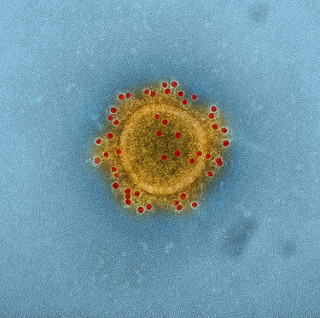
I blogged about a review of the surprising ability of some respiratory viruses (especially SARS-CoV and Influenza virus) to survive on dry surfaces last year. In the review, I predicted that MERS-Cov would also share the same ability to survive on dry surfaces as SARS-CoV – so I was interested to see a recent article in CID demonstrating that MERS is indeed more environmental than you may think.

Continue reading

The 12 Days of Infection Prevention and Control

outbreak phylogenetic tree

You have to sing this. Out loud. Loud.


On the twelth day of Christmas my true love sent to me:

Twelve bowels running

Eleven lines infecting

Ten kids a whooping

Nine hand hygiene dancers

Eight babes a milking

Seven stools a swimming

Six geese a sneezing

No g-o-l-d rings*

Four oozing wounds

Three copper pens

Two sterile golves

And – an – outbreak – in – a – phylogenetic – tree.


* Plain metal bands allowed.


This blog is inspired by a tweet from @IPS_Infection:

Image: HMS Beagle Blog (awaiting permission).

Surface contamination and respiratory viruses with pandemic potential (SARS, MERS and influenza): an underestimated reservoir?

Droplet airborne direct and indirect contact figure_final

Most virologists would probably tell you that enveloped viruses are generally pretty fragile outside of their host and so wouldn’t survive for long on dry surfaces. They may well say “If you were talking about a non-enveloped virus (like norovirus) then, yes, it would probably survive on surfaces for quite a while. But enveloped viruses, no – you’d be lucky if it survived for more than a few hours.” But when I looked at the literature to investigate the potential for dry surface-mediated transmission of respiratory viruses with pandemic potential (SARS, MERS and influenza), the picture that emerged was quite different. These respiratory viruses can survive on dry surfaces for ages, and the contaminated environment may well be an underestimated reservoir for their transmission. This is summarised in a review published recently in the Journal of Hospital Infection.

Continue reading

Could phages pre-programed for a “surgical strike” against antibiotic resistant bacteria be the ultimate microbiome-sparing surface disinfectant or skin sanitiser?

phage

It is becoming increasingly clear that a happy, healthy microbiome is fundamentally important to human health. Perturbation of the microbiome – especially in the gut – is responsible for C. difficile infection and probably many other diseases directly and indirectly linked to the gut. This has led to a move towards microbiome-sparing approaches to therapy. Faecal microbiota transplantation is one such approach, which happens to be spectacularly effective for treating recurrent CDI and may also be useful for decolonising carriers of resistant Gram-negative bacteria. A related approach is using a ‘competitive exclusion’ to reduce the level of contamination of hospital surface with hospital pathogens by seeding the surfaces with live Bacillus sp. spores. But wouldn’t it be great if there was a way to specifically target antibiotic-resistant bacteria and leave yourself with an antibiotic-susceptible population?

Continue reading

Can a wound dressing colour change indicate infection?

wound  dressing

For many years, diagnostic labs have used colour change as a marker for the growth of specific microbes. Think of all those chromogeneic agar plates that your lab goes through each day. And there are all sorts of broths that change colour in response to specific chemical changes caused by microbial growth. One of the first projects I was ever involved with was environmental sampling for MRSA at Lewisham hospital, where we used a selective broth that turned bright yellow when MRSA was present. So in a way, it is surprising that this approach has not been adopted as a marker to indicate wound infection.

Scientists at Bath Uni have developed a neat novel wound dressing that fluoresces when the early signs of an infection are present. The concept is simple: a gel containing tiny sacs of dye are included in a hydrogel dressing; if cytotoxins that are indicative of bacterial infection are present, they lyse the sacs and release the dye, which fluoresces under UV light.

Continue reading

Transmissible colistin resistance – made in China

colistin made in china

The emergence of CPE (and carbapenem-resistance in other Gram-negative bacteria) has forced us to reach to the dusty old antibiotic shelf to revive the clinical use of older agents with activity against Gram-negative bacteria, principally colistin. Colistin isn’t perfect by any means – it has poor tissue penetration compared with the carbapenems, and is associated with nephrotoxicity (although the high levels of nephrotoxicity in the older medical literature has not been reported due to better management of the drug). Furthermore, resistance has already been reported. To date – this has been mutational resistance, which does not have the capacity to spread horizontally. It was only a matter of time before a colistin resistance gene mobilised.

Continue reading