Crapsules part 2

How do you like your crap? Fresh or frozen?

Schermafbeelding 2016-01-19 om 22.44.47Since Jon’s post on crapsules is one of the most favorite on the blog, I assumed that many of you might enjoy a sequel.

Clostridium difficile infections (CDI), most certainly after the emergence of hypervirulent strains at the beginning of this millennium, have become a major cause of morbidity and mortality in hospital and (to a lesser degree) community patients. One in four patients will suffer from recurrent CDI and treatment options are limited. Consequently, fecal microbiota transplantation (FMT) has become a valuable alternative, but is not readily available. Using frozen FMT would make the logistics far easier and finally something frozen seems to be as good as fresh, according to this JAMA study!

Which is more important? Antibiotic resistance or pyelonephritis?

200 mg generic Ibuprofen from Safeway grocery store.

As we move inexorably towards the end of antibiotics, antibiotic-sparing approaches to the management of infectious diseases become more and more attractive. A study published recently in the BMJ compared the ‘symptomatic’ treatment of uncomplicated UTI in women in the community using ibuprofen with antibiotic treatment using fosfomycin.

Continue reading

Review of infectious disease blogs: survey

blog

A guest post by Imperial College London researchers Rachael Troughton and Dr Gabriel Birgand (bios below):

Blogs have become integral part of academic life for many in the field of infectious diseases. A happy medium between Twitter and an academic journal, they allow fast and easy communication on a global scale between peers and across disciplines. But who are the bloggers behind the blogs? And who reads them?

Continue reading

MERS joins the more-environmental-than-you-may-think club

mers

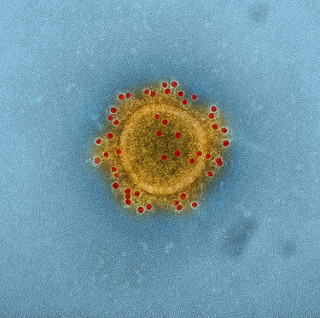
I blogged about a review of the surprising ability of some respiratory viruses (especially SARS-CoV and Influenza virus) to survive on dry surfaces last year. In the review, I predicted that MERS-Cov would also share the same ability to survive on dry surfaces as SARS-CoV – so I was interested to see a recent article in CID demonstrating that MERS is indeed more environmental than you may think.

Continue reading

The 12 Days of Infection Prevention and Control

outbreak phylogenetic tree

You have to sing this. Out loud. Loud.


On the twelth day of Christmas my true love sent to me:

Twelve bowels running

Eleven lines infecting

Ten kids a whooping

Nine hand hygiene dancers

Eight babes a milking

Seven stools a swimming

Six geese a sneezing

No g-o-l-d rings*

Four oozing wounds

Three copper pens

Two sterile golves

And – an – outbreak – in – a – phylogenetic – tree.


* Plain metal bands allowed.


This blog is inspired by a tweet from @IPS_Infection:

Image: HMS Beagle Blog (awaiting permission).

Surface contamination and respiratory viruses with pandemic potential (SARS, MERS and influenza): an underestimated reservoir?

Droplet airborne direct and indirect contact figure_final

Most virologists would probably tell you that enveloped viruses are generally pretty fragile outside of their host and so wouldn’t survive for long on dry surfaces. They may well say “If you were talking about a non-enveloped virus (like norovirus) then, yes, it would probably survive on surfaces for quite a while. But enveloped viruses, no – you’d be lucky if it survived for more than a few hours.” But when I looked at the literature to investigate the potential for dry surface-mediated transmission of respiratory viruses with pandemic potential (SARS, MERS and influenza), the picture that emerged was quite different. These respiratory viruses can survive on dry surfaces for ages, and the contaminated environment may well be an underestimated reservoir for their transmission. This is summarised in a review published recently in the Journal of Hospital Infection.

Continue reading

Could phages pre-programed for a “surgical strike” against antibiotic resistant bacteria be the ultimate microbiome-sparing surface disinfectant or skin sanitiser?

phage

It is becoming increasingly clear that a happy, healthy microbiome is fundamentally important to human health. Perturbation of the microbiome – especially in the gut – is responsible for C. difficile infection and probably many other diseases directly and indirectly linked to the gut. This has led to a move towards microbiome-sparing approaches to therapy. Faecal microbiota transplantation is one such approach, which happens to be spectacularly effective for treating recurrent CDI and may also be useful for decolonising carriers of resistant Gram-negative bacteria. A related approach is using a ‘competitive exclusion’ to reduce the level of contamination of hospital surface with hospital pathogens by seeding the surfaces with live Bacillus sp. spores. But wouldn’t it be great if there was a way to specifically target antibiotic-resistant bacteria and leave yourself with an antibiotic-susceptible population?

Continue reading

Can a wound dressing colour change indicate infection?

wound  dressing

For many years, diagnostic labs have used colour change as a marker for the growth of specific microbes. Think of all those chromogeneic agar plates that your lab goes through each day. And there are all sorts of broths that change colour in response to specific chemical changes caused by microbial growth. One of the first projects I was ever involved with was environmental sampling for MRSA at Lewisham hospital, where we used a selective broth that turned bright yellow when MRSA was present. So in a way, it is surprising that this approach has not been adopted as a marker to indicate wound infection.

Scientists at Bath Uni have developed a neat novel wound dressing that fluoresces when the early signs of an infection are present. The concept is simple: a gel containing tiny sacs of dye are included in a hydrogel dressing; if cytotoxins that are indicative of bacterial infection are present, they lyse the sacs and release the dye, which fluoresces under UV light.

Continue reading

Is it true that I have to finish my antibiotic treatment as prescribed?

Schermafbeelding 2015-11-21 om 15.01.52

It is always the same. If I think that I had a reasonable idea and put it on-line, it will only take a day or two, until friends and colleagues let me know, that others had the same idea – just earlier. In this case, John Ferguson (@mdjkf), brought to my attention, that Professor Lyn Gilbert started the same discussion in Australia (Link). As always, I am depressed for about 5 seconds and start to come up with a new, old idea.

Despite the discussion in Down-under, I have promised to post the results of my questionnaire. On Twitter, some were surprised how little evidence exists to support antibiotic prescribing dogmas (Eli Perencevich, @eliowa), whereas others like Christina Vandenbroucke-Grauls (@ChristinaGrauls) believe that we have plenty of evidence from lab experiments and theory to answer the question. Most importantly, “every bit of antibiotic leads to resistance”.

Continue reading