Eurosurveillance have recently published a study from the TIMER group evaluating the impact of antimicrobial resistance on hospital mortality, excess length of stay (LOS), and cost of BSI in European hospitals. The study highlights the high cost of BSIs, especially when antimicrobial resistant.
Author: Jon Otter (@jonotter)
CPE carriage: a rare event in London?
My old CIDR team have just published a study in JAC reporting a very low rate of carriage of CPE in patient admitted to a hospital in central London (just 5 (0.1%) of 4006 patients). This was a lot lower than we expected! Despite the very low rate of carriage, overseas hospitalisation was a significant risk factor for CPE carriage, and supports that we should be screening patients with recent overseas hospitalisation for CPE carriage.
Reducing Gram-negative BSI…by accident
We have precious little data on what works to prevent the transmission of MDR-GNR. An interesting article published recently in CID provides invaluable data that an infection control programme aimed at reducing MRSA (and succeeding) was also effective in reducing GNR BSI!
Lugdunin: a storm in a nasal passage?

It’s great to be able to report some much-need progress on the drug discovery front, with a Nature paper about a new antibacterial, lugdunin. Lugdunin is produced by S. lugdunensis and probably explains why this organism can out-compete S. aureus to colonise the nasal passages. Whilst the research has generated a great deal of positive press coverage – and so it should – but much like teixobactin, it will not go far to alleviate our problems with anti-infective-resistant bacteria.
Antimicrobials, anti-infectives or antibiotics?
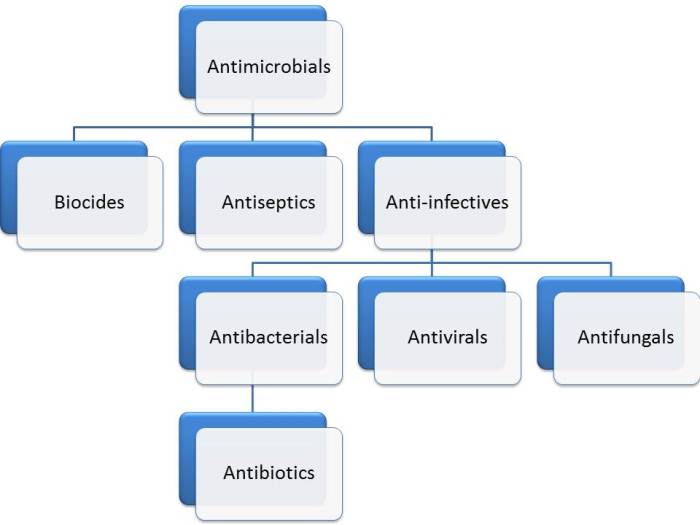
I am currently reading ‘The Drugs Don’t Work’ by Professor Dame Sally Davies, Dr Jonathan Grant and Professor Mike Catchpole (yes, I know I’m several years late to this particular party). I might do a book review for the blog once I’ve finished it – but an interesting question emerged in the early chapters. The author seem to make a point of referring to ‘antimicrobials’ rather than ‘antibiotics’ in the early part of the book, but later on, antibiotics appears as a common term. Which got me to thinking about what is the most appropriate generic term for what most people would term ‘antibiotics’ (what your GP gives you when you’ve got a snuffle, I mean potentially serious bacterial infection)?
CPE has landed in Manchester…officially
A really important point prevalence survey of CPE carriage in inpatients in a hospital in Manchester has just been published in the Journal of Hospital Infection. Important because of the high rate of carriage (11% of 662 patients included). Important because for every 1.6 known cases of CPE, there was an undetected case lurking, despite an extensive screening programme. Important because the lack of significant risk factors associated with CPE carriage suggests that it is distributed homogeneously, endemic in the population. And important because this is the first citable publication suggesting that Manchester has a problem with CPE, despite us having known about it for years via professional networks.
Are we passing too much CAUTI?
We have blogged before how CAUTI is rather ‘unloved’ as an HCAI prevention target. CLABSI reduction, on the other hand, is all the rage. Now, there is a key reason why this makes sense: outcome! A CLABSI is much worse news for a patient than a CAUTI. However, this doesn’t mean we should turn a blind eye to CAUTI, especially since CAUTI is a common root cause for CLABSI! In the US there is an addiional driver for preventing CAUTI: the costs associated with CAUTI are no longer reimbursed by insurers (since 2008). With this in mind, it was great to see a CAUTI reduction study published in NEJM recently (and see some interesting analysis on the Controversies blog).
Online antimicrobial stewardship course
I found out about a new free online antimicrobial stewardship course yesterday. The course is a collaboration between the the University of Dundee and the British Society for Antimicrobial Chemotherapy, and comes highly recommended. The course is designed for healthcare professionals.
If anybody completes the course, I’d be interested to hear your feedback.
Hydrogen peroxide vs. Clostridium difficile
This study has just been published in the Journal of Hopsital Infection, showing that the introduction of hydrogen peroxide vapour (HPV) for the terminal disinfection of rooms vacated by patients with CDI was assocaited with a significant reduction in the rate of CDI, from 1.0 to 0.4 cases per 1000 patient days.
Balancing risk and resource for CPE screening
The PHE Toolkit recommends pre-emptive isolation for patients who meet one of the risk-factor triggers for CPE screening. Furthermore, the pre-emptive isolation recommended in the Toolkit should be continued until three negative screens are obtained, each separated by 48 hours. In what is best described as a data-based thought experiment, colleagues from Imperial tested the impact of various CPE screening strategies on the burden of contact precautions generated.