
I’m at ECCMID in Amsterdam currently listening to a nice report of an OXA-48 Klebsiella pneumoniae outbreak in Gran Canaria in which sinks were found to be contaminated and replaced. Earlier today I listened to a nice paper on how sinks that drain slowly are more likely to contaminate the local environment for up to 1 metre from Paz Aranega Bou who, together with Ginny Moore and other colleagues has published this nice paper . So many papers on sinks now and I do wonder if we have lost sight of what they do and what they really are.
Year: 2019
Using qualitative methods to understand determinants of antibiotic prescribing

A couple of new studies provide insight into determinants of antibiotic prescribing using qualitative methodology. A systematic review in the Journal of Hospital Infection highlights the tension between the immediate need of the sick patient (“give ‘em broad spectrum antibiotics and keep ‘em on them for as long as I can get away with” [my caricature]) and the societal needs related to AMR (“we need to balance the individual needs of the patient with the bigger picture of AMR” [again, my caricature]). Also, a clever study by Esmita Charani and colleagues from Imperial College London provides new insight into antibiotic prescribing practice by “going native” and joining ward rounds – effectively becoming a fly on the wall to understand poor antibiotic prescribing practice. The study identified a contrast between antibiotic prescribing in Medicine, where decisions were generally multidisciplinary and policy-informed, and Surgery, where decisions were often ‘defensive’, resulting in prolonged and inappropriate antibiotic use.
From crowded house to ESBL-free house
A few weeks ago, Jon Otter blogged about a novel risk factor for ESBL Enterobacterales (ESBL-E) carriage, a “crowded house”, based on his work recently published in CMI: among 1,633 subjects in the catchment area of South-East London a crowded house, was associated with ESBL-E carriage, with an odds ratio of 1.5 (95% CI 1.1-2.2). Jon hinted towards future community-based interventions to reduce ESBL-E carriage and his blog naturally reached our research meeting. Continue reading
Preventing infection to tackle AMR
We’ve been blogging for a while about the need to prevent infection to tackle AMR – and am really pleased to see that this idea is central to various AMR long-term strategies (e.g. the 5 and 20 year UK AMR strategies). So I endorse wholeheartedly this new poster from IPS promoting messages aimed at healthcare professionals around preventing infection to reduce AMR.

Mcr-1 plasmid-mediated colistin resistance genes in environmental Enterobacteriaceae
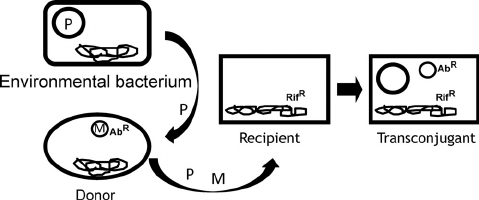
An interesting new Italian study has identified the mcr-1 gene, a plasmid-mediated colistin resistance gene, in 8% of environmental Enterobacteriaceae isolates. This suggests that environmental Enterobacteriaceae and perhaps even environmental surfaces themselves could be important reservoirs in the spread of mcr-1 and colistin resistance.
No CPE but a lot of VRE
Addenbrookes hospital in Cambridge (UK) have recently performed a point prevalence survey for antibiotic resistant bacteria. None of 540 patient samples grew CPE, but 130 (24%) grew VRE. So, why no CPE but so much VRE?
ESBL likes Crowded House!

Just in case you aren’t yet sick of 1980s pop culture references on this blog, here’s another: ESBL likes Crowded House! Our study of more than 4000 admissions to a London hospital group found that 9% of patients carried an ESBL, and living in an area where overcrowded housing was common was an ESBL risk factor.
How far can environmental hygiene REACH in reducing HCAI?

Brett Mitchell and colleagues have just published the exciting findings of the Researching Effective Approaches to Cleaning in Hospitals (REACH) study in the Lancet Infectious Diseases, along with my editorial. This large 11-centre randomised intervention study found that a low-cost enhancement to environmental hygiene managed to significantly reduce VRE infections, but did not reduce S. aureus bacteraemia or C. difficile infections.
What urine can tell you
Urine should not be seen as a useless excretion product. Doping experts know, as do clinical microbiologists. In two recently published studies zillions of urine cultures were drained from computer systems and linked to primary care data, yielding very interesting findings. One study from Israel quantified the effects of direct and indirect fluoroquinolone use on antibiotic resistance in E. coli, see also our comments to that study. The second comes from the UK, the country that has an ambition to reduce Gram-negative bacterial bloodstream infection rates by 50%, because of increasing BSI rates. This study may provide both the reason for the problem and the direction to meet that ambition. Continue reading
Who’s looking for CPE in English hospitals?

A team of authors surveyed NHS acute hospitals in England to determine the approach to CPE detection, including laboratory methods. The findings provide an opportunity to compare the approach to CPE detection and prevalence nationally, identifying higher CPE prevalence in the North-West, North-East and the South-East (the region that includes London) of England. The findings also suggest that more screening for CPE would detect more carriers – and perhaps help to prevent a silent epidemic of CPE in some regions.
 Reflections on Infection Prevention and Control