The light of day

Well, I’m two days in to my first ECCMID meeting, and what can I say, it’s huge. There also seems to be a bit of IPC creeping in, however one thing has struck me. There has been debate as to whether some interventions, for example chlorhexidine washing, is effective but in reality it seems to be common with many interventions in IPC that the real issue isn’t the intervention, it is getting people to reliably implement it that is the real issue.It is the same for pre-op prophylaxis, warming etc., etc., etc. We give feedback on SSI rates to surgeons, but what about the others who have an influence on the bundle that should be implemented. Not seen anyone look at performance of individual anaesthetists or other theatre practitioners in implementing antibiotic prophylaxis, warming, supplemented O2 and glucose control yet they are the gatekeepers of these interventions.

Whether something works in a lab or is theoretically possible seems to me to be a bit academic if no-one will do it. I saw a study today presented by Stephan Harbarth, who was defending screening and decolonisation (I prefer suppression) for Staph infection prevention and the compliance was <50% although there seemed to be an effect. Andreas Voss countered that if we cannot implement an intervention we should not be putting it in place, a fair point. In my humble opinion we really need to undertake some good qualitative studies that look at why interventions that may be (and sometimes that absolutely are) effective are not implemented despite the evidence. Is it that we are unable to personalise the outcome (for staff) or that (in the case of patients) that the perception of risk to the self is low, despite the evidence, as in smoking and alcohol intake. Perhaps we should have to describe how to implement reliably as part of the research and development process for the intervention. Otherwise are we just producing yet another publication or free paper that will not reliably and consistently be implemented and that will never really see the light of day?
What does it take to get an infection prevention and control service into shape?

mrsaWhilst the organisation of an infection control service isn’t everybody’s cup of tea, it is mine now. So, what are the key elements of a successful programme? A thoughtful review in Lancet ID penned by an all-star cast (including Zingg, Holmes & Pittet to name but a few) provides a framework for answering this question. Their systematic review yielded 10 key components:

  1. Organisation of infection control at the hospital level;
  2. Bed occupancy, staffing, workload, and employment of pool or agency nurses;
  3. Availability of and ease of access to materials and equipment and optimum ergonomics;
  4. Appropriate use of guidelines;
  5. Education and training;
  6. Auditing;
  7. Surveillance and feedback;
  8. Multimodal and multidisciplinary prevention programmes that include behavioural change;
  9. Engagement of champions;
  10. Positive organisational culture.

None of these are especially surprising, or that difficult to implement. It’s strange in a way that we know from multiple studies that high bed occupancy results in more transmission (specifically of MRSA). So why don’t we just reduce the rate of bed occupancy? If you account for the extended length of stay for patients who become infected, it would probably result in a net increase in patient throughput. Similarly, understaffing results in more transmission (again, specifically of MRSA). So why don’t we just make sure we hit adequate levels of staffing? I suspect the answer here is short-sighted accountancy combined with a genuine lack of the right staff to fill the necessary vacancies.

I’ve always found it a bit odd that the mere act of performing surveillance and reporting the results back to wards reduces HCAI – but there’s a fair amount of data behind this. I suspect it has to do with the type of people we are dealing with: busy healthcare professionals. If their unit’s rate of MRSA (or whatever) is, in the politest possible sense, in their face, they’re more likely to do something about it.

Finally, nurturing a positive organisational culture is crucial but somewhat philosophical. How do you measure whether your organisation has a positive culture? Perhaps perception is reality here, so the best approach is probably to consider organisational positivity as a highly transmissible infectious agent!

C’est difficile

Two new interesting papers in ICHE, both of significance I think. The first from Kings’ College Guy’s and St Thomas’ in London examines the degree of environmental contamination from patients with diarrhoea and toxigenic C. difficile but undetectable toxin. These patients are called a “potential Clostridium difficile excretor” in some papers. In this study, Biswas and colleagues (including Jon Otter and Simon Goldenberg) demonstrated that C. difficile was recovered from 49% of rooms from patients producing toxin and from 34% of the rooms of “potential Clostridium difficile excretor” group. Call me ‘Mr Picky’ but at what level of contamination does ‘potential’ become actual? 13% of sites tested in the ‘potential’ group were positive (around half that of the CDI group). So, actual infection seems to cause more contamination, which if patients are having more bowel movements I would accept, but the level of contamination from those without toxin production is, I would say significant (not forgetting that the toxin test is as reliable as flipping a coin).  The authors are right, all excretors are a risk and we should not shrink from efforts to detect them. Thinking further, It would be interesting to see if the level of contamination could be linked with the frequency of bowel movements (and possibly the Bristol stool chart score?). Should be possible if nursing records are reliable (ahem..). Without getting too graphic there would likely be a splatter factor. Should we increase cleaning frequency for patients with multiple type 7 stools in a day?

The second paper looked at the association between hospital room square footage and acquisition of  CDI, showing an Odds Ratio of 3 for every increase of 50 square feet. Interesting, possibly effective cleaning is more difficult in a large space, the cleaning equipment is recontaminating or any disinfectant is losing efficacy? What are the implications for multi-occupancy bays as in the UK? Still lots to learn about the environment.

Time to really recognise the importance of Prevention

Pretty worrying editorial in Clinical Infectious Diseases this month, discussing the issue of Polymixin resistance in Acinetobacter. So basically no treatment options and an attributable mortality of 30% from an organism that isn’t normally that virulent. Although these organisms do not seem to be causing too many problems in the UK, it is a different story in Asia. New therapeutics are some way off and there have been a few false dawns. So how about a real concerted effort to prevent infections and transmission in the first place. A good honest look at infection rates, realistic audit and feedback of hand hygiene compliance (instead of the non-credible >100% usually trumpeted), the same for assessing the effectiveness of cleaning, instead of the rose tinted spectacles that are the usual method. Infection prevention and control activity isn’t a PR activity; until new options for treatment come to fruition it may be all that we have.

PPE – help or hindrance?

Much attention on the use (and misuse) of PPE over the past months. I have always thought it to be a good thing if used well but this paper seems to suggest that universal use of gloves and gowns could be a good thing, suggesting that the 25% of staff that contaminate their clothing by only using PPE for patients with known pathogen carriage could be reduced by universal use of PPE. Whilst I agree that those not known to be carrying organisms ‘of interest‘ are a significant issue (you only know what you know after all), I also worry about the over-use of PPE and the possible blase attitude that this brings. As we all know, PPE can be a hazard if not removed in a logical order that minimises contamination to the wearer (‘correct’order TBA..), however given that training is er.. often less than comprehensive, would universal use reduce the risk? Maybe of  contamination of uniforms, but would other risks increase? I’m not totally convinced that clothing contamination is a significant risk to anyone but the wearer at the moment.

Pseudomonas – I keep getting that ‘sinking’ feeling

Yet another study has just appeared in AJIC ‘In Press’ that reports on a long-term, discontinuous ‘outbreak’ of Pseudomonas (see http://www.ajicjournal.org/article/S0196-6553%2815%2900138-8/abstract). Once again everything points back to the sinks in the unit and a reusable washbasin for hairwashing. So all back to water and practice issues around it. Water is dangerous you know, nearly 100% of murderers and theives have consumed it in the 24 hrs preceding their crimes and it is the leading cause of drowning. Seriously though, wouldn’t we expect to find Pseudomonas in a sink trap? It is how it gets to the patient that is the issue. I was in a hospital overseas recently where mop-heads were conveniently placed either side of the sink to soak up splashes from the basin. So, why were there splashes? The sink trap was just a hole and so the staff had placed big grilles over the bottom of the sink to prevent items going down and blocking the sink. Turning on the tap produced a very attractive set of fountains, a bit like at the end of ‘Oceans 11’. Nuff said

Do you know your CRE from your CRAB?

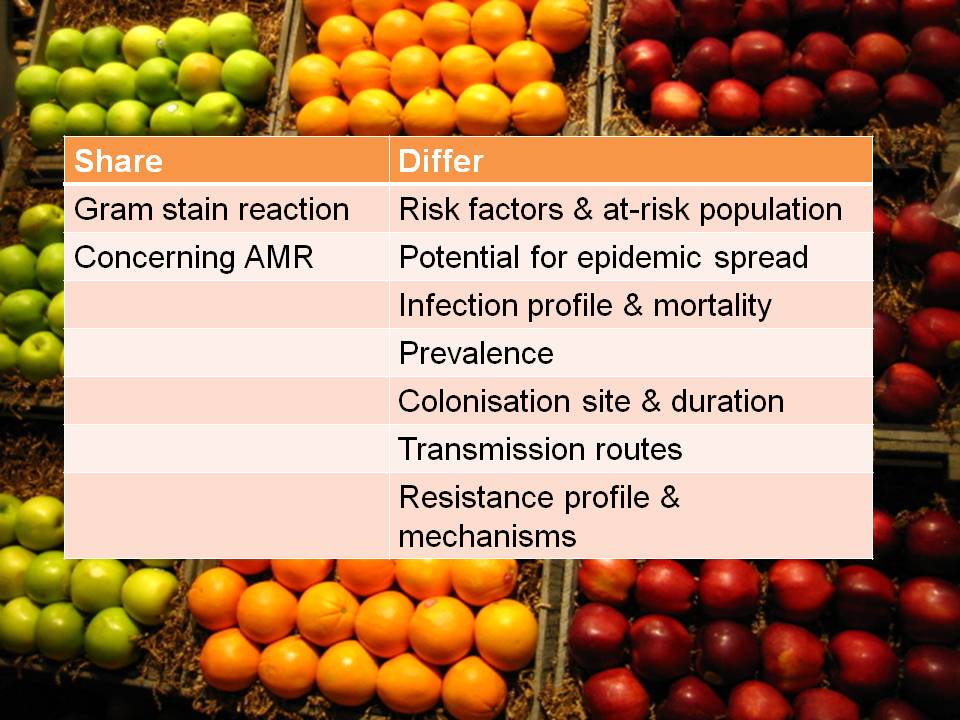
I gave a talk today at a meeting on combating carbapenem-resistant organisms. My angle was to clearly differentiate the epidemiology of the Enterobacteriaceae (i.e. CRE) from the non-fermenters (most importantly carbapenem-resistant A. baumannii – CRAB), and you can download my slides here.

I’ve blogged before about how confusing the terminology surrounding multidrug-resistant Gram-negative rods has become. Non-expert healthcare workers have little chance in distinguishing CRE from CPE from CRO from CPO. So we need to help them by developing some clear terminology, given the gulf in epidemiology between CRE and CRAB (see below).

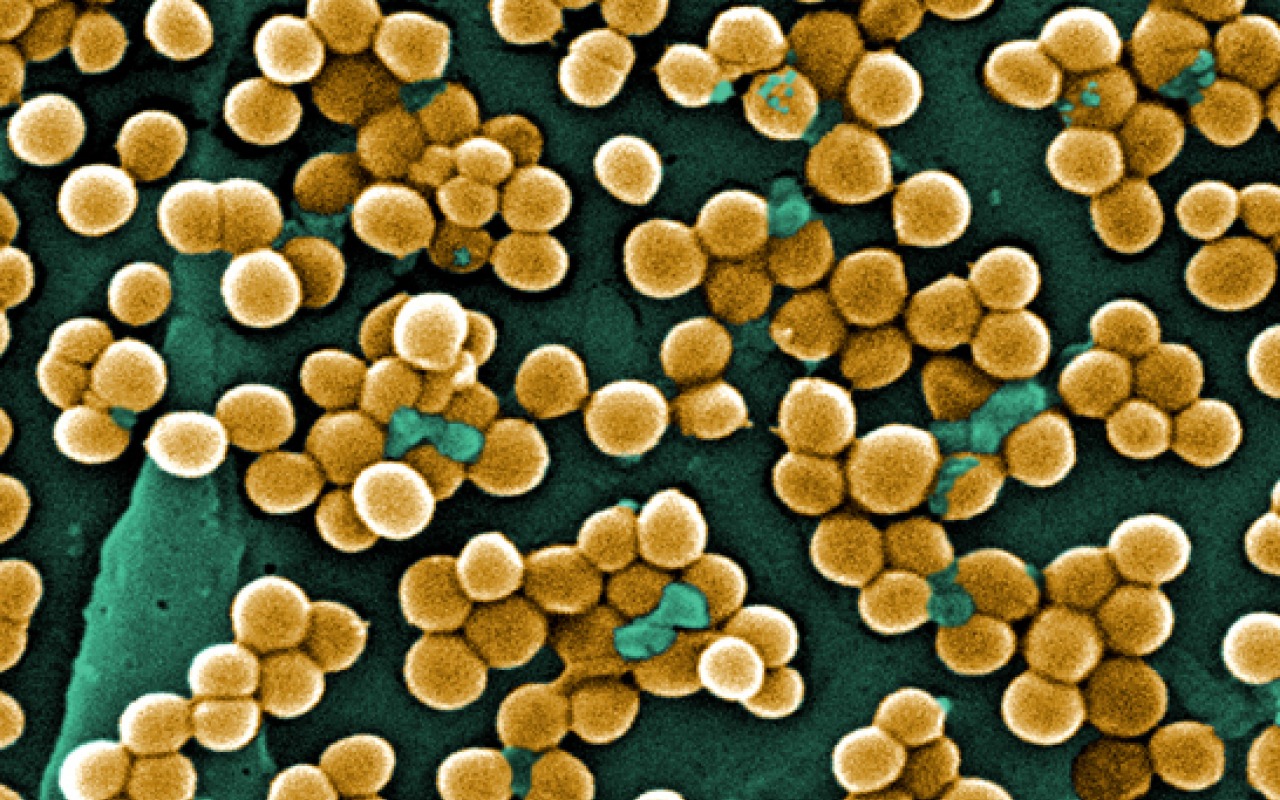
CRE and CRAB are like apples and pears: they share some basic microbiology but that’s about where the comparison ends!CRE CRAB

So, I think we should talk in terms of CRE (and CPE for confirmed carbapenemase carriers), and CRNF (or CRAB for A. baumannii and CRPA for P. aeruginosa). I don’t think that CRO is a useful term – in fact, I find it rather confusing. Carbapenem resistance in Enterobacteriaceae (CRE) and A. baumannii (CRAB) are both emerging problems, but they are not the same problem.

And we wonder why E. coli bacteraemia is rising..

Leicester incontinence sufferer ‘too frightened’ to drink water – http://www.bbc.co.uk/news/uk-england-leicestershire-32222349

Is there a link between gram-negative bacteraemia and hydration? Evidence a bit thin but I find it highly plausible, especially given the papers from all over the planet demonstrating seasonality. Pads vs antibiotics. No brainer

Rescuscitation

Time to wake this sleeping blog up I think. Plenty of material out there. I’m just back from a trip to Asia, including the APSIC meeting in Taiwan. What struck me was the huge amount of interest in the environment. The meeting kicked off with a keynote on the subject and looking through the programme there was a session on environmental contamination in virtually every concurrent. Acinetobacter is the primary concern and they’ve not got started on C. difficile yet (mainly helped by not looking for it.. I wish I’d thought of that)

How big is C. difficile infection in the USA?

Clostridium-difficileThe New England Journal of Medicine recently published an article evaluating the burden of CDI in the USA. The huge CDC-led initiative collected data from 10 geographically distinct regions, identifying more than 15,000 cases. Around two-thirds of cases were classified as healthcare-associated (although only 25% were hospital-onset). This means that, prima facie, a third of CDI cases were community-associated. I find this proportion difficult to believe: I strongly suspect that many of these cases would have had healthcare-associated risk factors if the team were able to look hard enough. For example, they used a fairly standard 12 week look-back period to evaluate previous hospitalisation, but how would the data look if they’d used 12 months? Also, it’s usually only possible to evaluate previous hospitalisation in a single healthcare system, but many patients commute between various healthcare systems. The authors acknowledge in the discussion that this designation of “community-acquired” may be inaccurate based on the finding from a previous study whether healthcare-associated risk factors were identified in most patients, but only be a detailed phone interview.

Scaling up from the figures from the 10 regions, national estimates were around 500,000 cases and 29,000 deaths due to CDI per annum in the US. This estimate is approximately double previous estimates for the national CDI burden in the USA, probably reflecting the adoption of molecular methods for the detection of CDI. This scaling up included an interesting statistical adjustment to see how prevalence varied depending on how many sites use sensitive molecular methods to detect CDI.

A sub-study included the culture of C. difficile from 1625 patients. More than 15% of stool specimens from patients diagnosed as CDI failed to grow C. difficile, probably illustrating the limitations of culture methods more than anything else. NAP1 (027) represented around half of cases, and was significantly more common in healthcare-associated CDI. I think it’s fair to say that the initial fears that NAP1 was a super-strain have been allayed by the fact that it’s now so common and there hasn’t been a surge in CDI mortality.

Finally, around 21% of healthcare-associated cases suffered at least one recurrence. Thus, there is a real need to the roll out of the uber successful faecal microbiota transplantation for recurrent CDI. In fact, there should be around 70,000 faecal microbiota transplantations each year in the US right now (500,000 x 0.66 x 0.21); I suspect there are far fewer.