Survey of social media use by healthcare professionals

social media montage

I have been asked by ECCMID to do a talk on ‘Selling your colleagues and society: how to use social media.’ While there is some good data on social media use by scientists, I was struggling to find specific data on social media use by healthcare professionals. So I thought I’d generate some (and in doing so, generate the power of social media!). So, I have put together a short, simple survey that I hope you will have time to complete here.

Continue reading

Review on AMR: Report on Infection Prevention and Control, and Surveillance

amr review hcai

The Review on AMR published their final instalment today: a report on Infection Prevention and Control, and Surveillance. A report on IPC was not planned at the start of the Review, so the existence of this report illustrates the responsiveness of the Review team. Also, having been peripherally involved in reviewing this report, I am aware that it was written within an extremely short timeframe but it does not show: it is comprehensive and thought-provoking (as it should be) with some useful recommendations.

Continue reading

Reflections from IFIC 2016

ific

I enjoyed my first IFIC experience over the past few days in Vienna, and thought I’d share some reflections.

I found the pro-con debate between Dr Michaal Borg and Prof Gary French on whether we need more evidence to improve infection prevention and control useful. (Clearly, my vote was for Prof French, my PhD supervisor and all-around acadmic mentor.) Prof French gave a good case for an evidence-based medicine approach to IPC, bemoaning poor-quality evidence to support IPC interventions and an over-reliance on ritual and tradition. Although decent IPC study designs are tricky (and tricker than for an antibiotic trials), they are possible, as illustrated by the small number of cluster RCTs we have at our disposal. Dr Borg argued convincingly that, even if cluster RCTs support on intervention, they would likely be performed in high-resource, academic teaching hospitals, which are a different plant to the average hospital so may well not be applicable. Furthermore, clinicans are pretty poor at following guidelines even if they are evidence-based because culture eats policy for breakfast! Michael questioned whether the ‘English MRSA Miracle’ was founded in evidence-based medicine, or a pragmatic multi-faceted intervention. On balance, the room sided with Michael, agreeing that we have enough evidence to make a big different (but all agreed that better quality evidence wouldn’t hurt)!

Continue reading

What are we doing to improve hospital room cleaning and disinfection?

I gave a webinar last week for 3M (you can download my slides here) on “Your hospital room can make you sick: How improved cleaning and disinfection can help”. I asked the audience what they were doing to improve cleaning and disinfection, and thought I would share the findings. I don’t know the exact size of the audience (but it’s usually a couple of hundred mainly US based IPC folks), and the audience were allowed to choose any answers that applied to them for the second two questions.

Continue reading

We need to EMBRACE engineers in the fight against HCAI and AMR

Embrace logo ok

I attended the first EMBRACE seminar today at Imperial College London. EMBRACE (Engineering, Medicine, Natural Sciences and Physical Sciences Bridging Research in Antimicrobial resistance: Collaboration and Exchange) is a gap-bridging collaborative aiming to bring together Engineers, Scientists, Doctors, and others to find new ways to address AMR and tackle HCAI. I thought I’d share some of my highlights from the seminar.

Continue reading

Are spores the secret of the success of FMT in treating recurrent CDI?

Characteristic of the aimes strain of b anthracis is the smooth

I have been following the literature around the use of faecal microbiota transplantation (FMT) for the treatment of recurrent Clostridium difficile infection (CDI). FMT is spectacularly effective but rather crude – and may have some associated risks, not least the possibility of transmissing infectious organisms we have not yet discovered! There is also the issue of administration. Compared with recurrent CDI, a duodenal infusion (aka tube up the backside) isn’t so bad – but an oral delivery would be preferable. The ‘crapsule’ (oral FMT) has been tested and is effective, but it requires a large number of crapsules to reach the required dose. So, the search is on to distill the effective elements of FMT into a format that can be delivered more easily. Some work has been done on exploring various combinations of live bacteria – with variable success.

Continue reading

Review on AMR: progress to date

amr review

Like many others, I am keeping a close eye on the UK Government’s commissioned ‘Review on AMR’. The Review team have been tremendously productive over the last few years, already releasing detailed reports on:

Continue reading

Colistin resistance in CPE: an emerging threat

colistin structure

I am becoming increasingly interested in colistin resistance in CPE, not least because of this work that we will be presenting on colistin resistance in CPE at ECCMID in a few months time. I have been brushing up on how colistin resistance occurs in CPE, and why it is important, so thought I’d share my findings. I started with a pubmed search for “colistin resistance mechanism” on 12/02/16 and this is what I found (85 hits from the initial search):

Colisin

Colistin is an old class (discovered during WWII) of cationic antibiotic. Colistin (polymyxin E) is a polypeptide bactericidal agent and is one of the two clinically available forms of polymyxin agents (polymyxin B and polymyxin E). Colistin interacts with lipopolysaccharide in the outer membrane, resulting in a leaky and ultimately dead bacterial cell.1 Issues with presumed nephrotoxicity have kept colistin very much on the top shelf, but the emergence of CPE has brought colistin down a shelf or two – and we are learning that the nephrotoxicity tradionally associated with colisin may not be so bad afterall.1

Continue reading

Antibiotic surgical prophylaxis: stewardship’s ‘elephant in the room’?

Doxycycline_100mg_capsules

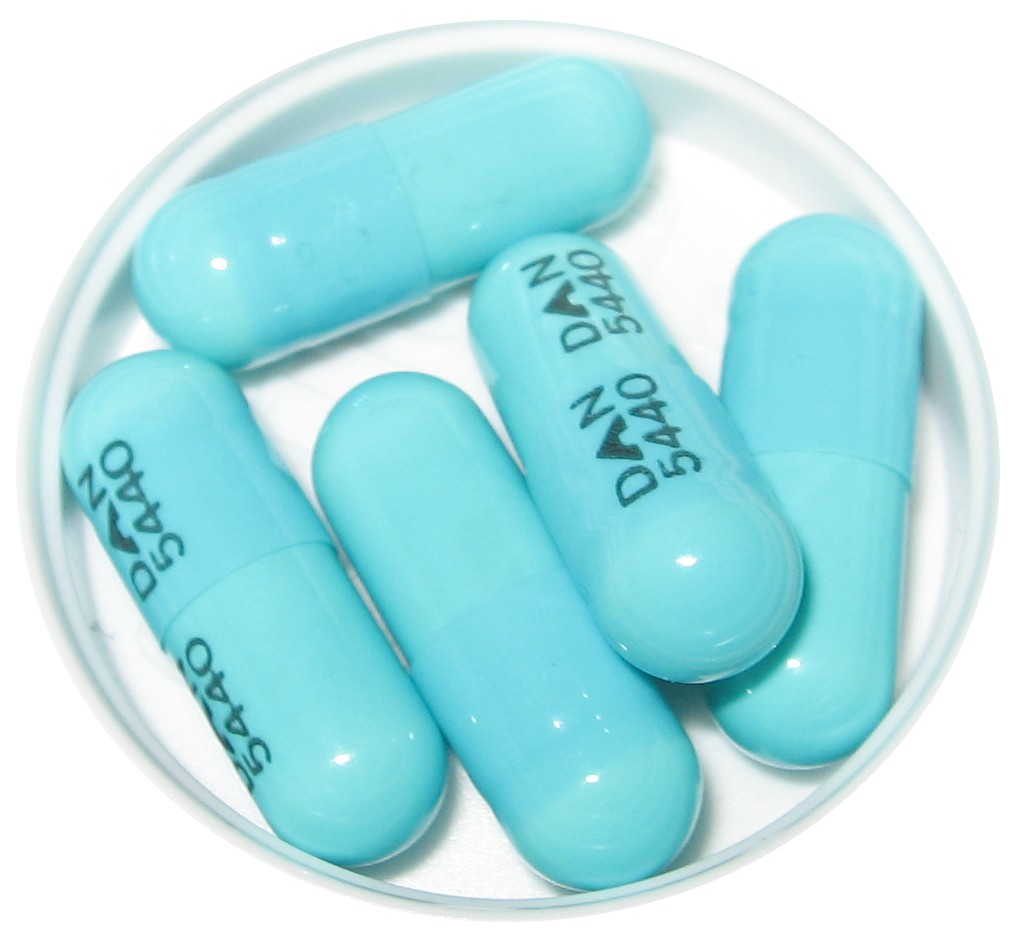
We are all pretty comfortable with the idea that we have used too many antibiotics in the past and now we are reaping the consequences. I think we are also all in agreement that we need to start using antibiotics much more rationally – and keep the big guns firmly on the top shelf, double-wrapped in password-protected packaging that you can only access with a fingerprint and retinal scan (whilst acknowledging that they will still somehow be prescribed by a junior doctor at 3am for a sniffle). But I get the feeling that we all have a bit of a blind spot (or soft spot) for surgical prophylaxis. Here, the situation is different, surely, because the consequence of an SSI is so great that the likely ‘cost’ of widespread surgical prophylaxis is outweighed by the gain of fewer SSIs? But has this become stewardship’s elephant in the room? We are comfortable talking about restricting carbapenem use in acute hospitals, but I don’t hear as much discussion about stopping the use of antibiotics for surgical prophylaxis! On one level, isn’t this is the same arguments as for ‘selective’ digestive or oral decontamination (SDD / SOD) in the ICU? Here, the argument in factor of SDD / SOD is compelling: fewer deaths and less spread of resistant bacteria. But indiscriminate use of antibiotics, which is bound to fuel antibiotic resistance in the long run, just cannot be a good idea, particularly in the high-risk ICU population.

Continue reading

CRISPR-Cas “surgical strikes” against antibiotic-resistant bacteria

surgical strike

We are in desperate need of antibiotic-sparing approaches to antibacterial therapy. Antibiotic resistance is increasing, and we are becoming increasingly aware of the impact of antibotics on the microbiota. I blogged a while ago about CRISPR-Cas systems being used to tackle antibiotic-resistant bacteria on surfaces. But the same approach could be applied to treating human infections.

Continue reading