Christmas 2014 Update

Christmas lights

Now that you have digested your Christmas turkey, I thought that it would be a good time to send out an update. These articles have been posted since the last update:

I’m in a rather reflective mood, so time to remind you of some of the key themes from 2014: Ebola, MERS-CoV, universal vs. targeted interventions, faecal microbiota transplantation (FMT), whole genome sequencing (WGS), carbapenem-resistant Enterobacteriaceae (CRE), and some interesting developments in environmental science. And what will we be still talking about come Christmas 2015? Let’s hope it won’t be Ebola, and I think that WGS will be a lab technique akin to a Vitek machine rather than subject matter for NEJM. But I think we still have ground to cover on whether to go for universal or targeted interventions, FMT, and improving our study designs in infection prevention and control. I can also foresee important studies on the comparative and cost-effectiveness of the various tools at our disposal.

And finally, before I sign off for 2014, a classic BMJ study on why Rudolf’s nose is red (it’s to do with the richly vascularised nasal microcirculation of the reindeer nose, apparently).

Image: Christmas #27.

Who's harbouring CRE?

carbapenemase

Many of us are in the process of developing policies of who to screen for CRE carriage. I’ve recently reviewed the literature for studies of CRE carriage (Table, summarising studies evaluating faecal carriage rate of CRE, below).

Author Year Location Setting n patients n carriers % carriers
Adler1 2015 Israel CRE carriage in post-acute hospitals, 2008 1147 184 16.0
CRE carriage in post-acute hospitals, 2013 1287 127 9.9
Mack 2014 London ‘High-risk’ inpatients and admissions. 2077 7 0.3
Rai2 2014 East Delhi, India Outpatients 242 24 9.9
Zhao3 2014 Fujian, China Stool samples from hospitalized patients 303 20 6.6
Birgand4 2014 Paris, France Patients repatriated or recently hospitalized in a foreign country 132 9 6.8
Kim5 2014 Seoul, Korea ICU admissions 347 1 0.3
Girlich6 2014 Morocco Hospitalized patients 77 10 13.0
Lin7 2013 Chicago, USA Long term acute care hospitals 391 119 30.4
Short stay hospital ICU 910 30 3.3
Villar8 2013 Buenos Aires, Argentina Non-hospitalized individuals 164 8 4.9
Kothari9 2013 New Delhi, India. Healthy neonates 75 1 1.3
Day10 2013 Pakistan Patients attending a military hospital 175 32 18.3
Swaminathan11 2013 New York All admissions to 7 units, including ICU, of 2 hospitals 5676 306 5.4
Nüesch-Inderbinen12 2013 Zurich, Switzerland Healthy community residents and outpatients 605 0 0.0
Armand-Lefèvre13 2013 Paris, France ICU patients 50 6 12.0
Wiener-Well14 2010 Jerusalem, Israel Hospitalized patients 298 16 5.4
The most important question to consider when reviewing these data are whether these are CRE or CPE? The rate of carriage of Enterobacteriaceae that are resistant to some carbapenemens by mechanisms that don’t involve carbapenemase will be higher than CPE. Some studies did not report whether they checked for carbapenemase production, and those that did reported a much lower rate of CPE. For example, Armand-Lefèvre et al.13 reported a 12% carriage rate of imipemen-resistant (i.e. carbapenem-resistant) Enterobacteriaceae in ICU patients but none of these carried a carbapenemase.A number of studies report shockingly high rates of carriage. A point-prevalence study of long-term acute care hospitals in Chicago found that 30% of patients carried CRE.7 High rates of carriage were also found in long-term acute care hospitals in Israel, but a national intervention reduced the rate of carriage from 16% in 2008 to 10% in 2013.1 Perhaps even more concerning are signs that there is a substantial community burden of carriage in the Indian Subcontinent. For example, 18% of patients attending a military hospital in Pakistan carried NDM-1 producing Enterobacteriaceae,10 and 10% of Enterobacteriaceae in stool specimens from 123 outpatients in East Delhi produced a carbapenemase.2

In contrast, most studies from Europe report very low rates of carriage, particular in community residents. For example, a Swiss study failed to identify a single carbapenemase producer in a sample of 605 community residents and outpatients.12 Similarly, data published from the Royal Free in London found that only 0.3% of 2077 ‘high-risk’ patients carried CRE.

So, where does this leave us in developing our CRE screening policies? These data mean that your approach will depend where you are. If you are in the middle of New Delhi, then your approach will be different to those of us in London. It seems that CRE is currently rare in most parts of Europe but the surprisingly high CRE carriage rates in some parts of the US are particularly troubling, and should serve to keep us all on our toes.

Image: ‘OXA-48 like carbapenemase.’

References

  1. Adler A, Hussein O, Ben-David D et al. Persistence of Klebsiella pneumoniae ST258 as the predominant clone of carbapenemase-producing Enterobacteriaceae in post-acute-care hospitals in Israel, 2008-13. J Antimicrob Chemother 2015; 70: 89-92.
  2. Rai S, Das D, Niranjan DK, Singh NP, Kaur IR. Carriage prevalence of carbapenem-resistant Enterobacteriaceae in stool samples: A surveillance study. Australas Med J 2014; 7: 64-67.
  3. Zhao ZC, Xu XH, Liu MB, Wu J, Lin J, Li B. Fecal carriage of carbapenem-resistant Enterobacteriaceae in a Chinese university hospital. Am J Infect Control 2014; 42: e61-64.
  4. Birgand G, Armand-Lefevre L, Lepainteur M et al. Introduction of highly resistant bacteria into a hospital via patients repatriated or recently hospitalized in a foreign country. Clin Microbiol Infect 2014; 20: O887-890.
  5. Kim J, Lee JY, Kim SI et al. Rates of fecal transmission of extended-spectrum beta-lactamase-producing and carbapenem-resistant Enterobacteriaceae among patients in intensive care units in Korea. Ann Lab Med 2014; 34: 20-25.
  6. Girlich D, Bouihat N, Poirel L, Benouda A, Nordmann P. High rate of faecal carriage of extended-spectrum beta-lactamase and OXA-48 carbapenemase-producing Enterobacteriaceae at a university hospital in Morocco. Clin Microbiol Infect 2014; 20: 350-354.
  7. Lin MY, Lyles-Banks RD, Lolans K et al. The importance of long-term acute care hospitals in the regional epidemiology of Klebsiella pneumoniae carbapenemase-producing Enterobacteriaceae. Clin Infect Dis 2013; 57: 1246-1252.
  8. Villar HE, Baserni MN, Jugo MB. Faecal carriage of ESBL-producing Enterobacteriaceae and carbapenem-resistant Gram-negative bacilli in community settings. J Infect Dev Ctries 2013; 7: 630-634.
  9. Kothari C, Gaind R, Singh LC et al. Community acquisition of beta-lactamase producing Enterobacteriaceae in neonatal gut. BMC Microbiol 2013; 13: 136.
  10. Day KM, Ali S, Mirza IA et al. Prevalence and molecular characterization of Enterobacteriaceae producing NDM-1 carbapenemase at a military hospital in Pakistan and evaluation of two chromogenic media. Diagn Microbiol Infect Dis 2013; 75: 187-191.
  11. Swaminathan M, Sharma S, Poliansky Blash S et al. Prevalence and risk factors for acquisition of carbapenem-resistant Enterobacteriaceae in the setting of endemicity. Infect Control Hosp Epidemiol 2013; 34: 809-817.
  12. Nuesch-Inderbinen M, Zurfluh K, Hachler H, Stephan R. No evidence so far for the dissemination of carbapenemase-producing Enterobactericeae in the community in Switzerland. Antimicrob Resist Infect Control 2013; 2: 23.
  13. Armand-Lefevre L, Angebault C, Barbier F et al. Emergence of imipenem-resistant gram-negative bacilli in intestinal flora of intensive care patients. Antimicrob Agents Chemother 2013; 57: 1488-1495.
  14. Wiener-Well Y, Rudensky B, Yinnon AM et al. Carriage rate of carbapenem-resistant Klebsiella pneumoniae in hospitalised patients during a national outbreak. J Hosp Infect 2010; 74: 344-349.

ECDC data shows progressive, depressing increase in antibiotic resistance in Europe

The ECDC recently released their 2013 report, which includes 2013 data. The data are on the whole fairly depressing for more parts of Europe, with high and increasing rates of resistance to important antibiotics in common bacteria. So it was not surprising to see ECDC issue a corresponding press release focusing on worrying resistance to last-line antibiotics.

I’ve chosen a few illustrative countries from this useful interactive database. Carbapenem resistance in Enterobacteriaceae (i.e. CRE) is one of the most concerning challenges facing us right now. So it’s not good to see continued high rates of carbapenem resistance in K. pneumoniae in Greece, and the seemingly inexorable increase in Italy (Figure 1). It’s worth noting that these are invasive isolates, the majority of which would be bloodstream infections. And the mortality rate for a CRE bloodstream infection is around 50%

Figure 1: Susceptibility of Klebsiella pneumoniae invasive isolates to carbapenemsEARS-Net 2014 CRE

In some ways, the steady increase in multidrug-resistant K. pneumoniae from many parts of Europe, illustrated in Figure 2, is even more concerning than the sharp increases in CRE in some parts of Europe. If you draw a mental trend line for Italy and Portugal, it doesn’t look good.

Figure 2: Multidrug-resistant Klebsiella pneumoniae invasive isolates (resistant to third-generation cephalosporins, fluoroquinolones and aminoglycosides)EARS-Net MDR Kleb

The picture for P. aeruginosa (and I suspect the other non-fermenters like A. baumannii, which isn’t included in EARS-Net) in terms of carbapenem resistance is different to the Enterobacteriaceae (Figure 3). Rates are high in Greece, intermediate in Italy and Portugal, and low in the UK. But the trend is stable.

Figure 3: Susceptibility of Pseudomonas aeruginosa invasive isolates to carbapenemsEARS-Net 2014 CRPA

And let’s not forget about MRSA (Figure 4). The UK and some other European countries have done a tremendous job in reducing the transmission of MRSA. This has had an interesting and somewhat unexpected effect on the rate of methicillin-resistance in S. aureus, which has also reduced considerably. I suspect this is a consequence of interrupting the transmission of MRSA, but failing to prevent the spread of MSSA. Put another way, if MRSA and MSSA fell in tandem, the rate of methicillin-resistance in S. aureus would remain constant. The impressive reductions of MRSA reported in the UK have not been replicated everywhere in Europe. Portugal in particular increased from less than the UK in the early 2000s to more than the UK today. There is some evidence that the national campaign in Portugal to reduce healthcare-associated MRSA is making some impact, with a notable reduction in MRSA rate in 2013.

Figure 4: Susceptibility of Staphylococcus aureus invasive isolates to methicillin (i.e. MRSA rate)EARS-Net 2014 MRSA

In summary, it’s not all doom and gloom. The reductions in MRSA in the UK and elsewhere show that reducing the transmission of these antibiotic resistant bacteria can be done. But it takes considerable investment and national focus. Without this, it’s difficult to see the trends in antibiotic resistance, including to last-line agents, continuing to increase in some parts of Europe.

Filling the gaps in the guidelines to control resistant Gram-negative bacteria

I gave the third and final installment of a 3-part webinar series on multidrug-resistant Gram-negative rods for 3M recently. You can download my slides here, and access the recording here.

During the webinar, I provided an overview of the available guidelines to control CRE and other resistant Gram-negative bacteria. I then identified gaps in the guidelines, in terms of definitions of standard precautions, outbreak epidemiology and who should be on the guidelines writing dream team. Finally, I discussed some controversial areas in terms of effective interventions: patient isolation, staff cohorting and selective digestive decontamination.

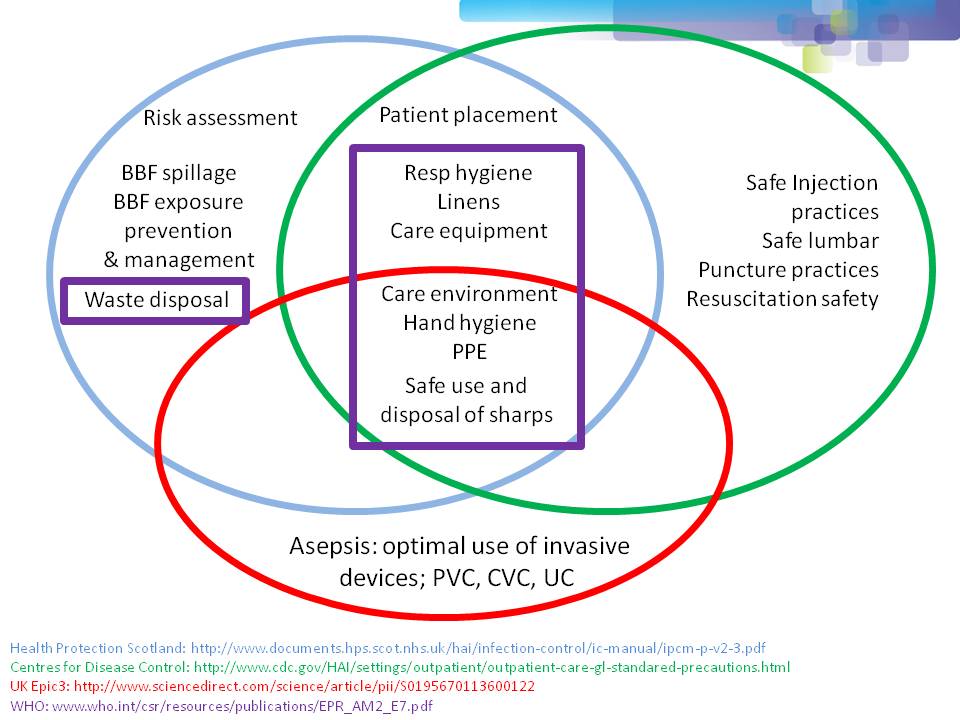
One of the most important points when considering infection prevention and control guidelines is the issue of ‘standard precautions’. What do we apply to every patient, every time? As you can see from Figure 1 below, ‘standard precautions’ is far from standardized. This is problematic when developing and implementing prevention and control guidelines.

Figure 1: differences in the definition of ‘standard precautions’.

filling gaps std precautions

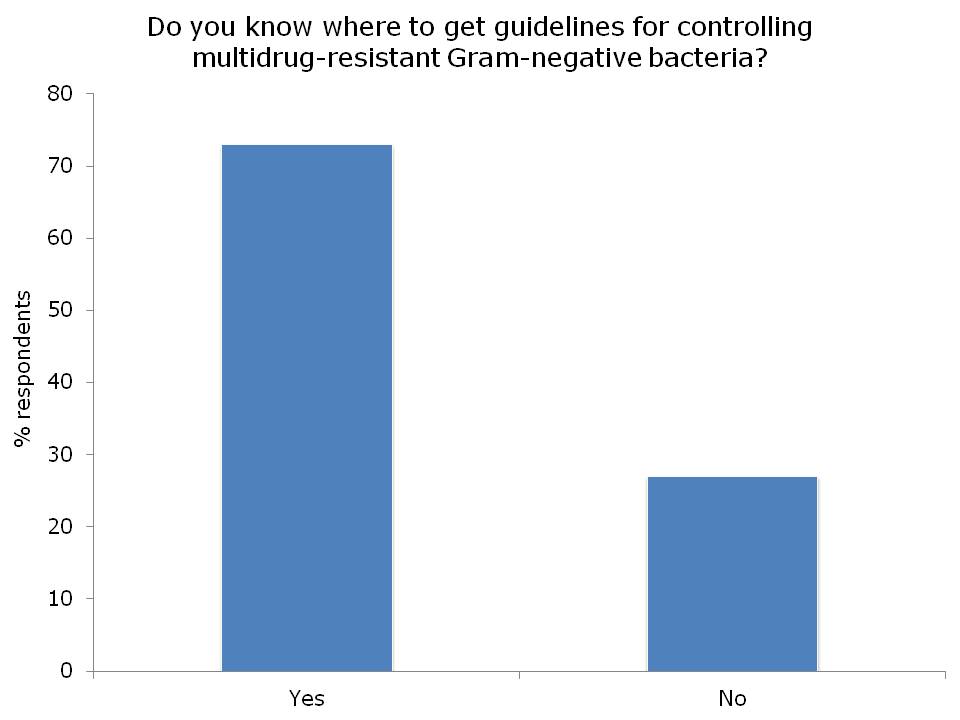
I had the opportunity to ask the webinar audience a few questions throughout the webinar, which are outlined in Figure 2.

Figure 2: response to the questions from the 120 or so participants.

filling the gaps1 filling the gaps2 filling the gaps3

I was somewhat concerned but not that surprised that more than a quarter of the audience did not know where to access control guidelines for MDR-GNR. I suppose this means that we need to do a better job of signposting the location of the various guidelines available. Here’s a non-exhaustive list for starters:

There was a fairly even split between active and passive surveillance to detect outbreaks. The problem with relying on passive surveillance (i.e. clinical cultures) is that there’s a good chance that the ‘horse will have bolted’, and you have a large outbreak on your hands, before a problem is detected. For this reason, I favour active surveillance.

But who to screen? In the case of CRE, I was pleased to see that virtually nobody said nobody. There was a pretty even split between everybody, high-risk individuals or all individuals in high-risk specialties. Accurately identifying individuals who meet screening triggers is operationally challenging, as outlined by the “backlash” to the UK toolkit, so I think screening all patients in high-risk specialties (e.g. ICU) makes most sense.

So, what works to control MDR-GNR transmission? We don’t really know, so are left with a “kitchen sink” (aka bundle approach) (more on this in my recent talk at HIS). We need higher quality studies providing some evidence as to what actually works to control MDR-GNR. Until then, we need to apply a healthy dose of pragmatism!

What’s trending in the infection prevention and control literature? HIS 2012 -> HIS 2014

I was privileged to speak at the Healthcare Infection Society meeting in France today on ‘What’s trending in the infection prevention and control literature? HIS 2012 -> HIS 2014’. You can download my slides here, and view the recording below:

http://youtu.be/k2NsEb_xUZ4

I have always enjoyed attending these light-hearted summary sessions at other conferences, so I hope I struck the right tone. In order to track some of the trends in the infection prevention and control literature since the last HIS conference (in late 2012), I plugged some search terms into Google trends (Figure).

Figure: Google Trends for all search terms (excluding viruses) (2004 to present). Logos and arrows represent the time of the HIS 2012 and HIS 2014 conferences. Search terms: hospital cleaning; carbapenem resistant Enterobacteriaceae, whole genome sequencing, fecal microbiota transplantation. [Note, I had to spell it ‘wrong’ (fecal v faecal) to detect a trend. Blasted Americans.]what's trending google trends

Based on my search terms, there was one infection control trend that trumped all others: Ebola. If I include in with the other Google search terms, it eclipses all others! Whilst trends in Google searches may not necessarily correlate with trends in the infection prevention and control literature, in this case, it is true that the outbreak of Ebola in West Africa has prompted a lot of publications in the literature – and consumed an awful lot of professional time for all who are connected with hospital infection prevention and control! Aside from Ebola, other trends in the infection prevention and control literature that I covered include MERS-CoV, universal vs. targeted interventions, faecal microbiota transplantation, whole genome sequencing, carbapenem-resistant Enterobacteriaceae (CRE), and some aspects of environmental science. Finally, I looked into my crystal ball and predict some of the trends in the infection prevention and control literature by the time HIS 2016 comes around.

Carbapenem-resistant Enterobacteriaceae (CRE): so what should an infection prevention and control team do now?

kleb pneumoGuest blogger Dr Evonne Curran (bio below) writes…

Jon asked me to write on his blog about our column (‘#15: Carbapenemase-producing Enterobacteriaceae’). As he kindly accepted my offer to co-write a column, I accept his to write this blog. I am calling this blog (which contains only my personal views): ‘Carbapenem-resistant Enterobacteriaceae (CRE): so what should an infection prevention and control team do now?’.

The problems with CRE are numerous, and the different actions needed to control or at least delay its endemnicity are likewise legion; the task can seem insurmountable. The approach being taken at national and international level covers much of what is needed. The question for individual infection prevention and control teams (IPCTs) is this: where do you begin to protect a healthcare system that has little capacity (and in some cases little will) to start to solve a problem that essentially has yet to arrive, that has at least 6 names (none of which can be spelt with confidence) and is absent from the CEO’s performance monitoring agenda? The additional challenge for IPCTs is this: it will be difficult for those working in clinical areas to believe that for all the improvement in infection prevention and control that reduced MRSA and C. difficile, still more is required for this new microbiological-kid on the block.

If I were still part of a hospital based IPCT this is where I would start…..

  1. Give it a name and stick to it in all correspondence / education / awareness sessions;
  2. Succinctly provide the reasons as to why this should be on everyone’s radar;
  3. Take a high-reliability approach to strengthening your healthcare system;
  4. Involve patient advocates.

1)      Give it a name and stick to it…

As mentioned in the column (and many times by Jon) there needs to be a name that we can a) all agree on and b) conveys to non-microbiology people the problem and its seriousness. We have to stop fighting about what it is: CPE, CRO, CPE etc, etc.  I don’t know who is on (or how you get on) the micro-organism naming committee, but I am beginning to think they need to make it more democratic and involve people who don’t understand microbiology. There is no perfect name that will keep all microbiologists happy, so let’s stop trying to find one. It’s important that IPCTs have a short name that denotes this big problem and makes this consistent in all documentation. (See this previous blog by Jon for more info on nomenclature surrounding this issue.)

2)      Succinctly provide the reasons as to why this should be on everyone’s radar

I offer the following as a succinct summary for why this should be on everyone’s radar:

  • These resistant organisms inactivate commonly used antibiotics. For any infected patient there are Few Treatment Options and there will eventually be No Treatment Options.
  • They are spread Person to Person by touch, splash or contaminated equipment / environments.
  • The resistance mechanisms are spread between different species of bacteria.
  • They are difficult to detect when people are screened.
  • They cause outbreaks, which are also difficult to detect and very costly to manage.
  • Spread across the world makes at least some transmission here inevitable.

3)      Take a ‘high-reliability’ approach to the problem in your area…

I am not going to regurgitate what is in existing guidelines but offer some high-reliability characteristics.

Sensitivity to operations: Given your patient/client population, consider how and why your healthcare system is vulnerable; share this information within your organisation.

Deference to expertise: Identify who you would go to for expert advice within and outwith your organisation should an incident arise. Keep contact details accessible.

Preoccupation with failure: Consider in which clinical areas you most likely to have an outbreak – visit these clinical areas and see if there can be changes to ways of working that would make outbreaks less likely.

Reluctance to simplify: Look for and don’t dismiss alert signals – this could be data that suggests you may have cases, cross-transmission, that you are insufficiently looking for possible cases or that your antibiotic prescribing data could make your healthcare system more vulnerable.

Commitment to resilience: Good as you and your team are – consider how you can make your systems better at preparedness, prevention and management of outbreaks.

High-reliability theory provides a framework to achieve mindfulness. Google ‘High-Reliability Theory’ and ‘Weick’ for some very useful information.

4)      Involve patient advocates

Patient advocates only really knew about MRSA and Clostridium difficile infection when the media told them. Letting patient advocates know that your team is alert to this emerging threat and that you are taking actions to prevent outbreaks may help. They can also lobby for leaders to take further action if required.

Here ends my first blog! Happy I think to receive comment, suggestions or improvements. Thanks for reading. Of note: Outbreak column 17 is on Cognitive Errors in Outbreak Prevention, Preparedness and Management.

Dr Evonne Curran bio:

curran cropped

Evonne is a practicing infection control nurse (since 1987) and a Doctor of Nursing (since 2010). She is the editor of the Outbreak column in the Journal of Infection Prevention (since 2011).

A postcard from Portugal: “Some days we don’t have any needles on the ICU”

portugal stamp

Most of us know that Portugal is facing a dual threat: high rates of antibiotic-resistant bacteria and financial difficulties. This results in a vicious cycle: there’s no money to address antibiotic resistance, so transmission continues unabated and the antibiotic resistance problem gets worse. You can understand the dilemma from the hospital administrators’ viewpoint: I met an intensivist who confessed that “some days we don’t have any needles”. In this situation, is it better to buy some needles or invest in another infection preventionist?

I recently attended a national infection control meeting in Portugal, where I participated in a forum on “International experiences with HCAI”. You can download my slides here.

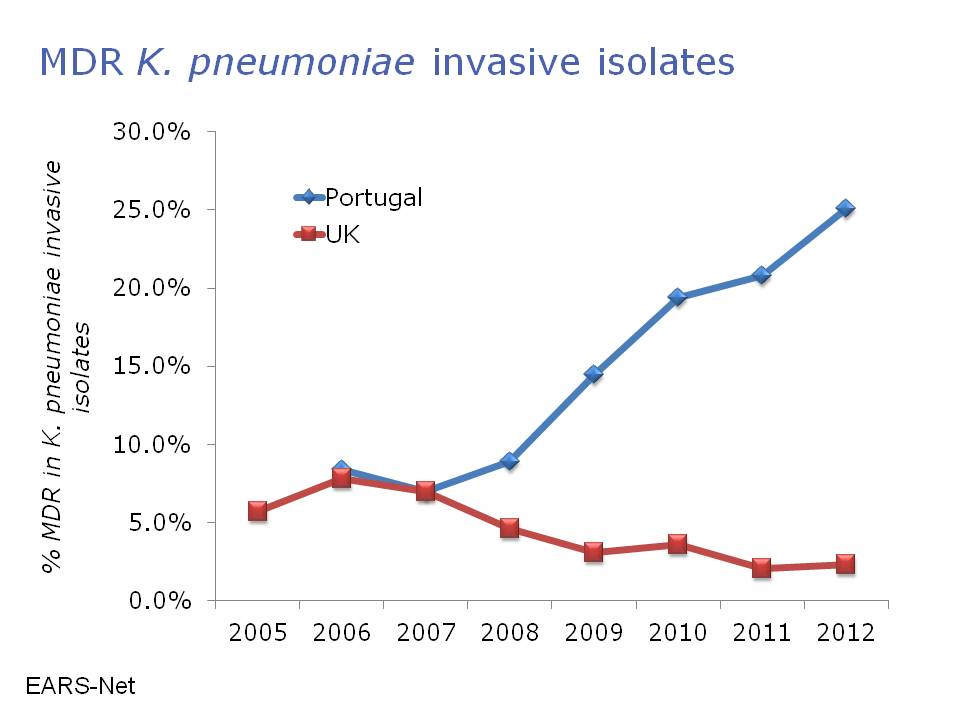
MRSA first emerged as a problem in the 1980s in Europe. It became a major problem in many European countries in the 1990s and 2000s so that recent data from ECDC shows high rates of meticillin resistance in S. aureus invasive isolates, especially in some southern European countries; the contrast between the rate of MRSA in the UK and Portugal is stark. In the early 2000s, the rate of MRSA was higher in the UK than in Portugal whereas now, it is much lower in the UK (Figure 1).

Figure 1: Rates of meticillin-resistance in invasive S. aureus in the UK and Portugal. Data from EARS-Net.mrsa uk vs portugal earsnet

Greece, Italy and Portugal are especially affected, with 25 to >50% of invasive S. aureus isolates resistant to methicillin. In the UK, a national strategy has yielded a dramatic reduction in the number of MRSA bloodstream isolates reported to the government in a mandatory reporting scheme (Figure 2).

Figure 2: Dramatic reductions in MRSA bacteraemia in England. But what has made the difference? mrsa bacteraemia whats made the differecnce

Since the national intervention in England was multifactorial, it is not clear what made the most impact, and it seems likely that more than one intervention contributed to the decline. Interventions included increased attention to intravenous line care, cleaning and disinfection of the environment, improved diagnostics (including the introduction of chromeagar and rapid PCR) and a national hand hygiene campaign. Perhaps the single most important intervention was the introduction of MRSA reduction targets, which were very controversial at the time, but put the issue of MRSA higher on the priority list for the hospital administration.

And this issue is not restricted to MRSA. In fact, the threat of the resistant Gram-negatives is even greater than MRSA in many ways. Carbapenem-resistant Enterobacteriaceae are rare currently in Portugal, accounting for 1-5% of invasive K. pneumoniae isolates. However, you get the feeling that it’s only a matter of time: carbapenem-resistant Acinetobacter baumannii are now endemic on many Portugese ICUs, and carbapenem use in Portugal is some of the highest in Europe, with >45% of patients on an antibiotic and >5% of patients on a carbapenem according to the ECDC point prevalence survey. Indeed, there has been a disturbing increase in multidrug-resistant K. pneumoniae in Portugal in recent years (Figure 3).

Figure 3: Disturbing emergence of multidrug-resistant Klebsiella pneumoniae in Portugal. Data from EARS-Net.

mdr kleb uk vs portugal ears net

The reason for these differences between the UK and Portugal is not clear, but may include infection control staffing, antibiotic usage and lower prioritisation by hospitals. Some progress is being made in Portugal with the recent launch of a national strategy to control healthcare-associated infection. However, the financial climate and somewhat fragmented healthcare system (compared with the NHS) will make implementation challenging. But at least it’s a start.

Image: Portugal stamp.

Selective Digestive Decontamination (SDD) is dead; long live faecal microbiota transplantation (FMT)

crapsules

Ok, so the title may be a little premature, since this blog relates to a study with a sample size of exactly one. However, I do think it spells the beginning of the end for Selective Digestive Decontamination (SDD), especially when applied to suppress gut colonization with antibiotic-resistant bacteria.

A number of groups have looked at using SDD to ‘decolonise’ carriers of multidrug-resistant Gram-negative bacteria such as CRE. In one study, 20 CRE colonized patients in each arm given gentamicin + polymyxin (SDD arm) or placebo (Control arm). The results were rather modest (see chart below). Plus, SDD has substantial downsides in terms of the potential for developing further antibiotic resistance, and ‘collateral’ damage to the gut microbiota.

Figure: Modest impact of SDD to ‘decolonise’ the gastrointestinal tract of CRE carriers.

Saide-Oldes CRE decol

I’ve been waiting for some data on the effectiveness of faecal microbiota transplantation (FMT) to decolonise carriers of antibiotic resistant bacteria for some time. A case report at ID Week related how the ordeal of a 13 year old girl was ended by a faecal microbiota transplantation. After months of persistent colonization and infection, the impact of a single dose of FMT was startling: CRE carriage was eliminated and there was no further bacterial infection.

One of the push-backs against using FMT more regularly is that it’s a crude (in every sense) and labour-intensive procedure compared with an antibiotic capsule. But that was before the invention of ‘crapsules’ (aka oral FMT). Another ID Week abstract reports the successful delivery of oral FMT using crapsules. (And it’s amazing what great dinner party conversation ‘crapsules’ makes. Try it – you’ll see.)

So, I think it’s time for a cluster randomized trial to compare the impact of SDD and FMT; my money is on FMT!

Image: Barbara Krawcowicz.

Not all resistant Gram-negative bacteria are created equal: Enterobacteriaceae vs. non-fermenters

apples and oranges

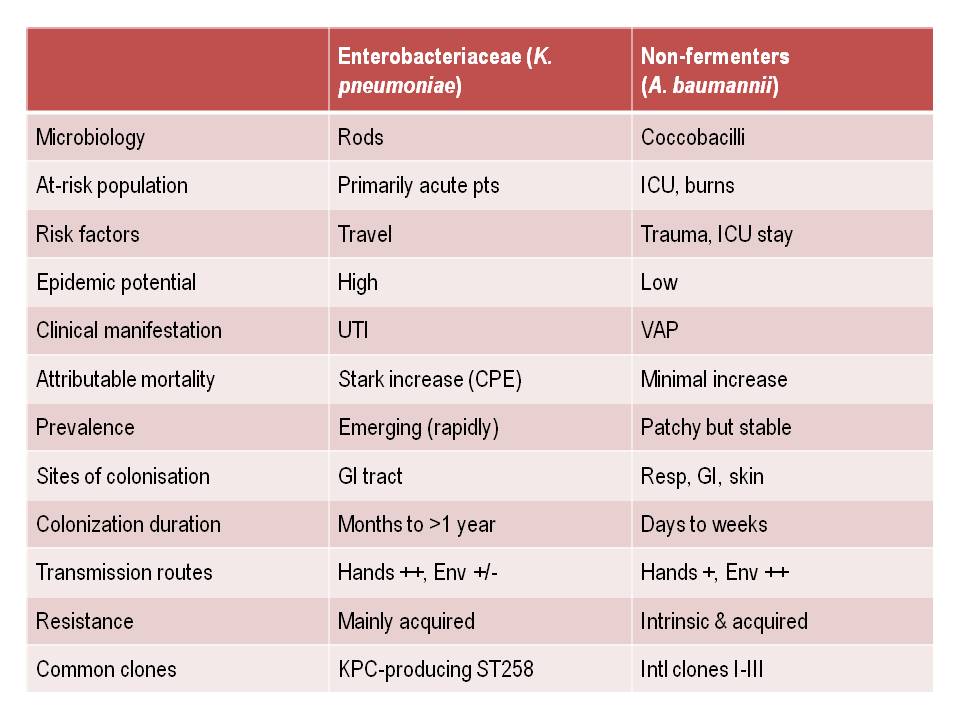
Apples and oranges. They’re both more or less spherical and classified as fruits, and that’s about whether the similarity ends. It’s the same for antibiotic-resistant Enterobacteriaceae (e.g. Klebsiella pneumoniae) and non-fermenters (e.g. Acinetobacter baumannii): they both share the same basic shape (more or less) and classification (Gram-negative), and that’s about where the similarity ends (see the Table below):

Table: Comparing the epidemiology of resistant Enterobacteriaceae and non-fermenters.3M webinar QA Not all created equal_table

I gave a webinar yesterday as part of a three part series on resistant Gram-negatives. You can download the slides here, and access the recording here (although you’ll have to register to do so). I am increasingly hearing people talking about ‘carbapenem-resistant organisms’ (CRO), used as a catch-all term to encompass both the Enterobacteriaceae and the non-fermenters. As you can see from the comparison table able, this doesn’t make a lot of sense given the key differences in their epidemiology. Indeed, MRSA is a CRO, so why don’t we lump that together with the Enterobacteriaceae and non-fermenters? Carbapenem-resistant Enterobacteriaceae and carbapenem-resistant non-fermenters are both emerging problems, but they are not the same problem.

I asked a few questions of the audience, which I’ve summarised below:

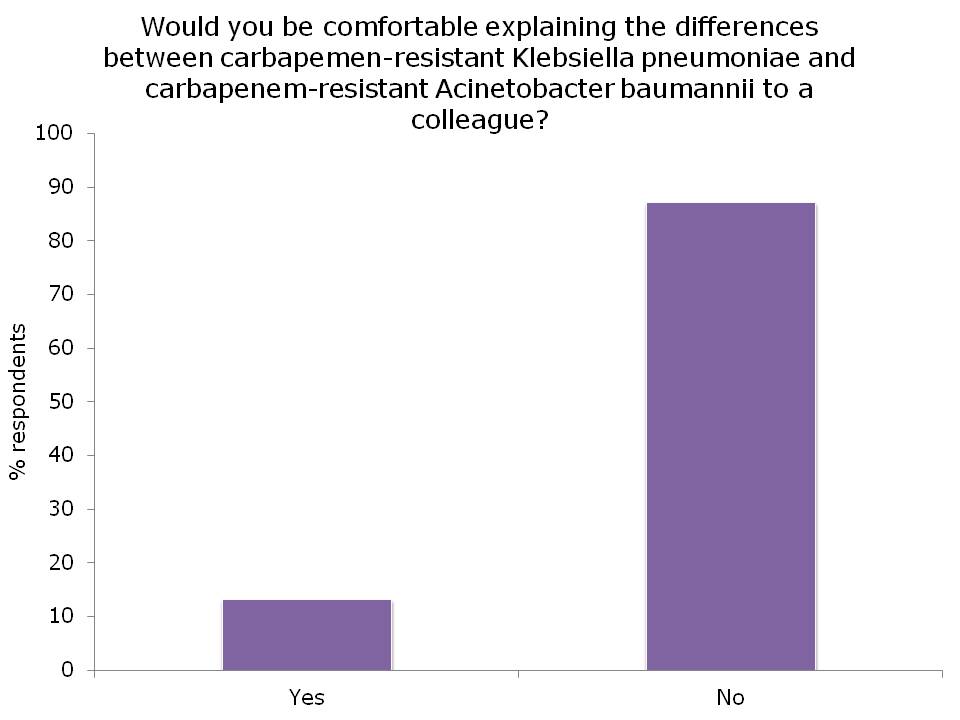
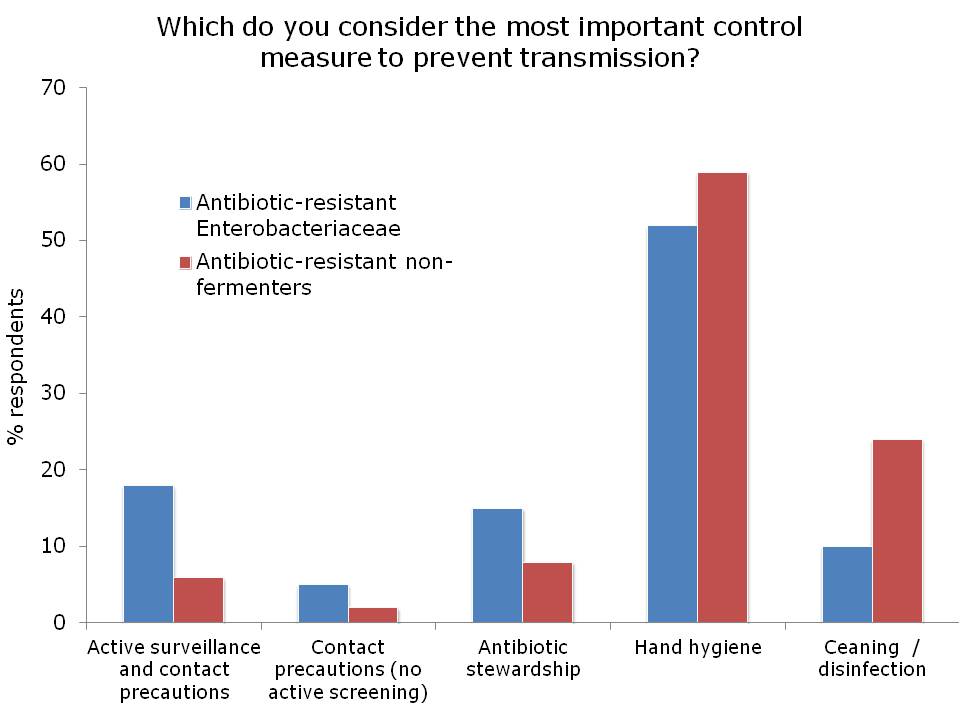
Figures: Questions asked of around 150 webinar participants, mainly from the USA.3M webinar QA Not all created equal Q13M webinar QA Not all created equal q23M webinar QA Not all created equal q3

I was not surprised that so few people felt comfortable explaining the difference between the Enterobacteriaceae and non-fermenters – and this rather justified the whole thrust of the webinar! I was a little surprised that the ‘prevalence’ of the two groups of resistant bacteria were so similar; I was expecting the Enterobacteriaceae to be more common (although I admit this wasn’t a brilliantly worded question). In terms of control interventions, it’s true that we still don’t really know what works to control resistant Gram-negative bacteria. But it does seem likely that the control interventions will be different for Enterobacteriaceae and non-fermenters, and this did come across in the responses. Hand hygiene was selected by most people (which makes sense), with screening & isolation, and stewardship more commonly selected for Enterobacteriaceae, and cleaning / disinfection for the non-fermenters.

Q&A

Following the webinar, the audience asked a few interesting questions:

  1. Can you get chlorhexidine resistant organisms? A number of studies have hinted that reduced susceptibility to chlorhexidine may be an emerging problem, (for example Batra, Otter, Lee and Suwantarat). But increases in bacterial MICs (for Gram-positive bacteria at least) appear to be a long way below the applied concentration. However, it’s worth noting that the measured CHG skin concentration in one study (15-312 mg/L before the daily bath and 78-1250 mg/L after the daily bath) was much lower than the applied CHG concentration (10,000 mg/L). This is around the CHG MIC for some Gram-negatives and potentially brings the subtly reduced susceptibility to CHG reported in MRSA into play. On balance though, the rationale and data on reduced susceptibility are cautionary but not enough to recommend against universal use in the ICU given the clinical upside.
  2. Do you think we should be doing universal chlorhexidine bathing? On our ICU in London, we have been using universal chlorhexidine decolonization for a decade combined with targeted screening and isolation, and have seen a dramatic reduction in the spread of MRSA. So yes, I think we should be doing universal chlorhexidine bathing, but the need to monitor carefully for the emergence of clinically-relevant reduced susceptibility.
  3. Can we discontinue contact precautions for CRE? The short answer is no. Quite a few studies have found that gut colonization with CRE typically lasts for at least 6 months to >1 year. And those that become spontaneously ‘decolonised’ sometimes revert to colonized, suggesting that they weren’t really decolonized at all – it’s just that their load of CRE at the time of sampling had fallen below the limit of detection. So I favour a “once positive, always positive” approach to CRE colonization.
  4. Which disinfectant would you recommend for resistant Gramnegatives? It does seem that the non-fermenters (and in particular A. baumannii) are “more environmental” than the Enterobacteriaceae. However, the Enterobacteriaceae (including CRE – especially K. pneumoniae) can survive on dry surfaces for extended periods. Therefore, I think enhanced disinfection – especially at the time of patient discharge – is prudent for both groups. Consider using bleach or hydrogen peroxide-based liquid disinfectants, and terminal disinfection may be a job for automated room disinfection systems, such as hydrogen peroxide vapour.
  5. Should we use objective tools to monitor cleaning? Effective tools are available to objectively monitor cleaning (e.g. ATP and fluorescent dyes), and these have been shown to improve surface hygiene. Therefore, we should all now be using these tools to performance manage our cleaning processes.

Image credit: ‘Apples and oranges’.

Journal Roundup August 2014: seeking your input

Fist bumpThe August edition of the Journal of Hosptial Infection Journal Roundup is now available, featuring:

  • A whopping five-fold increase in the detection of CRE in 25 US community hospitals.
  • MALDI-TOF as a new frontier for rapid detection of carbapenemase activity.
  • More on fist bumping instead of hand shaking. (Would you like a fist bump greeting from your doctor? No thanks!)
  • Triclosan-impregnated stitches would be cost-effective if they were only a little bit effective, but turns out they’re not effective at all.
  • The new ‘crAssphage bacteriophage’, C. difficile biofilms, and increasing rates of antibiotic resistance – all in the human gut microbiome.
  • Some hope for Ebola drug and vaccine targets.
  • How to reduce the number of sickies that children take from school (through effective school-based immunization programmes).
  • Thoughtful analysis on S. aureus outbreaks of old with lessons for now.
  • Reviews of CRE mortality, global antibiotic use, microbial hitchhikers, overdiagnosis & overtreatment, useless reporting of science in the mainstream media, and whether biocide use drives biocide resistance.

I’ve written three editions of the Journal of Hosptial Infection Roundup now (June, July and August), so there’s a few examples to review. You can read about my methods for producing the Roundup in the blog accompanying the June edition. I thought that now would be a good time to get some feedback, specifically:

  • Is the title right? A few people have expected it to be an overview of articles in the Journal of Hospital Infection only.
  • Is the length about right? (Do you fall asleep reading it or find yourself begging for more?)
  • Is the depth right? Or would you like to read more about less articles, or less about more articles?

Any feedback that you have would be most appreciated. Please either submit a comment below or email me.

Photo credit: ‘Fist bump’.