Reflections from Infection Prevention 2015 Part III: Thinking outside the box

think outside the box

For the third and final installment of my blog-report from Infection Prevention 2015, I thought I’d cover some of the more innovative approaches in and around the IPC sphere:

Part I: Beating the bugs

Part II: Improving the systems

Part III: Thinking outside the box

New technology to improve hand and environmental hygiene

I for one am pretty sick of seeing unrealistically high levels of hand hygiene compliance being reported from peer-to-peer manual auditing approaches. One way to get more realistic compliance data is through automated approaches to hand hygiene compliance, reviewed here by Drs Dawson (Warwick) and Mackrill (Imperial College London), who also presented their findings at the conference, and by another group here. Drs Dawson and Mackrill considered issues around product usage, self-reporting, direct observation, perceptions of technology (often viewed, unhelpfully, as a ‘silver bullet’), and staff perceptions of need and benefit. They divided the technology into those that monitored product usage, surveillance systems that monitored individual performance, and systems that monitored both product usage and individual performance. Although automated surveillance systems will always be imperfect and involve a degree of inference, would you rather monitor the 5 moments sporadically / badly or have robust measurements of a smaller number of moments? Automated surveillance methods will not replace manual audits – at least for now – but it’s time to take a long hard look at what is available.

Continue reading

Reflections from Infection Prevention 2015 Part II: Improving the systems

Swiss_cheese_model_of_accident_causation

Welcome to the second installment of my blog-report from Infection Prevention 2015, focused on improving the systems around the delivery of safe healthcare, and infection prevention and control:

Part I: Beating the bugs

Part II: Improving the systems

Part III: Thinking outside the box

The economics of HCAI is going to become increasingly important as the NHS – and healthcare systems worldwide – continue to “seek efficiency savings” (aka demand more for less). So the overview of HCAI economics from Dr Nick Graves (QUT, Australia) was timely. I find it remarkable that we are still so reliant on the 2000 Plowman report to gauge the cost of HCAI – surely there must be a more sophisticated approach? There is something rather uncomfortable about setting an ‘acceptable’ level of HCAI, or putting a £ value that we would be prepared pay to save a life, but this is exactly what we have to do to manage the demands of scarcity. Dr Graves presented some useful worked examples to illustrate his point, around coated catheters, hip replacements, hand hygiene improvement, and MRSA screening. In most cases, there comes a point where a health benefit is too expensive to ‘purchase’, which is an uncomfortable but very real choice across all areas of healthcare (e.g. cancer drugs).

Continue reading

Reflections from Infection Prevention 2015 Part I: Beating the bugs

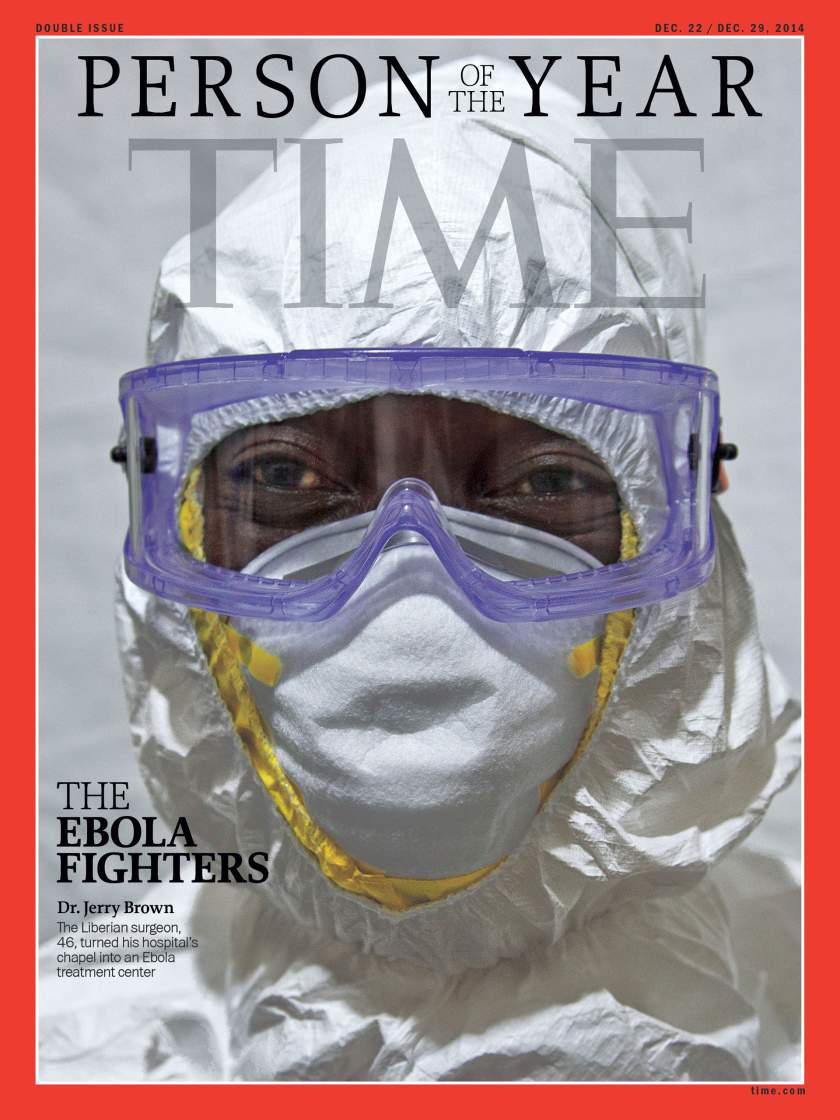
time person of the year

Infection Prevention 2015, the annual conference of IPS, was held in Liverpool this year. I’m delighted to say that the abstracts from the submitted science are published Open Access in the Journal of Infection Prevention. This first instalment of my report will be “bug-focussed”, followed by another two on different themes:

Part I: Beating the bugs

Part II: Improving the systems

Part III: Thinking outside the box

Opening lectures

The conference kicked off with fellow ‘Reflections’ blogger Prof Andreas Voss. By Andreas’ own admission, he was given a curve-ball of a title: ‘CRE, VRE, C. difficle or MRSA: what should be the priority of infection prevention?’ [No idea where that could have come from…] Andreas developed a framework for grading the priority of our microbial threats, accounting for transmissibility, virulence, antibiotic resistance, at-risk patients, feasibility of decolonisation, cost, and impact of uncontrolled spread. And the result? Any and all microbes that cause HCAI should be a priority of infection prevention. Even those that seem to have less clinical impact (such as VRE) are good indicators of system failure. If we focus too much on one threat, we risk losing sight of the bigger picture.

Continue reading

Attendance Grants Available

Schermafbeelding 2015-05-13 om 18.02.30ESCMID/SHEA
Training Course in Hospital Epidemiology
Goes Down Under

Cairns, Australia

20 July 2015 – 24 July 2015

This is the 2nd Australian edition of the (former) ESCMID-SHEA course. This course will be based on 3 cases that are handled by 6 groups of 10 students.

Each group has a dedicated faculty member to guide them, while 3 additional faculty members will be available for more general guidance (including handling of datasets and statistical/epidemiological issues). The cases run throughout the week and the theory will be given, based on the problems encountered in the cases.

Attendance Grants:

ESCMID provides a number of attendance grants for ESCMID “young scientist members”. The grant covers the registration fee, but not travel or accommodation costs. Please apply here before 1 June 2015. Applicants will be informed about their acceptance by 8 June 2015.

Continue reading

Journal of Hospital Infection Special Edition on the 2014 Healthcare Infection Society (HIS) Conference

HIS_Web_Banner_Jpeg

JHI have published a Special Edition featuring write-up from the 2014 HIS Conference (you can see my reflections from HIS here).

I’m all for special editions, and I think that JHI should do more of them. I know that compiling this Special Edition has been a considerable undertaking for the Journal, but well worth the effort: it’s a very useful read. Particular thanks to Dr Mark Walker who was the editor for this Special Edition, and to Dr Jenny Child who initiated it.

Twitter for healthcare professionals: useful or a waste of time?

twitter

An unusual review has just been published by Clinical Infectious Diseases by Debra Goff, Ravina Kullar and Jason Newland entitled Review of Twitter for Infectious Diseases Clinicians: Useful or a Waste of Time?”. As a keen reader of the journal, and a keen Twitter user, I found the article to be a fascinating read.

The authors make a strong argument that Twitter is a better fit with our “always on” culture than traditional forms of communication: and cite the fact that ‘UpToDate’ has pretty much replaced textbooks. However, I was interested to read that around 1.5% of all Twitter users are healthcare professionals (75,000 / 5,000,000). Does this mean that healthcare professionals are underrepresented on Twitter, since around 6% of the UK workforce work in the healthcare sector (1.4 m / 23 m)?

One interesting section addresses the accuracy of data on Twitter, which you’d expect to be somewhat flaky. However, an interesting analysis of tweets related to the H1H1 swine flu outbreak identified a surprising degree of accuracy. For example, 90% of the tweets contained a reference to source information where considered necessary, and <5% of tweets were classified as misinformation / speculation.

The article serves as a “how-to” guide, with a basic overview of what Twitter is and how it works. There’s also a useful list of people and organizations to follow to get you started (including ‘lil old me, I’m delighted to say)! The table of ‘Twitter Terminology’ is especially useful: this would have been a much-used resource for me if available when I started out on Twitter and didn’t know my retweet from my favorite!

From a personal viewpoint, I was pretty resistant to the idea of Twitter. How did I feel about putting myself ‘out there’ is such a public space? I have to admit though, my experience of Twitter for professional use has been unanimously positive:

  • It’s a very personalized newsfeed – I pick up on a lot of useful new data.
  • I’ve not had any ‘trolling’ whatsoever. Yes, some challenging, frank discussions. But nothing nasty.
  • I try hard to fit Twitter into my schedule and not let it take over my life. My general rule is that what goes out on Twitter is what I do anyway – so it’s pretty much time-neutral. In reality, it’s not quite time-neutral, but it’s pretty close.
  • It goes hand in hand with this blog. Sometimes 140 characters just won’t do – and that’s where this blog comes in!
  • I’ve made some really useful new contacts (not least Debbie Goff and Jason Newland, two of the review’s authors).
  • Live-tweeting conferences is a lot of fun; it has added a lot of value to my conference experience, and has served as notes for more comprehensive reports. (My conference experience has been enhanced further by Symplur Healthcare Hashtags analytics, which is also mentioned in the review.)

So, ‘Twitter for healthcare professionals: useful or a waste of time?’ It’s unrealistic to expect Twitter use to be completely time-neutral, but I do think that you can get close to that and add a new dimension to your worklife.

Image: Charis Tsevis.

Reflections from HIS 2014, Part III: Education, communication, and antibiotic resistance

HIS_Web_Banner_Jpeg

Welcome to the third and final installment of my reflections from HIS 2014. You can access the ‘box set’ via the list at the start of Part I.

Prof Alison Holmes – Impact of organisations on healthcare-associated infection

Self-professed pragmatist Prof Holmes reminded us that the perceived and actual priorities of society, politicians and healthcare systems mean that it’s not all about infection control. We must harness macro (inter-hospital) and meso (inter-departmental) and micro (inter-team) relationships to successfully control transmission. This requires shared beliefs, reinforcement systems, role models, and the right staff skills. Plus, we need to get HCAI on the metric dashboard of CEOs. Indeed, HCAI outcomes are a sensitive surrogate marker of organisation performance, so this should be attractive to the hospital CEO once understood. We also need to embrace the public to tackle antibiotic resistance. Government messages about reducing antibiotic resistance have helped our day job (and proved popular on Twitter)! Involving patients and the public in our research makes everybody happy; patients and the public like it, and it improves our research (and helps to win grants). We need to embrace ‘mHealth’ in all its forms – games, apps and more – remembering that dinosaurs became extinct. The bottom line? Organisational, structural and managerial issues are crucial for the prevention of healthcare-associated infection (and the Lancet ID agrees).

Prof Herman Goossens – European Antibiotic Awareness Day

eaad 2014

Since it was the occasion of European Antibiotic Awareness Day (EAAD) 2014, the talk from the impressive Prof Goossens was well timed! EAAD is a campaign aimed at the public and professionals to highlight the issues around antibiotic use and resistance. Many of the campaign materials are useful, including a toolkit for self-medication without antibiotics and various infographics. Prof Goossens spent some time discussing how to measure the impact of EAAD. A lot of questionnaire type surveys have been performed, and it does seem that EAAD has prompted a swing towards a better understanding of antibiotics, so well done to all involved.

What’s hot and what’s not in infection prevention and control?

Dr Jenny Child (JHI Editor) presented a view of the literature through the eyes of a journal editor! Bad research can do much damage:  look no further than the MMR & autism debacle. Worth remembering that indifferent, uncitable papers will not get published; it’s just not in the journal’s interest. Also, clever, ‘pseudo-scientific’ language is a barrier to good science. The bigger the journal, the plainer the language. Finally, whilst JHI has traditionally been a quantitative medicine journal (with p values and 95% confidence intervals!), like it or not, social science is coming!

I gave a talk on ‘What’s trending in the infection prevention and control literature’. You can access the slides and recording on a separate blog, here. Finally, Dr Jim Gray (JHI Deputy Editor) scanned the horizon of the infection control literature, seeing studies with specific interventions and real clinical outcomes (not proxy measures), SSIs, antibiotic resistance (especially CRE), obesity, design & technology, diagnostics and decontamination!

Antibiotic stewardship: persuasion or restriction?

Esmita Charani began by explaining the need to achieve behaviour change, not education in isolation, in order to effectively moderate antibiotic prescribing behaviour. The local prescribing culture is likely to influence prescribing policy more than the national guidelines. Junior doctors often don’t have a clue what to prescribe, so it’s a case of follow-my-leader (i.e. consultant). But targeting hospital consults alone won’t get us out of the mess of antibiotic resistance. We need to engage a wider audience, including the public.

Meanwhile, Prof Inge Gyssens outlined the impact of antimicrobial restriction: contribute to MRSA reductions, prevent the emergence of MDR-GNR, and may help to bring outbreaks under control. The only downside is that switching to another antibiotic may cause more problems than it solves – a ‘squeezing of the balloon’ type effect. In a way, doctors are “addicted” to antibiotics. Put simply, antibiotic stewardship through restriction is a ‘cold turkey’ approach that works.

Although not a formal debate, Esmita Charani and Prof Gyssens did a good job of presenting both viewpoints. I was left concluding that both persuasion and restriction are important but when it comes down to it, restriction is more important than persuasion. Left to their own devices, antibiotic prescribers will sometimes make poor choices; restriction takes away that choice!

Summary

I really enjoyed HIS 2014 – especially the opportunity to contribute to the conference via my talk (on trends in the IPC literature) and poster round. The conclusion of my talk was to look into my crystal ball and highlight what will be trending by the time HIS 2016 comes around:

  • I’m pretty certain that Ebola and MERS will not be trending (at least I hope not). However, the scars of Ebola in West Africa will take a generation to heal. There’s a chance that we could be experiencing the next Influenza pandemic, but it’s more likely we’ll be talking pandemic preparedness.
  • Whilst I personally favour targeted interventions, I fear there will be a general move towards universal interventions. I also fear that the confusing ‘vertical’ (aka targeted) vs. ‘horizontal’ (aka universal) terminology will be widely adopted, despite the fact that it’s confusing!
  • Faecal microbiota transplantation is only going to get bigger. It will be the standard of care for recurrent CDI by the time the next HIS conference comes around – perhaps even via oral ‘crapsules’.
  • Whole genome sequencing will not be as trendy as it is right now – it will just be a standard tool that we all use.
  • The trend of CRE (and other multidrug-resistant Gram-negatives) is only going to go one way – upwards!
  • I’m hoping to see some high-quality studies (ideally cluster RCTs) of environmental interventions with clinical outcomes.
  • Finally, as we all deal with increasing cost constraints, studies evaluating the cost-effeteness of infection prevention and control interventions are going to become increasingly important.

Reflections from HIS 2014, Part II: Dealing with the contaminated environment

HIS_Web_Banner_Jpeg

Welcome to Part II of my reflections from HIS. For the box-set, see the list at the beginning of Part I here.

Dr Karen Vickery – Multispecies biofilms on dry hospital surfaces – harbouring and protecting multiantibiotic resistant organisms

Probably the most important update from the entire conference was more data from the Vickery lab on biofilms on dry hospital surfaces. She excised 44 dry surface samples from the ICU, put them under the electron microscope and, lo and behold, 41 of them (93%) had fully-fledged (if somewhat unusual) EPS-producing biofilms on! The implications are huge: this could explain extended surface survival, poor success rate of surface sampling, and result in reduced biocide susceptibility up to the tune of 1000x (see my review just published in JHI with Karen as a co-author for more on biocides and biofilm susceptibility).

Dr Silvia Munoz-Price – Controlling multidrug resistant Gram-negative bacilli in your hospital: We can do it so can you!

Dr Munoz-Price described her hospital’s impressive reductions on carbapenem-resistant A. baumannii – from 12 new isolates per week to virtually none today. So what worked? It’s difficult to be sure since it was a bundled intervention. Dr Munoz-Price described the rationale behind some elements of the bundle: environmental surface and staff hand sampling to visualize the invisible, environmental cleaning and disinfection to deal with the ‘fecal [sic] patina’ [a stooly veneer emanating from the rectum] (see Dr Munoz-Price and Dr Rosa’s guest blog for more details), and chlorhexidine bathing. Perhaps the most interesting aspect was the various implementation challenges that were overcome. It was amazing how far removed practice ‘in the trenches’ was from the policy set by the epidemiologist’s office, exemplified by environmental staff buying their own UV lamps to for “spot cleaning” removal of fluorescent markers of cleaning thoroughness. Overcoming these challenges required more that the stick (citations for non-compliance, which failed); culture change takes understanding, time and a very large carrot (and some sticks too, sometimes).

Jim Gauthier – faeces management

A number of key pathogens are associated with faecal colonization and shedding: C. difficile, VRE, ESBL and CRE. Jim didn’t mention MRSA, but this can also cause gastrointestinal colonization and, more controversially, infection. Enterobacteriaceae can survive on dry surfaces for longer than you’d expect, too. We traditionally worry about surface contamination of high-touch sites in inpatient settings. Floor contamination isn’t important (unless you happen to be a wheel chair user, a toddler, or drop your pen). Contamination in outpatient settings isn’t a problem either (unless you happen to have a fairly short consultation for a patient with VRE). So, what to do? Jim introduced the idea of a ‘hierarchy of control’; put another way, prevention is better than cure, so do we have the right systems in place to manage faeces which is teeming with hospital pathogens? For example, should we be enforcing mandatory contact precautions for all contact with faeces (standard precautions – which aren’t very standard anyway – are probably not adequate)? Finally, Jim mentioned the growing importance of faecal microbiota transplantation (and hearing a Canadian speak about this reminded me of a hilarious spoof video).

No-touch automated room decontamination (NTD)

medical equipment in a hospital roomFigure: Hospital bed rails are frequently contaminated, and often not easy to clean and disinfect using conventional methods. 

Paul Dickens – establishing Ebola surge isolation capacity in the UK

Paul Dickens gave a whistle-stop overview of the detailed plans for Ebola surge capacity in the UK (perish the thought). He began by describing the replacement of formaldehyde with hydrogen peroxide vapour for the decontamination of the patient isolators at the Royal Free High Level Isolation Unit (HLIU). They now have a tried and tested process and protocols in place to get the HLIU back online within days using hydrogen peroxide vapour decontamination, where the previous protocol using formaldehyde put it out of action for 6 weeks! (I was involved in writing the protocols for this tricky decontamination assignment, which were reported on a poster published at HIS.) Other challenges in establishing surge capacity include staff expertise, and PPE recommendations, supply & training. Surge capacity is now established. Let’s just hope we won’t need it!

Dr Frédéric Barbut – How to eradicate Clostridium difficile spores from the environment

There’s now plenty of evidence that contaminated surfaces contribute to the transmission of C. difficile. These environmental intervention studies show a 50-80% reduction in the rate of CDI; does this mean that 50-80% of CDI acquisition is environmentally-associated? This seems too high, but it’s difficult to think of another explanation. Furthermore, there is emerging but compelling evidence of a proportional relationship between the degree of C. difficile surface contamination and transmission risk? I really don’t think that the public have yet ‘got’ that the previous occupant can influence acquisition risk. And when they do, I think there will be increasing demand for properly decontamination rooms. So, is it time to turn to NTD systems? Sometimes, yes. And do you go for hydrogen peroxide or UV? Well, that depends on what you’re trying to achieve! If you’re trying to eliminate pathogens, which sometimes you will be, then hydrogen peroxide vapour is the best choice. But if you’re trying to reduce contamination levels without necessarily eliminating all pathogens, then UV is the best choice due to its speed and ease of use.

The debate: “Hospitals that do not use high-tech decontamination of the environment are doing their patients a disservice.”

This debate pitted Profs Hilary Humphreys and Phil Carling (pro) against Peter Hoffman and Martin Kiernan (con). It was lively, entertaining and engaging…

Prof Humphreys argued that it is not acceptable to admit patients to rooms with inherent additional risk for transmission. We can address this by ‘walking like the Egyptians’ and copperising our surfaces, for which there is now some data with a clinical outcome. Another approach is NTD systems, for which data (including some clinical outcomes) are emerging. Prof Carling’s presentation was somewhat unusual, with his arguments seemingly an appeal to common sense rather than drawn from the published literature.

Martin Kiernan began by acknowledging the role of the environment, but that hand contamination is almost always the final vector (and there’s some evidence for this). The cornerstone of Martin’s argument was that whether NTD systems work is the wrong question. We should be focusing our time, money and attention on improving conventional methods which have been shown to reduce transmission. Peter Hoffman complemented Martin’s pragmatic viewpoint with thorough, thoughtful critiques of the studies on HPV decontamination with a clinical outcome. The 2008 Boyce study has more holes than the 2013 Passaretti study, which itself is far from watertight!

The key argument for turning to NTD systems is that admission to a room previously occupied by a patient with an MDRO increases the risk of acquisition due to residual contamination, and NTD decontamination mitigates this increased risk. So, my own conclusion is that hospitals that do not use high-tech decontamination of the environment are indeed doing their patients a disservice. Sometimes!

Look out for the third and final installment of my reflections from HIS 2014 at some point tomorrow!

Image: Medical equipment in a hospital room.

Reflections from HIS 2014, Part I: Updates on C. difficile, norovirus and other HCAI pathogens

HIS_Web_Banner_Jpeg

The 2014 Healthcare Infection Society (HIS) Conference was in Lyon, France, and combined with SFH2 (The French Society for Hospital Hygiene). Congratulations to all involved (especially Martin Kiernan and Prof Hilary Humphreys) for such a stimulating programme, and enjoyable conference. The abstracts from the oral presentations can be downloaded here, and the posters here. I plan to share some of my reflections on key conference themes over the next few days:

Prof Wing-Hong Seto – Airborne transmission and precautions – facts and myths

Prof Seto’s energy and enthusiasm lit up the stage, just like a few years ago in Geneva for ICPIC. Prof Seto spent his lecture convincingly debunking the idea that airborne transmission of respiratory viruses is common, notwithstanding some data that, prima facie, suggests this. Only very few pathogens require obligate airborne transmission (e.g. TB); some have preferential airborne transmission (e.g. measles); and some have potential airborne transmission (respiratory viruses). There is some evidence that respiratory viruses such as influenza can be transmitted via the airborne route, but the most important route of transmission will depend on context. One important point is that studies demonstrating airborne “transmission” using PCR rather than viral culture as an endpoint, or using artificial aerosol generation should not be taken as definitive evidence of airborne transmission. Prof Seto’s view is that medical masks are sufficient to prevent the transmission of respiratory viruses, as demonstrated by his own work during SARS. Finally, we can forget the requirement for negative pressure isolation rooms: open doors and windows yields a whopping 45 air changes per hour!

Prof Mark Wilcox – Is Clostridium difficile infection (CDI) underestimated due to inappropriate testing algorithms?

Prof Wilcox began by reporting an unusual epidemic: “PCRitis”, which can cloud rather than clarify accurate diagnosis of CDI. Perhaps the most important point made by Prof Wilcox is that the ultimate “gold standard” for CDI should be clinical, and not laboratory based. Prof Wilcox spent most of his time reflecting on the recent multicentre European study of CDI underdiagnosis in Europe. There are some real shockers in here: the reported rate of CDI in Romania was 4 cases per 1000 patient days vs. closer to 100 per 1000 patient days when samples from the same patients were tested in the reference lab. This is no surprise in a sense because only 2/5 local laboratories were using optimal methods. However, even in the UK where around 80% of local labs are using optimal methods, around 2-fold more cases were identified in the reference vs. the local laboratory. Clearly, if we’re going to have a hope of controlling the spread of C. difficile in Europe, laboratory diagnosis needs to improve.

Norovirus

norovirus

Norovirus is especially topical in the UK given the recent PHE announcement about unusually high rates of norovirus in the NHS. The prolific Dr Ben Lopman (CDC) began by explaining the ‘image problem’ that norovirus has in US hospitals, where it is considered an uncommon cause of gastroenteritis. In fact, a systematic review found that norovirus cases around 20% of acute gastroenteritis. However, I would say it’s just not possible to get an accurate assessment of how common norovirus is on a population level due to chronic under-reporting. When we had an outbreak of ”norovirus” in the Otter household, the last thing we felt like doing was submitting a specimen, and I suspect we are not alone in this! Although norovirus is usually mild and self-limiting, it is by no means benign: one Lopman study suggested that it is responsible for 20% of deaths due to gastroenteritis not caused by C. difficile in those ages >65. And then there’s the infection control challenges. Due to the exquisitely low infectious dose, 2g of stool from an infected individual is enough to infect the entire human population! Plus, it is shed in high titre, stable in the environment, and resistant to many disinfectants. Rather depressingly, it seems that effective interventions to control norovirus teeter around the cost-effectiveness threshold. More optimistically though, prospects for vaccines look promising.

Prof Marion Koopmans then described the huge diversity within the “norovirus” family, spanning more phylogenic space than many single species occupy. For chapter and verse on nomenclature, see Norovirus Net. It’s difficult to know what works to control norovirus due to dynamic outbreak settings combined with multiple interventions. One key aspect for control is understanding shedding profiles of infected, recovered and asymptomatic individuals. Whilst all can shed norovirus, much like Ebola, those who are symptomatic are by far the highest risk for transmission. Finally, our inability to culture norovirus in the lab has been an important barrier to understanding the virus; a recent study (in Science no less) suggests that a working lab model for culturing norovirus may be just around the corner.

Dr Lennie Derde – Rapid diagnostics to control spread of MDR bacteria at ICU

Given the turnaround times of conventional culture (24 hours to preliminary results – at best), rapid PCR-based diagnostics make sense in principle. But do they work in practice? There is some evidence that rapid diagnostics may work to reduce MRSA transmission, although other studies suggest that they don’t make a difference. In order to put rapid diagnostics to the test Dr Derde et al. ran the impressive MOSAR study. This study suggest that screening and isolation by conventional or rapid methods does not help to prevent the transmission of MDROs in the ICU, but I don’t think we should take that away from this study, not least due to the fact that many units were already doing screening and isolation during the baseline period!

New insights from whole geneome sequencing (WGS)

WGS is trendy and trending in the infection prevention and control sphere. Prof Derrick Crook gave an engaging overview of the impact that WGS has made. It’s analogous to the manual compilation and drawing of maps to GPS; you wouldn’t dream of drawing a map by hand now that GPS is available! Desktop 15 minute WGS technology will be a reality in a few years, and it will turn our little world upside down. The major limiting step, however, is that mathematics, computer science and computational biology are foreign to most of us. And we are foreign to most of them! But, these issues are worth solving because the WGS carrot is huge, offering to add new insight into our understanding of the epidemiology of pathogens associated with HCAI. For example, Prof Crook WGS study on C. difficile suggests that transmission from symptomatic cases is much less common than you’d expect. So if the C. difficile is not coming from symptomatic cases, where is it coming from? Contact with animals and neonates in the community are plausible sources However, I was surprised that Prof Crook didn’t mention the large burden of asymptomatic carriage of toxigenic C. difficile, which must be a substantial source for cross-transmission in hospitals.

WGS has yielded similar insight into the epidemiology of TB and MRSA, outlined by Drs Timothy Walker and Ewan Harrison, respectively. One challenging idea from Dr Harrison is how much of the “diversity cloud” that exists within an individual is transferred during a transmission event? Finally, WGS can turn a ‘plate of spaghetti’ of epidemiological links to a clear transmission map, as was the case during a CRE outbreak at NIH in the USA.

Look out for some more reflections from HIS posted over the next few days…

What’s trending in the infection prevention and control literature? HIS 2012 -> HIS 2014

I was privileged to speak at the Healthcare Infection Society meeting in France today on ‘What’s trending in the infection prevention and control literature? HIS 2012 -> HIS 2014’. You can download my slides here, and view the recording below:

http://youtu.be/k2NsEb_xUZ4

I have always enjoyed attending these light-hearted summary sessions at other conferences, so I hope I struck the right tone. In order to track some of the trends in the infection prevention and control literature since the last HIS conference (in late 2012), I plugged some search terms into Google trends (Figure).

Figure: Google Trends for all search terms (excluding viruses) (2004 to present). Logos and arrows represent the time of the HIS 2012 and HIS 2014 conferences. Search terms: hospital cleaning; carbapenem resistant Enterobacteriaceae, whole genome sequencing, fecal microbiota transplantation. [Note, I had to spell it ‘wrong’ (fecal v faecal) to detect a trend. Blasted Americans.]what's trending google trends

Based on my search terms, there was one infection control trend that trumped all others: Ebola. If I include in with the other Google search terms, it eclipses all others! Whilst trends in Google searches may not necessarily correlate with trends in the infection prevention and control literature, in this case, it is true that the outbreak of Ebola in West Africa has prompted a lot of publications in the literature – and consumed an awful lot of professional time for all who are connected with hospital infection prevention and control! Aside from Ebola, other trends in the infection prevention and control literature that I covered include MERS-CoV, universal vs. targeted interventions, faecal microbiota transplantation, whole genome sequencing, carbapenem-resistant Enterobacteriaceae (CRE), and some aspects of environmental science. Finally, I looked into my crystal ball and predict some of the trends in the infection prevention and control literature by the time HIS 2016 comes around.