Contaminated surfaces contribute to transmission; the question is, how much?

mop

I’ve been asked to write a chapter on the role of the environment in transmission in an Springer book (on the potential role for antimicrobial surfaces in healthcare). So, I’ve been busy updating my 2011 ICHE literature review on a similar topic, drawing on an excellent recent AJIC review by Dr Donskey.

There are some epidemiological associations that suggest an important role for contaminated surfaces in transmission. Most compelling are the studies showing that admission to a room previously occupied by a patient with certain environmentally-associated pathogens increases the risk of acquisition for incoming patients, presumably due to residual contamination. However, in order to really nail a scientific association, an intervention is required. Hence, the environmental intervention studies provide the highest quality evidence evaluating the role of the environment in transmission (see the Table below).

These studies have shown that switching to more effective agents, improving the cleaning / disinfection process or turning to automated “no-touch” room disinfection systems (NTD) can reduce transmission in endemic settings. It’s important to note that some studies report an ineffective environmental intervention. These are important to publish to avoid publication bias. Looking under the bonnet of these studies usually offers an explanation as to why they did not show a significant reduction in transmission. For example:

  • Wilcox 2003. There was virtually no impact on the frequency of C. difficile environmental contamination on the wards using bleach, so it’s surprising that they saw any reduction in CDI!
  • Valiquette 2007. The bundle of interventions, some of which were environmental, was only given a few months to be effective.
  • Wilson 2011. This one is more difficult to explain. Perhaps it was underpowered to detect a clinical impact in the declining prevalence of MRSA in the UK?
  • Dharan 1999. The intervention was focused mainly on improving the cleaning and disinfection floors, which are not exactly a high-touch, high-risk sites.

Believe it or not, I still occasionally meet people who tell me that contaminated surfaces do not contribute to transmission. That rather dated viewpoint is becoming increasingly untenable as the volume and quality of data evaluating the role of the environment in transmission continues to increase. For me, the question has now moved on to how much contaminated surfaces contribute to transmission, and how best to address contamination of the hospital environment.

Table. Intervention studies evaluating the role of contaminated surfaces in the endemic transmission of nosocomial pathogens.

Reference Setting, location Organism Study design Key findings
Mayfield 2000 1 Three units, USA C. difficile 18-month before-after study of a switch from QAC to bleach disinfection. Significant reduction in CDI incidence on the highest risk unit from 8.6 to 3.3 cases per 1000 patient-days.
Wilcox 2003 2 Two units, UK C. difficile 2-year ward cross-over study of a switch from detergent to bleach disinfection. Significant reduction in CDI incidence on one of the units (from 8.9 to 5.3 cases per 100 admissions), but not on the other.
McMullen 2007 3 MICU and SICU, USA C. difficile 2-month before-after evaluation of bleach disinfection of CDI rooms on SICU and 4-month evaluation of bleach disinfection of all rooms on MICU in a hyper-endemic setting. Significant reduction in CDI incidence on both units (10.4 to 3.9 cases per 1000 patient days on SICU; 16.6 to 3.7 cases per 1000 patient days on MICU).
Valiquette 2007 4 Hospital-wide, Canada C. difficile 5-month evaluation of enhanced infection control and disinfection, including a switch to bleach, and a subsequent switch to ‘accelerated’ hydrogen peroxide. Neither environment intervention made a significant impact on the incidence of CDI; a reduction in the use of high-risk antibiotics significantly reduced the incidence of CDI.
Boyce 2008 5 Hospital-wide, USA C. difficile 20-month before-after study on the use of HPV disinfection for terminal disinfection of CDI rooms. Significant reduction in CDI incidence on five high incidence units (from 2.3 to 1.3 cases per 1000 patient-days). Lesser reduction in CDI incidence hospital wide.
Hacek 2010 6 Three hospitals, USA C. difficile 3-year before-after study on switching from QAC to bleach for terminal disinfection of CDI rooms. Significant reduction in the incidence of CDI (from 0.85 to 0.45 per 1000 patient days).
Orenstein 2011 7 Two medical units, USA C. difficile 2-year before-after study on switching to bleach wipes for daily and terminal disinfection of all rooms. Significant reduction in the incidence of CDI (from 24.2 to 3.6 per 1000 patient days).
Manian 2013 8 Hospital-wide, USA C. difficile 3-year before-after study on enhanced terminal disinfection of CDI rooms using HPV and bleach. Significant reduction in the incidence of CDI (from 0.88 to 0.55 cases per 1000 patient days).
Hayden 2006 9 ICU, USA VRE 9-month before-after study on educational improvement of cleaning and hand hygiene. The frequency of environmental contamination and patient acquisition of VRE were reduced  from 33 to 17 acquisitions per 1000 patient-days during the improved cleaning phase.
Datta 2011 10 ICU, USA VRE / MRSA 3-year before-after study of an intervention (fluorescent markers, “bucket method” and education) to enhance daily and terminal cleaning. Significant reduction of MRSA (3.0% to 1.5% of admissions) and VRE (3.0% to 2.2% of admissions) acquisitions; intervention significantly reduced the increased risk from the prior occupant for MRSA but not VRE.
Perugini 2011 11 Hospital-wide, Brazil VRE 4-year before-after study of an educational and observational intervention for cleaners. Significant reduction in VRE infection (from 7.7 to 1.9 per 1000 patient days) and environmental contamination.
Grabsch 2012 12 Hospital-wide, Australia VRE 18-month before-after study of a multimodal intervention (switch to bleach, improved monitoring of cleaners, modification of VRE contact isolation, periodic ‘super-clean-disinfection’ of high-risk wards). Significant reduction of VRE colonization (from 10.7% to 8.0% of patients) and VRE environmental contamination.
Passaretti 2013 13 ICU, USA VRE / all MDROs 30-month cohort study on the impact of HPV decontamination. Patient admitted to rooms disinfected using HPV significantly less likely to acquire an MDRO (15.7 to 6.2 per 1000 patient days) and VRE (11.6 to 2.4 per 1000 patient days).
Mahamat 2007 14 Hospital-wide, UK MRSA 8-year interrupted time series analysis of multiple infection control interventions. Introduction of bleach disinfection, environmental sampling, alcohol gels and admission screening all reduced the prevalence of MRSA.
Dancer 2009 15 Two wards, UK MRSA 12-month cross over-study on the impact of one extra cleaner. Enhanced cleaning was associated with significant reductions surface contamination, hygiene fails and MRSA acquisition.
Wilson 2011 16 ICU, UK MRSA 12-month randomized crossover study on the impact of additional twice daily cleaning of hand contact surfaces. Significant reduction in the detection of MRSA on surfaces and hands, but no significant change in MRSA acquisition was detected.
Dharan 1999 17 5 medical wards, Switzerland 4-month controlled study where 3-wards received an intervention (including an active oxygen based compound) and 2 wards continued current practice. Intervention associated with reduced contamination but not reduced nosocomial infection or MRSA infection / colonization.

HPV = hydrogen peroxide vapour.


References

1.       Mayfield JL, Leet T, Miller J, Mundy LM. Environmental control to reduce transmission of Clostridium difficile. Clin Infect Dis 2000; 31: 995-1000.

2.       Wilcox MH, Fawley WN, Wigglesworth N, Parnell P, Verity P, Freeman J. Comparison of the effect of detergent versus hypochlorite cleaning on environmental contamination and incidence of Clostridium difficile infection. J Hosp Infect 2003; 54: 109-114.

3.       McMullen KM, Zack J, Coopersmith CM, Kollef M, Dubberke E, Warren DK. Use of hypochlorite solution to decrease rates of Clostridium difficile-associated diarrhea. Infect Control Hospital Epidemiol 2007; 28: 205-207.

4.       Valiquette L, Cossette B, Garant MP, Diab H, Pepin J. Impact of a reduction in the use of high-risk antibiotics on the course of an epidemic of Clostridium difficile-associated disease caused by the hypervirulent NAP1/027 strain. Clin Infect Dis 2007; 45 Suppl 2: S112-121.

5.       Boyce JM, Havill NL, Otter JA et al. Impact of hydrogen peroxide vapor room decontamination on Clostridium difficile environmental contamination and transmission in a healthcare setting. Infect Control Hosp Epidemiol 2008; 29: 723-729.

6.       Hacek DM, Ogle AM, Fisher A, Robicsek A, Peterson LR. Significant impact of terminal room cleaning with bleach on reducing nosocomial Clostridium difficile. Am J Infect Control 2010; 38: 350-353.

7.       Orenstein R, Aronhalt KC, McManus JE, Jr., Fedraw LA. A targeted strategy to wipe out Clostridium difficile. Infect Control Hosp Epidemiol 2011; 32: 1137-1139.

8.       Manian FA, Griesnauer S, Bryant A. Implementation of hospital-wide enhanced terminal cleaning of targeted patient rooms and its impact on endemic Clostridium difficile infection rates. Am J Infect Control 2013; 41: 537-541.

9.       Hayden MK, Bonten MJ, Blom DW, Lyle EA, van de Vijver DA, Weinstein RA. Reduction in acquisition of vancomycin-resistant enterococcus after enforcement of routine environmental cleaning measures. Clin Infect Dis 2006; 42: 1552-1560.

10.     Datta R, Platt R, Yokoe DS, Huang SS. Environmental cleaning intervention and risk of acquiring multidrug-resistant organisms from prior room occupants. Arch Intern Med 2011; 171: 491-494.

11.     Perugini MR, Nomi SM, Lopes GK et al. Impact of the reduction of environmental and equipment contamination on vancomycin-resistant enterococcus rates. Infection 2011; 39: 587-593.

12.     Grabsch EA, Mahony AA, Cameron DR et al. Significant reduction in vancomycin-resistant enterococcus colonization and bacteraemia after introduction of a bleach-based cleaning-disinfection programme. J Hosp Infect 2012; 82: 234-242.

13.     Passaretti CL, Otter JA, Reich NG et al. An evaluation of environmental decontamination with hydrogen peroxide vapor for reducing the risk of patient acquisition of multidrug-resistant organisms. Clin Infect Dis 2013; 56: 27-35.

14.     Mahamat A, MacKenzie FM, Brooker K, Monnet DL, Daures JP, Gould IM. Impact of infection control interventions and antibiotic use on hospital MRSA: a multivariate interrupted time-series analysis. Int J Antimicrob Agents 2007; 30: 169-176.

15.     Dancer SJ, White LF, Lamb J, Girvan EK, Robertson C. Measuring the effect of enhanced cleaning in a UK hospital: a prospective cross-over study. BMC Med 2009; 7: 28.

16.     Wilson AP, Smyth D, Moore G et al. The impact of enhanced cleaning within the intensive care unit on contamination of the near-patient environment with hospital pathogens: a randomized crossover study in critical care units in two hospitals. Crit Care Med 2011; 39: 651-658.

17.     Dharan S, Mourouga P, Copin P, Bessmer G, Tschanz B, Pittet D. Routine disinfection of patients’ environmental surfaces. Myth or reality? J Hosp Infect 1999; 42: 113-117.
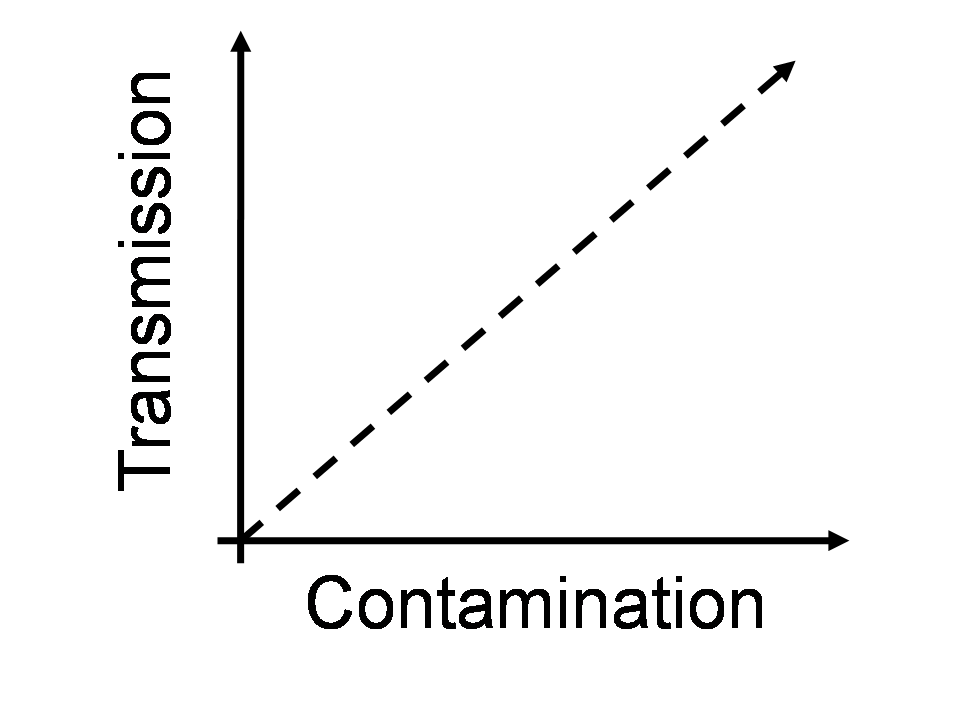
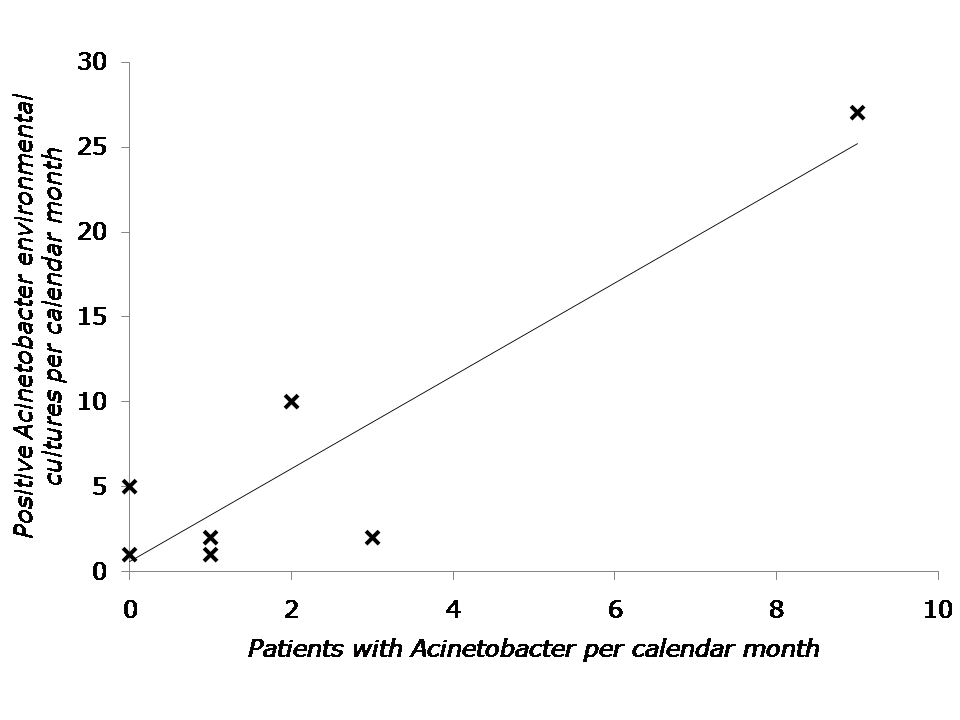
Is there a causal relationship between contamination burden and transmission risk?

contamination v transmission There’s an age-old problem in science: how do you prove a causal relationship between variables that correlate? Proving that the variables are correlated is the easy part; it’s more difficult to disentangle cause from effect. This can be seen in several studies that identify a correlation between environmental burden and the number of patients that are infected or colonized with pathogens.DentonFigure 1. Correlation between the number of patients infected with Acinetobacter spp. and the number of positive Acinetobacter spp. environmental cultures per calendar month during an outbreak on a neurosurgical ICU.1

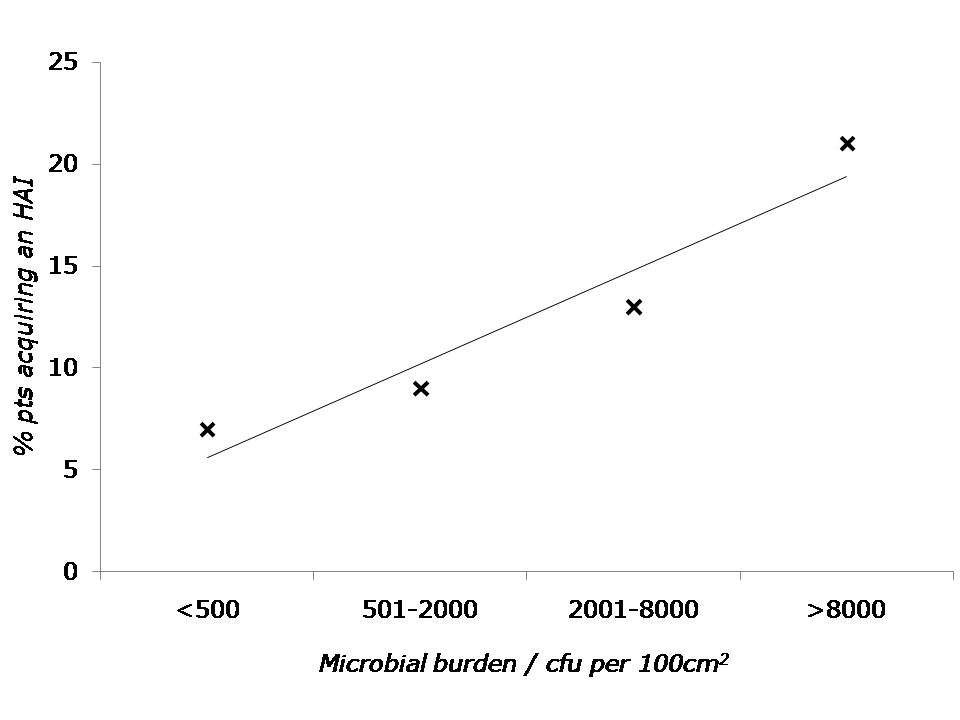
SalgadoFigure 2. Correlation between microbial burden and the number of patients who acquired an HAI in ICUs.2

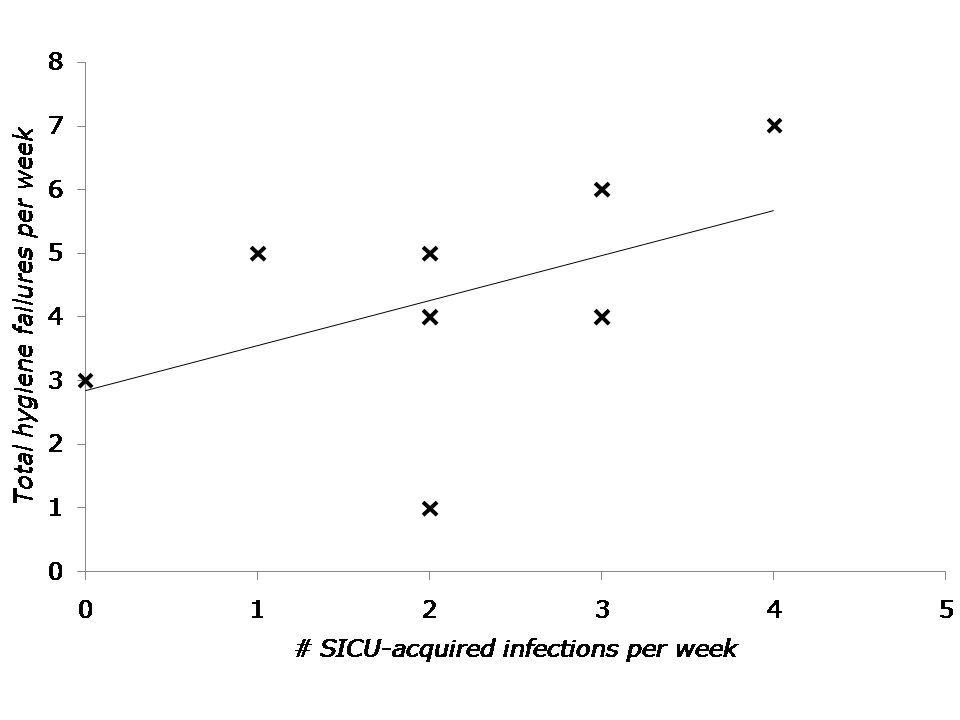
WhiteFigure 3. Correlation between the number of hygiene failures and the number of patients who acquired an infection on a surgical intensive care unit each week.3

So can we conclude that the higher burden of contamination resulted in an increased risk of acquisition? Or is it that more patients were infected or colonized with pathogens, which resulted in more environmental shedding? From these studies, you can’t be sure.

If you were seeking to prove the role of a gene in a process, you’d knock out the gene and demonstrate that the process stopped or changed. So, the only way to disentangle cause and effect in contamination and transmission is to perform an intervention to reduce environmental contamination and show that this correlates with reduced transmission. While the Salgado study evaluated an intervention, the data correlating contamination burden with HAIs was not stratified by the intervention, which would have been one way to assess likely causation.2

There is some further in vitro and epidemiological data supporting that the degree of transmission may be proportional to the environmental burden. An in vitro mouse model established a ‘dose-response’ relationship between the degree of contamination with C. difficile spores and the development of CDI.4 Furthermore, this model showed that disinfectants that achieved a greater log reduction of C. difficile spores were more able to interrupt transmission.

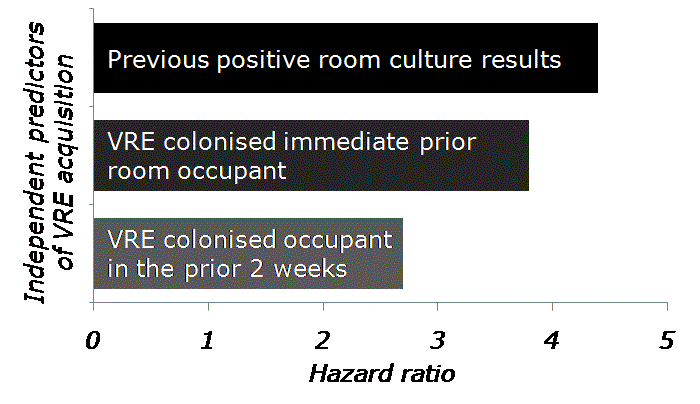
Also, one of the studies demonstrating that admission to a room previously occupied by a patient with VRE increases the chances of VRE acquisition identified something amounting to a ‘dose response’.5 The greatest increased risk was for patients admitted to a room with an environmental culture positive for VRE, and being admitted to a room where the immediate prior room occupant was colonized with VRE carried a greater increased risk than being admitted to a room where any patient in the 2 weeks prior to admission was VRE colonized (Figure 4).

DreesFigure 4. How the increased risk of acquiring VRE from the prior room occupant changes due to patient and environmental factors.5

Is there a causal relationship between contamination burden and transmission risk? On balance, the answer seems to be yes, though it would be useful to have a solid intervention study to prove that an increasing environmental burden causes an incrementally increase in transmission risk.

Article citations:

  1. Denton M, Wilcox MH, Parnell P et al. Role of environmental cleaning in controlling an outbreak of Acinetobacter baumannii on a neurosurgical intensive care unit. J Hosp Infect 2004; 56: 106-110.
  2. Salgado CD, Sepkowitz KA, John JF et al. Copper surfaces reduce the rate of healthcare-acquired infections in the intensive care unit. Infect Control Hosp Epidemiol 2013; 34: 479-486.
  3. White LF, Dancer SJ, Robertson C, McDonald J. Are hygiene standards useful in assessing infection risk? Am J Infect Control 2008; 36: 381-384.
  4. Lawley TD, Clare S, Deakin LJ et al. Use of purified Clostridium difficile spores to facilitate evaluation of health care disinfection regimens. Appl Environ Microbiol 2010; 76: 6895-6900.
  5. Drees M, Snydman D, Schmid C et al. Prior environmental contamination increases the risk of acquisition of vancomycin-resistant enterococci. Clin Infect Dis 2008; 46: 678-685.

The pitfalls of PCR for detecting pathogens on surfaces

PCR has proven an invaluable tool for the rapid diagnosis of a range of pathogens, including MRSA and C. difficile. Several studies have evaluated the potential use of PCR for the detection of pathogens on surfaces and have identified some issues that, frankly, seem pretty terminal for this application using currently available commercial PCR kits.

A study from Cleveland evaluated the use of a commercial RT-PCR test for detecting C. difficile on hospital surfaces. Three composite sites were sampled in 22 patient rooms, 41% of which housed a patient with CDI with the remaining 59% sampled after terminal cleaning and disinfection. Two swabs and a gauze were collected from each site; one swab was cultured directly onto selective agar and the other was tested using PCR. The gauze was cultured using broth enrichment. C. difficile that grew on the selective agar were tested for toxin production and only toxigenic C. difficile were included.

Overall, 23 (35%) of the 66 sites grew toxigenic C. difficile and only 4 of these were detected using the standard RT-PCR assay (sensitivity 17%, specificity 100%). The sensitivity of RT-PCR in rooms that had been cleaned and disinfected was even worse (10%). Increasing the CT threshold of the assay (making it less stringent) improved the overall sensitivity to 52% and did not affect the specificity.

The study has several important limitations. The RT-PCR assay detected only the Toxin B gene, whereas the toxigenic culture methodology would detect both Toxin A and B producers. More importantly, there was a crucial difference in sampling methodology: the gauzes used for broth enrichment culture had a 50% higher positivity rate than the swabs (in line with other findings), but only swabs were tested by both PCR and culture. Thus, if the gauzes are a more effective sampling device, this would make the RT-PCR methodology seems worse than it is. I would have liked to have seen the sensitivity of the RT-PCR assay for detecting C. difficile cultured from the swabs only, but I could not derive this from the data in the paper.

An older study from New Haven, Connecticut provides a contrasting view of the use of PCR to detect pathogens from surfaces. Here, 10 standardized sites were sampled in the rooms of 10 patients infected or colonized with MRSA, and 5 rooms of patients not known to be infected or colonized with MRSA. Swabs were directly plated onto selective agar for MRSA, then DNA was extracted from the swabs before a broth enrichment procedure using the same swabs. In this study, 40 (27%) of the 150 surfaces were positive by culture, but 90 (60%) were positive by PCR (sensitivity 93%, specificity 51%).

Deshpande 2013

Figure 1. Contrasting sensitivity and specificity when using PCR to detect C. difficile and MRSA on hospital surfaces.

It seems then that the sensitivity of PCR is too low for the environmental detection of C. difficile but the specificity is too low MRSA (figure 1). How could this be? Assuming that this is not due to experimental differences between the studies, it could be that the standard extraction procedure used for the C. difficile assay was not robust enough to liberate DNA from the mature environmental spores, resulting in low sensitivity. Conversely, the PCR assay was detecting DNA from dead MRSA on surfaces, resulting in low specificity.

So, in summary, the MRSA assay was too sensitive and the C. difficile assay was not sensitive enough! While the use of these “off the shelf” commercial assays doesn’t seem to be useful for detecting pathogens on surfaces, there may be hope for a PCR assay tailored specifically for an environmental application.

Article citations:

Deshpande A, Kundrapu S, Sunkesula VC, Cadnum JL, Fertelli D, Donskey CJ. Evaluation of a commercial real-time polymerase chain reaction assay for detection of environmental contamination with Clostridium difficile. J Hosp Infect 2013;85:76-78.

Otter JA, Havill NL, Boyce JM. Evaluation of real-time polymerase chain reaction for the detection of methicillin-resistant Staphylococcus aureus on environmental surfaces. Infect Control Hosp Epidemiol 2007;28:1003-1005.

The effect of closing and cleaning wards on infection rates

Not so long ago, the UK Government ordered a national ‘deep clean’. This prompted a fair amount of debate among experts and the public. If the NHS needed a spring clean, then does that mean that it was dirty in the first place? Perhaps. There does not seem to have been a formal evaluation of impact, but there is some rationale for closing and cleaning wards. For example, this paper from the early 1970s evaluated the impact of closing and cleaning five wards in London.

The five wards (four surgical and one medical) had an outbreak of MRSA (termed ‘cloxacillin-resistant S. aureus’). Rates of infection (termed ‘sepsis’) were monitored on the study wards before and after closing and cleaning. Wards were closed to admissions and emptied of patients. All fabrics were sent for laundering and all left over supplies were discarded. Cleaning comprised washing floors, walls and all other surfaces with hot water containing detergent; bed frames and furniture were also washed. The length of time that all this cleaning too is not specified, but I suspect it took place over several days. Crucially, staff and patients were screened for carriage of epidemic strains of S. aureus; colonised patients were not re-admitted after ward cleaning where possible.

The charts below show the impact on all infections (Figure 1), all S. aureus infection (Figure 2) and MRSA infection (Figure 3). Infection rates were compared 3 months before vs. 3 months after cleaning on Wards 1-3 and 6 months before vs. 6 months after on Wards 4 and 5. As you can see, the impact was pretty dramatic.

Noone Fig 1

Figure 1. Total infection rate (proportion of admissions infected) on the five wards before vs. after ward closing and cleaning.

Noone Fig 2

Figure 2. S. aureus infection rate (proportion of admissions infected) on the five wards before vs. after ward closing and cleaning.

Noone Fig 3

Figure 3. MRSA infection rate (proportion of admissions infected) on the five wards before vs. after ward closing and cleaning.

The poor reduction in total infection rate on Ward 1, a gynecological ward, (Figure 1) is largely due to high Gram-negative infection rates before and after cleaning, most likely explained by endogenous urinary tract infections. Reductions in total infection rate and S. aureus infection rate appeared to be less on Wards 4 and 5, which could be influenced by the fact that rates were compared for 6 months pre and post ward closing and cleaning rather than 3 months on Wards 1-3. The impact of a one off environmental intervention is likely to diminish over time. It’s also interesting to note that the MRSA infections identified on Ward 5, a general surgical ward, after cleaning were due to a different strain of MRSA (determined by phage typing and antibiogram) than before cleaning. This new strain matched the outbreak strain from Ward 2. Two of the patients on Ward 5 who became infected with this strain were operated on in the same theatre as the infected patients from Ward 2 within two weeks of one another. Four other patients (on different wards) also appeared to acquire the strain in the same operating theatre.

The study has several important limitations. It is not possible to be certain whether active screening and isolation or ward closing and cleaning were responsible for the reduction in infection rates; it was probably combined impact. The study design lacked the rigor of more modern investigations: infection rates were not expressed in terms of patient-days and infection rates were compared for different time periods making direct comparison of the impact across the five wards difficult. Also, no environmental sampling was conducted to demonstrate the efficacy of the cleaning procedure (both initially and in terms of recontamination).

Notwithstanding these limitations, the study provides evidence that ward closing and cleaning combined with active screening and selective readmission resulted in a dramatic reduction in the rate of nosocomial infection on five study wards. The impact appeared to be most pronounced in the first three months, which is consistent with a reduction in environmental contamination. Outbreaks of MRSA were eradicated by closing and cleaning on all five study wards. However, there was evidence of new nosocomial transmission following the re-admission of infected patients. Finally there was some interesting circumstantial evidence of transmission within operating theatres.

Article citation: Noone P, Griffiths RJ. The effect of sepsis rates of closing and cleaning hospital wards. J Clin Pathol 1971;24:721-725.

This is what happens when norovirus “sprays” from a toddler

baby changeAn outbreak report in the Journal of Infectious Diseases tells the fascinating story of a norovirus outbreak in a car (auto*) dealership in Oregon that was initially thought to be foodborne, but was eventually traced to contaminated surfaces on a baby changing table (diaper changing station*) in a public toilet (restroom*). The outbreak had a startlingly high attack rate, affecting 75% of 16 employees who attended a team meeting. A thorough investigation of the restaurant that provided the sandwiches for lunch turned out to be a blind alley following the recollection of a staff member of a toddler with “spraying” diarrhoea using the baby changing table in the public toilet of the dealership. The (generous) mother left the mess for the staff member to clean up, which was accomplished using, wait for it, dry paper towels.

The environmental investigation included samples from the baby changing table in the dealership and some ‘control’ samples from 14 baby changing tables in public toilets throughout the state. Norovirus of the same genotype as the outbreak strain was identified from the baby changing table in the car dealership, but norovirus was not identified from the control baby changing tables.

Some limitations of the outbreak include the fact that it is difficult to disentangle the relative importance of the environmental reservoir and secondary transmission via contaminated food. The PCR method used for environmental sampling does not assure that the norovirus RNA identified on the baby changing table was viable. Also, the environmental norovirus isolates could not be sequenced meaning that they could not be sequence-matched with the patient isolates.

Perhaps the most shocking part of the story is that the image of visible soiling on the baby changing table (after two rounds of cleaning) was consistently viewed on baby changing tables in public toilets. Or perhaps it’s even more shocking that only 3 of the 12 affected individuals actually took time off work. As a “survivor” of a norovirus outbreak that swept through the Otter household in 2012, I can vouch for the fact that a) you need to take time off work and b) you ought to take time off work!

One important discussion point was the finding of Dr Carling’s group that baby changing tables were least likely to be cleaned on cruise ships, a setting in which persistent norovirus outbreaks are common. This outbreak report and Dr Carling’s earlier work highlight an important deficiency in how to clean and disinfect baby changing tables in public toilets. As a frequent user over the past 14 months, I can vouch for the fact that, much like a hospital bed, turnover is high which pressurizes effective terminal disinfection! I agree with the authors that disinfection with a chlorine-containing disinfectant would be ideal, but question whether this is feasible in practice.

There’s surprisingly little data supporting the role of environmental contamination in the transmission of norovirus. I’m persuaded by the various outbreaks affecting separate cohorts of patients / staff on cruise ships or aeroplanes, but this outbreak is even more compelling due to the environmental findings. Quantifying the role of the environment in the transmission of norovirus is difficult to study because it always occurs in outbreaks (hence difficult to perform a controlled study). But I’d be interested to see whether the “prior room occupancy” concept that has been established for other environmentally-associated pathogens holds true for norovirus.

Article citation: Repp KK, Hostetler TP, Keene WE. A norovirus outbreak related to contaminated surfaces. J Infect Dis 2013;208:295-298.

Also, take a look at Dr Repp’s blog.

* = for my American readers! Current data indicates that around 40% of the readers of this blog are US based, 40% are UK based and 20% are rest of world!

MDR-Acinetobacter baumannii beats MRSA in the war for ICU predominance

A. baumannii is a notorious nosocomial pathogen due to a combination of its environmental resilience, its association with antimicrobial resistance and its outbreak potential. Colonized patients and contaminated environments are thought to be the primary reservoirs for the nosocomial transmission of this pathogen.

A recent study from China suggests that carriers of MDR A. baumannii (MDR-AB) show stronger ability to contaminate their immediate environment than those carrying MRSA and that MDR-AB spreads more easily and rapidly among inpatients compared with MRSA. The 20-month study was conducted in a respiratory ICU (RICU) where active screening of patients and targeted environmental screening for MRSA and MDR-AB were performed. The environmental samples were collected from 6 sites on patients’ bed linens.

High levels of carriage and nosocomial acquisition were found among the 175 patients admitted to the RICU where 44% of the patients were MDR-AB positive (80% of which were hospital acquired) and 24% of patients were MRSA carriers (60% of which were hospital acquired). Interestingly, 15.4% of the patients were co-carriers of MRSA and MDR-AB.

Researchers found that bed linens were commonly contaminated with MRSA and MDR-AB and that the contamination rate for MDR-AB was significantly higher than that of MRSA. Of the 576 MRSA samples, 26.6% were positive, and 51.6% of the 1,176 MDR-AB swabs were positive. This is surprising given the strict daily extensive cleaning practices, thrice daily bed linen changes and stringent terminal sterilization immediately after discharge of carriers. Researchers used the weekly colonisation pressure adjusted by degree of bed linen contamination (WCPe) and weekly acquisition rate (WAR) as parameters to evaluate the potential spread of these pathogens among inpatients. They found a positive significant correlation between the WCPe and WAR values for both organisms but both the WCPe and WAR of MDR-AB were significantly higher than for MRSA.

This study shows that environmental contamination with MDR-AB and the rate of its nosocomial acquisition is significantly higher than those for MRSA, which may explain why MDR-AB is able to spread among inpatients more rapidly. Although the study found positive significant correlation between the WCPe and WAR in the subsequent weeks, this correlation does not necessarily indicate causality. Nevertheless, the authors conclude that reduction of environmental contamination close to MDR-AB positive patients is crucial in controlling MDR-AB transmission.

Article citation:

Sui W, Wang J, Wang H et al. Comparing the transmission potential of Methicillin-resistantStaphylococcus aureus and multidrug-resistant Acinetobacter baumannii among inpatients using target environmental monitoring. Am J Infect Control. 2012. doi: 10.1016/j.ajic.2012.08.007

Where the wild things are

Carbapenem-resistant Enterobacteriaceae (CRE) are a major threat to public health worldwide and Israel is among the countries with the highest rates of these pathogens. A concerted campaign has done a good job of bringing the national outbreak under control, but problems persist1. An Israeli hospital investigated the extent of environmental contamination with CRE in the vicinity of 34 CRE-carriers using two different sampling methods; contact plates and swabs (with or without enrichment). Pilot sampling was performed to identify the five sites that were most likely to be contaminated (pillow, crotch and leg area on the bed, personal bedside table and infusion pump). To investigate the effect of cleaning on the recovery of CRE, the five sites were sampled at two different times; 4 and 24 hr after rooms were cleaned and patient cloths and sheets were changed.

12-PDR-A290-278

The study detected CRE in the surrounding environment of most (88%) of the patients sampled, showing that a high proportion of carriers shed these pathogens into their environment which can then be transmitted. Recovery was highest in the carrier’s immediate environment with the patient bed being the most contaminated. Not surprisingly, recovery of CRE from the environment was reduced when sampling was done 4 hr after cleaning compared to 24 hr after cleaning (21% of sites contaminated vs 27%). However these results also highlight the speed by which the patient environment is re-contaminated with CRE after cleaning. The study also showed that the choice of the detection method is also important and reported that contact plates were more efficient at recovering CRE than swabs even with enrichment broth.

The high rate of recovery of CRE from the environment in this study is surprising. Hence, hospitals with CRE-carriers should expect the environment in the vicinity of these patients to be contaminated. Regular and thorough cleaning of the patient environment and equipment should be an integral part of the hospital’s infection control strategy to reduce the spread of these pathogens.

Article citation:

Lerner A, Adler A, Abu-Hanna Jet al.Environmental contaminationby carbapenem-resistantenterobacteriaceae. J Clin Microbiol 2013;51:177-81.

References

1.       Schwaber MJ, Lev B, Israeli Aet al. Containment of a country-wide outbreak of carbapenem-resistant Klebsiella pneumoniae in Israeli hospitals via a nationally implemented intervention. Clin Infect Dis 2011; 52: 848-855.

Do biofilms on dry hospital surfaces change how we think about hospital disinfection?

An important paper published in the Journal of Hospital Infection has identified biofilms on dry hospital surfaces. Biofilms are known to be important in several areas of medicine including indwelling medical devices and endoscope tubing, usually associated with surface-water interfaces. However, it was unclear whether biofilms formed on dry hospital surfaces. The study by Vickery et al. ‘destructively sampled’ several hospital surfaces after cleaning and disinfection using bleach (i.e. cut the materials out of the hospital environment and took them to the lab for analysis). Scanning electron microscopy was used to examine the surfaces for biofilms, which were identified on 5/6 surfaces: a curtain, a blind cord, a plastic door, a wash basin and a reagent bucket. Furthermore, MRSA was identified in the biofilm on three of the surfaces.

biofilm

Could it be that we have missed or underestimated the importance of biofilms on dry hospital surfaces? Biofilms could explain why vegetative bacteria can survive on dry hospital surfaces for so long, be part of the reason why they are so difficult to remove or inactivate using disinfectants (bacteria in biofilms can be 1000x more difficult to kill than corresponding planktonic bacteria) and explain to some degree the difficulty in recovering environmental pathogens by surface sampling.

Biofilms are clearly not the only reason for failures in hospital disinfection given the difficulty in achieving adequate distribution and contact time using manual methods, but these findings may have implications for infection control practices within hospitals and on the choice of the appropriate disinfectants used to decontaminate surfaces.

Article citation: Vickery K, Deva A, Jacombs A, Allan J, Valente P, Gosbell IB. Presence of biofilm containing viable multiresistant organisms despite terminal cleaning on clinical surfaces in an intensive care unit. J Hosp Infect 2012; 80: 52-55.

Image courtesy of the Lewis Lab at Northeastern University. Image created by Anthony D’Onofrio, William H. Fowle, Eric J. Stewart and Kim Lewis