As posted previously, bacteriophage therapy is making a remarkable come-back, if measured in media attention. It is portrayed as safe and effective in treating infections where antibiotics fail. Yet, well-designed controlled studies either lack or failed to demonstrate benefits. All we have are case reports, with – with no exception – spectacular results. But that doesn’t make bacteriophages part of our daily options for treatment. And thus, desperate patients pay thousands of euros for bacteriophages in Georgia, Poland and Belgium for self-treatment, while – at the same time – all of us seem to agree that efficacy and safety should be determined. Continue reading
Antibiotic resistance
The war against CPE
An interesting publication on the control of CPE last week. Not in Nature, Science of Journal of Hospital Infection, but in the “Staatsblad van het Koninkrijk der Nederlanden”. The paper, “Besluit van 26 april 2019, houdende aanpassing van het Besluit publieke gezondheid vanwege een meldingsplicht voor Carbapenemaseproducerende Enterobacteriaceae”, with King Willem-Alexander as first author, implies that on April 26th it was decided that from July 1st 2019 on, by law, all CPE detected in the Netherlands must be notified, see. A next step in our war against CPE.
The challenges of detecting colistin resistance in CPE
Colistin resistance in CPE is bad news. Colistin is an older antibiotic that has been effectively brought out of retirement to tackle CPE infections. We have first-hand experience of witnessing the emergence and spread of colistin resistance in CPE – and it’s not a pretty sight. Colistin susceptibility testing is very tricky from a diagnostic laboratory viewpoint – and so I was interested in this recently published paper from colleagues at Imperial evaluating a rapid MALDI-TOF based approach to detecting colistin resistance, which looks very promising indeed.
The winner takes it all for S. aureus
As usual, some of the most interesting presentations at ECCMID were in the late-breakers “clinical trials” session. Four of 5 presentations were on treatment or prevention of S. aureus infection, the other one on oral treatment in patients with refractory fungal disease. With all respect to fungi, the meat was in the aureus, with nothing less than a Shakespearian tragedy. Continue reading
From crowded house to ESBL-free house
A few weeks ago, Jon Otter blogged about a novel risk factor for ESBL Enterobacterales (ESBL-E) carriage, a “crowded house”, based on his work recently published in CMI: among 1,633 subjects in the catchment area of South-East London a crowded house, was associated with ESBL-E carriage, with an odds ratio of 1.5 (95% CI 1.1-2.2). Jon hinted towards future community-based interventions to reduce ESBL-E carriage and his blog naturally reached our research meeting. Continue reading
Preventing infection to tackle AMR
We’ve been blogging for a while about the need to prevent infection to tackle AMR – and am really pleased to see that this idea is central to various AMR long-term strategies (e.g. the 5 and 20 year UK AMR strategies). So I endorse wholeheartedly this new poster from IPS promoting messages aimed at healthcare professionals around preventing infection to reduce AMR.

Mcr-1 plasmid-mediated colistin resistance genes in environmental Enterobacteriaceae
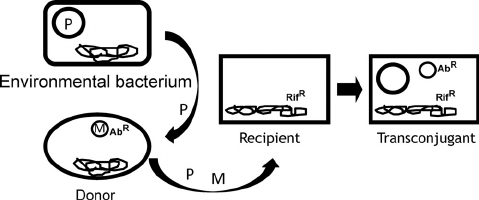
An interesting new Italian study has identified the mcr-1 gene, a plasmid-mediated colistin resistance gene, in 8% of environmental Enterobacteriaceae isolates. This suggests that environmental Enterobacteriaceae and perhaps even environmental surfaces themselves could be important reservoirs in the spread of mcr-1 and colistin resistance.
No CPE but a lot of VRE
Addenbrookes hospital in Cambridge (UK) have recently performed a point prevalence survey for antibiotic resistant bacteria. None of 540 patient samples grew CPE, but 130 (24%) grew VRE. So, why no CPE but so much VRE?
What urine can tell you
Urine should not be seen as a useless excretion product. Doping experts know, as do clinical microbiologists. In two recently published studies zillions of urine cultures were drained from computer systems and linked to primary care data, yielding very interesting findings. One study from Israel quantified the effects of direct and indirect fluoroquinolone use on antibiotic resistance in E. coli, see also our comments to that study. The second comes from the UK, the country that has an ambition to reduce Gram-negative bacterial bloodstream infection rates by 50%, because of increasing BSI rates. This study may provide both the reason for the problem and the direction to meet that ambition. Continue reading
The antibiotic resistance crisis resolved by bateriophages (part 5)
Yesterday we had another episode on the miracles of bacteriophage therapy on Dutch television. In the show I asked our minister of Health to modify the Dutch law, in order to make scientific evaluation of this approach in patients possible. Yet, the reasons why we need this change were not broadcasted. As several patients explained how they had been treated across Europe, this must have bee confusing, people not understanding why I – the knucklehead – failed to do studies. Let me explain. Continue reading
 Reflections on Infection Prevention and Control