I trust you are enjoying a well-deserved summer break or packing your bags to take off. In case you missed this paper in the daily list of new ones on biorxiv, it tells you where to swim safely and where not. Elena Buelow, from Germany, a former PhD student in our lab in Utrecht and now post-doc in Limoges, France, reported. So, if you are floating quietly in a pittoresque small river and you see a hospital building on the hill near the next bend in the river, are you still in safe waters? Continue reading
Year: 2019
21 is the magic number (for defining CPE person-to-person transmission using WGS)
A fascinating study from a European research group has unravelled the molecular epidemiology of a large European collection of carbapenem-resistant Klebsiella pneumoniae clinical isolates. Most carbapenem resistance was due to an acquired carbapenemases, transmission clusters were common within and between hospitals, carbapenemase-producing isolates are more likely to spread in hospitals, and 21 SNPs is the magic number for defining CPE person-to-person transmission using WGS.
Are the robots taking over? The role of machine learning and AI in tackling infectious diseases

I attended a brilliant seminar at Imperial College last week on the role of machine learning and artificial intelligence (AI) in infectious management, and to a lesser extent, infection prevention and control. There’s so much potential for this exciting technology to revolutionise the way we identify, treat, and prevent the spread of infectious diseases. But, there’s also some risks – some are already asking whether the robots are taking over, and whether that is an entirely good thing!
How a bundle kills Cochrane – or not?
Nice paper this week in JAMA Internal Medicine. How to treat patients hospitalized with Community-Acquired Pneumonia (CAP)? Antibiotics, sure, but can you do more to improve outcome and shorten length of stay (LOS)? You could choose any of 4 evidence-based interventions, that, according to (Cochrane) meta-analyses, improve patient outcome. Or decide to include all 4 in a bundle, as the Australian investigators did. And then the bundle fails to provide benefit and increases harm. Valentijn Schweitzer and I tried to explain. Continue reading
How a bundle kills Cochrane – or not?
Nice paper this week in JAMA Internal Medicine. How to treat patients hospitalized with Community-Acquired Pneumonia (CAP)? Antibiotics, sure, but can you do more to improve outcome and shorten length of stay? You could choose any of 4 evidence-based interventions, that, according to (Cochrane) meta-analyses, improve patient outcome. Or decide to include all 4 in a bundle, as the Australian investigators did. And then the bundle fails to provide benefit and increases harm. Valentijn Schweitzer and I tried to explain. Continue reading
Getting to grips with healthcare-associated Gram-negative bloodstream infection
I did a Webber Teleclass today on GNBSI. I covered some background and epi, drivers of GNBSI, and how we can take positive steps to tackle GNBSI. Here’s my slides, with a summary below.
It (the flu) came from the desert

We tend to find that the flu season in Australia is an early predictor for the severity of the coming flu season in the Europe. And the early indications are the flu in Aus this year is bad – unprecedentedly bad. So, let’s get our flu vaccination campaign planning hats on!
Infectious disease epidemiology 101
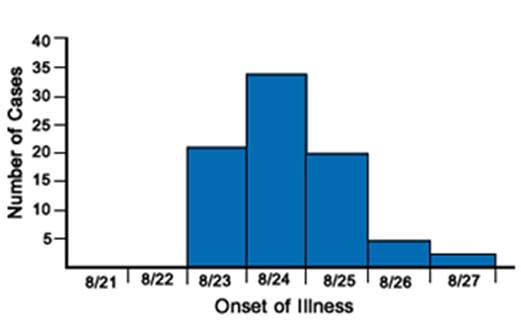
I participated in Imperial College London’s school outreach programme by doing an intro to infectious disease epidemiology with a group of year 10-12 students (age 15-18) (you can download my slides here). It was hugely rewarding and highly recommended for anybody considering supporting this sort of work. The group were sharp, good fun, and asked good questions – and perhaps included one of the next generation of infectious disease epidemiologists?
What does good surgical wound closure look like?

I love and hate SSI prevention in equal measure. On the one hand, we have good evidence and strong guidelines around SSI prevention – but on the other hand, implementing these interventions to prevent SSI can be enormously tricky in practice. One key factor in preventing SSI is creating a well-closed wound in theatre. Surprisingly, there’s precious little data on how to measure what a well-closed surgical wound looks like. This qualitative study presents some potential indicators to measure good surgical wound closure in order to prevent SSI.
Studying bacteriophages: catch-22
As posted previously, bacteriophage therapy is making a remarkable come-back, if measured in media attention. It is portrayed as safe and effective in treating infections where antibiotics fail. Yet, well-designed controlled studies either lack or failed to demonstrate benefits. All we have are case reports, with – with no exception – spectacular results. But that doesn’t make bacteriophages part of our daily options for treatment. And thus, desperate patients pay thousands of euros for bacteriophages in Georgia, Poland and Belgium for self-treatment, while – at the same time – all of us seem to agree that efficacy and safety should be determined. Continue reading
 Reflections on Infection Prevention and Control