Are hand dryers safe for clinical settings?

paint splatter

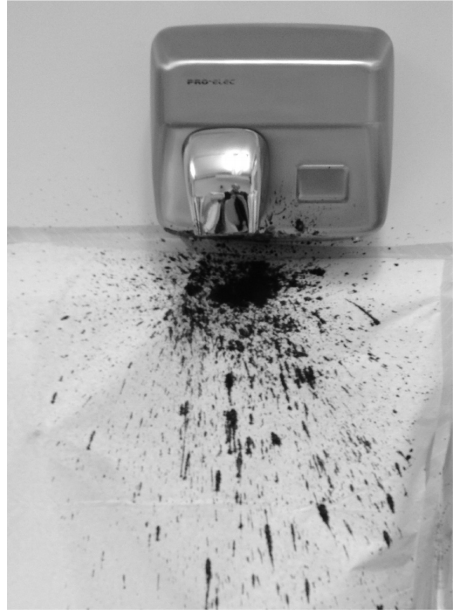
I edited a paper for Journal of Hospital Infection a few years ago on the potential risk of warm air dryers and especially jet air dryers compared with paper towels in spreading microbial contamination via the air. The paper showed that hands dipped in a concentrated bacterial suspension resulted in fairly widespread bacterial contamination of the air; jet air dryers were the worst culprit, followed by warm air dryers, with paper towels resulting in markedly less contamination. They also did some cool paint splatter experiments to visualize potential contamination routes (see image above, from the paper).

Continue reading

Preventing UTI: Could probiotics help?

24142960319_9117fccedc_zA study protocol has caught my eye this week, a trial of oral probiotics vs placebo as prophylaxis for UTI in spinal cord patients, a very high risk group for these infections and  associated complications. It will be a multi-site randomised double-blind double-dummy placebo-controlled factorial design study running over 24 weeks conducted in New South Wales, Australia. Probably about as robust as it gets scientifically. Continue reading

Reflections from ECCMID: the pink, the blue, and the new

eccmid2016

I’ve recently returned from an enjoyable few days in Amsterdam for ECCMID. I’ve not been to a conference of this scale for a few years; there was a lot of good stuff to choose from so I’ve tried to stick to key updates for the purposes of this reflection!

Continue reading

Social media survey for healthcare professionls: the results

I gave a presentation at ECCMID today on social media use by healthcare professionals (you can download my slides here). Since there isn’t a great deal of data around social media use by healthcare professionals, I thought I’d generate some! I put out this survey a few weeks ago. I was delighted that 749 healthcare professionals took the survey; thanks to everybody who took part.

Continue reading

English HCAI and AMR data at your Fingertips

PHE have just launched an interactive database for HCAI and AMR data from England using their ‘Fingertips’ platform. The HCAI data in the module has been available for years, but was buried in pretty dense Excel spreadsheets so tricky to visualise. The Fingertips platform makes data extraction and visualisation so easy even I can do it (example below).

Continue reading

Diluting the efficacy of hydrogen peroxide room decontamination?

h2o2

A somewhat perplexing new study has just been published in the Journal of Hospital Infection comparing the effectiveness of two hydrogen peroxide based automated room decontamination systems: a low-concentration (5%) hydrogen peroxide system (Deprox) and a high-concentration (30%) hydrogen peroxide system (Bioquell).

The study evaluated the impact of the two systems each run in 10 single rooms containing seeded metal discs placed in five locations, with a 6-log load of MRSA, K. pneumoniae, and C. difficile spores. The MRSA and K. pneumoniae were either low soiling (0.03% BSA) or heavy soiling (10% BSA), and the C. difficile spores was either low soiling (0.03% BSA) or in body fluid. In addition, surface samples were taken from 22 surfaces in each room before and after decon using contact plates. The bottom line is that both systems achieved a >5-log reduction on all of the discs (including those with heavy soiling), and there were no real differences in the levels of surface contamination remaining. All this understandably moved the authors to conclude that ‘The starting concentration and mode of delivery of hydrogen peroxide may not improve the efficacy of decontamination in practice.’

Continue reading

Poultry production and antimicrobial resistance in India

Schermafbeelding 2016-03-31 om 00.46.37

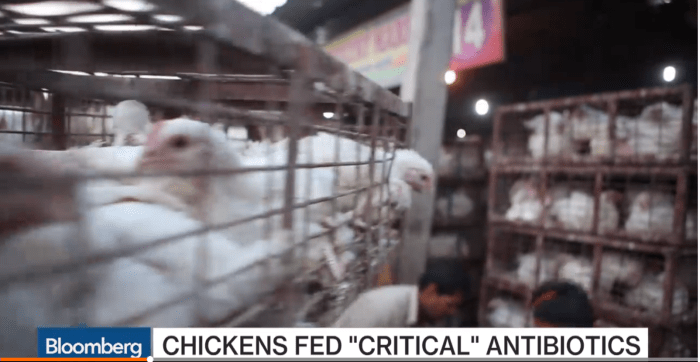
Take a look at these three stories on intensive poultry production and antimicrobial resistance in India published yesterday on the Bloomberg website. In accordance with what the movie industry does, these articles should be accompanied by a warning: “These articles contains scenes that some readers may find disturbing”. As the editor of the articles said in an email to colleagues that forwarded it to me: “I think you’ll agree that these are important stories and deserve attention (and hopefully a response from the appropriate authorities and the community).” Obviously, I do agree.

http://www.bloomberg.com/news/features/2016-03-29/antibiotic-apocalypse-fear-stoked-by-india-s-drugged-chickens

http://www.bloomberg.com/news/articles/2016-03-29/hen-s-eye-view-of-drug-use-in-the-fastest-growing-chicken-market

http://www.bloomberg.com/news/articles/2016-03-29/baby-s-death-shows-global-threat-from-wonder-drug-s-demise

Survey of social media use by healthcare professionals

social media montage

I have been asked by ECCMID to do a talk on ‘Selling your colleagues and society: how to use social media.’ While there is some good data on social media use by scientists, I was struggling to find specific data on social media use by healthcare professionals. So I thought I’d generate some (and in doing so, generate the power of social media!). So, I have put together a short, simple survey that I hope you will have time to complete here.

Continue reading

Review on AMR: Report on Infection Prevention and Control, and Surveillance

amr review hcai

The Review on AMR published their final instalment today: a report on Infection Prevention and Control, and Surveillance. A report on IPC was not planned at the start of the Review, so the existence of this report illustrates the responsiveness of the Review team. Also, having been peripherally involved in reviewing this report, I am aware that it was written within an extremely short timeframe but it does not show: it is comprehensive and thought-provoking (as it should be) with some useful recommendations.

Continue reading

Adapt to adopt | Didier Pittet | TEDxPlaceDesNations

Schermafbeelding 2016-03-21 om 22.42.44

Just as another way of sharing here the link to Didier’s TEDx PlaceDesNations talk: http://tinyurl.com/AdaptToAdopt or click on the picture.