Busy hospitals, contaminated surfaces and the acquisition of Acinetobacter baumannii

acinetobacterPhoto: Acinetobacter on MacConkey by Iqbal Osman.

Guest bloggers Dr. Rossana Rosa and Dr Silvia Munoz-Price write: The relationship between patients and their hospital environment is obvious yet intangible. What do we mean by environment? We are talking about the room, and objects within the room such as bedside tables, bedrails and IV pumps. In our study, which was published in the recent ICHE special edition, we found when patients are exposed to rooms contaminated with Acinetobacter baumannii they have an increased risk of acquiring this organism during their index admission. This association remained strong even after controlling for other variables.

In a previous study1, we addressed the other side of the equation, and reported the high degree of contamination detected in the rooms of A. baumannii positive patients. We found that the paired isolates had similarity by PFGE of at least 94.8% with each other, thus suggesting a direct contamination of the environment from the A. baumannii positive patient occupying the room. Put in perspective, the results of these two studies highlight how close, dynamic and interactive is the association between patients and the hospital environment.

Interestingly, we found two variables to be ‘effect modifiers’. An effect modifier is a variable that differentially modifies the observed association between an exposure and an outcome. Despite finding a very strong association between exposure to a contaminated environment and acquisition of A. baumannii in the whole cohort, this association was rendered non-significant when evaluated in sub-groups admitted either to a unit with high colonization pressure or admitted to the trauma intensive care unit. This is relevant because colonization pressure has been shown to play a role in the horizontal transmission of CRE2, as well as VRE3, MRSA4 and C. difficile5. This poses the question of whether contamination of the environment could be primarily a result of the colonization pressure within a unit, to the extent of reaching a threshold after which most of the surfaces in a unit will be contaminated.

The good news is that the exposure to a contaminated environment should be a modifiable risk factor for the acquisition of CRE and MDRO. Active surveillance cultures can be performed to screen for carriers, colonization pressures can then be estimated for each unit, and high touch surfaces can be determined and targeted for cleaning.

References

1. Munoz-Price LS, Namias N, Cleary T, et al. Acinetobacter baumannii: association between environmental contamination of patient rooms and occupant status. Infect Control Hosp Epidemiol 2013;34:517-520.

2. Swaminathan M, Sharma S, Poliansky Blash S, et al. Prevalence and risk factors for acquisition of carbapenem-resistant Enterobacteriaceae in the setting of endemicity. Infect Control Hosp Epidemiol. 2013;34:809-817.

3. Bonten MJ, Slaughter S, Ambergen AW, et al. The role of “colonization pressure” in the spread of vancomycin-resistant enterococci: an important infection control variable. Arch Internal Med 1998;158:1127-1132.

4. Merrer J, Santoli F, Appere de Vecchi C, Tran B, De Jonghe B, Outin H. “Colonization pressure” and risk of acquisition of methicillin-resistant Staphylococcus aureus in a medical intensive care unit. Infect Control Hosp Epidemiol 2000;21:718-723.

5. Lawrence SJ, Puzniak LA, Shadel BN, Gillespie KN, Kollef MH, Mundy LM. Clostridium difficile in the intensive care unit: epidemiology, costs, and colonization pressure. Infect Control Hosp Epidemiol 2007;28:123-130.

Bios

TICU_photo1_031914Photo key: from left to right: Dr. Nicholas Namias, Dr. Silvia Munoz-Price, Dr. Rossana Rosa and Dr. Daniel Kett. Location: Trauma Intensive Care Unit.

Dr. Silvia Munoz-Price is an Associate Professor of Clinical Medicine at the University of Miami. Dr. Rossana Rosa is currently an Internal Medicine Resident at Miami Miller School of Medicine and an incoming fellow of Infectious Diseases at the same institution. She hopes to continue developing her career in Hospital Epidemiology and Infection Control.

CRE can survive on dry surfaces for longer than you may expect

If I was to perform a straw-poll of microbiologist on how long Enterobacteriaceae could survive on dry surfaces, I suspect that most answers would be measured in hours and days rather than weeks and months. However, a lab study that I performed in collaboration with Nancy Havill and John Boyce at Yale New Haven Hospital demonstrated that CRE are able to survive on dry surfaces for over a month.

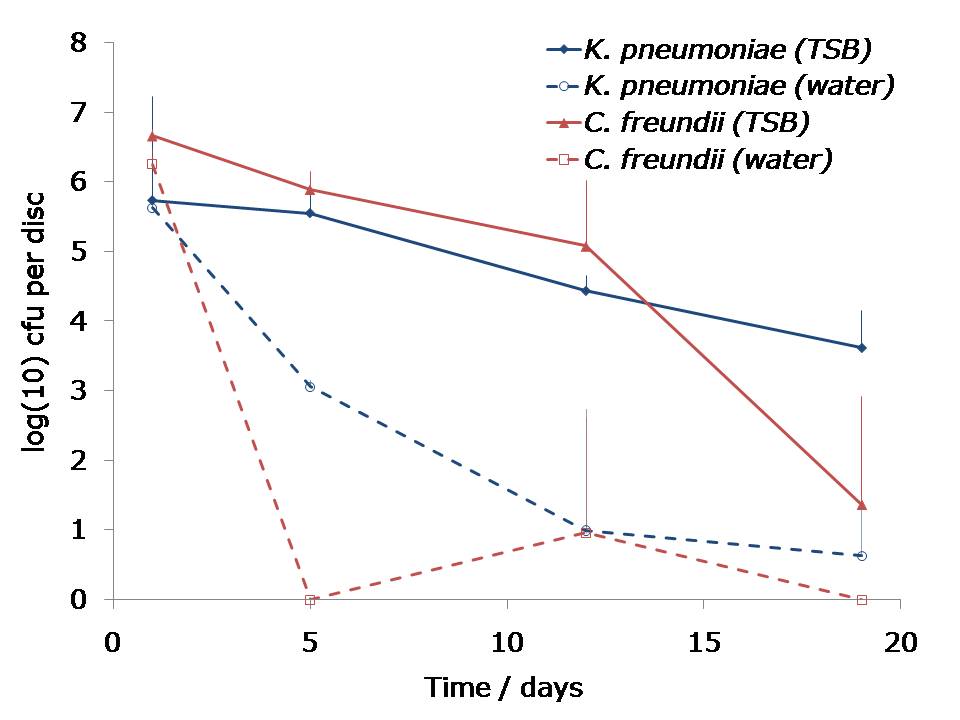
For the study, which is published in the recent ICHE special edition on CRE and MDROs, we took two clinical isolates of CRE (Klebsiella pneumoniae and Citrobacter freundii) and dried them onto metal discs either in a water or TSB suspension. Discs were then enumerated every few days over a 19 day period. Both K. pneumoniae and C. freundii were able to survive for more than two weeks, and all but C. freundii dried in water survived to the end of the testing period (day 19) (Figure 1). In addition, K. pneumoniae and C. freundii dried in TSB survived for more than 40 days in an additional set of experiments.

CRE survival 1Figure 1. Survival of K. pneumoniae and C. freundii on dry surfaces dried on metals discs in either water or TSB; error bars represent +1 standard deviation on a mean of three replicates at each time point.

We shouldn’t be surprised by these findings. Previous drying studies of Enterobacteriaceae have demonstrated a range of survival times, from hours to months depending on the species, strain and testing conditions. Whist it is plausible that carbapenem-resistance imposes a fitness burden on Enterobacteriaceae that may curtail their survival time, the CRE that we studied seemed to exhibit survival times in the same range as carbapenem-susceptible Enterobacteriaceae. Furthermore, a previous study from my lab identified a stark difference in the survival times of three different K. pneumoniae strains (Figure 2). One of the three strains tested was dead by three weeks, whilst another survived for more than 6 weeks with a minimal log reduction.

CRE survival 2Figure 2. Survival of three different strains of K. pneumoniae dried on metal discs; error bars represent +1 standard deviation on a mean of three discs at each time point.

It seems that CRE can survive for long enough on surfaces to be potentially involved in transmission. However, recent studies by Nseir et al, and Ajao et al. have failed to identify an increased risk associated with admission to a room occupied by a patient infected or colonized with resistant Enterobacteriaceae, in contrast with other bacteria including Acinetobacter baumannii. I suspect part of this is due to the fact that the Enterobacteriaceae are such a diverse family. A number of studies have identified large differences in the rate of contamination when comparing ESBL-producing E. coli vs. K. pneumoniae. If the prior room occupancy studies had been stratified and powered according to species within the Enterobacteriaceae family, I’d expect to see the increased risk from the prior room occupant for K. pneumoniae but not for E. coli. Also, the substantial variation in survival times amongst K. pneumoniae strains has clear implications for outbreaks of K. pneumoniae: are you dealing with a strain that is a “survivor” on surfaces? If so, more attention to cleaning and disinfection may be required.

In summary, CRE are able to survive on dry surfaces for weeks to months, which is long enough to be potentially involved in transmission; this justifies the advice for enhanced cleaning and disinfection to control the spread of CRE.

Article citation: Havill NL, Boyce JM, Otter JA. Extended survival of carbapenem-resistant Enterobacteriaceae on dry surfaces. Infect Control Hosp Epidemiol 2014;35:445-447.

What can outbreaks of Salmonella from the 1950s tell us about CRE?

I recently came across a fascinating review article published in 1963 mainly about outbreaks of Salmonellosis during the 1950s. The review focuses on epidemics that were traced to contaminated surfaces, including ingested, contact and inhaled transmission routes. A number of interesting epidemics stand out:

  • An outbreak linked to contaminated neonatal respirators.
  • An outbreak linked to a contaminated chopping board (see Figure). In this outbreak, one of the investigators apparently contracted Salmonellosis after touching the chopping board during sampling and then having a cigarette before washing his hands.
  • An outbreak (of microbial endotoxin syndrome) linked to a contaminated mouthpiece of SCUBA equipment. Here, the outbreak occurred in naval diving academy and the pattern of lessons and cases was so regular, that the epidemiologist could predict precisely when to visit to see the next case.

chopping board 2

Figure: A chopping board at risk of persistent microbial contamination due to surface damage. 

Although most outbreaks covered in the review relate to ancient catering-related outbreaks of Salmonella, there may be some useful learning for hospital epidemiology today, specifically CRE. It’s rare although not unheard of to find Salmonella carrying a carbapeneamase (i.e. Salmonella CRE). However, Salmonella is a member of the Enterobacteriaceae, so the involvement of contaminated surfaces during outbreaks of Salmonella suggests that contaminated surfaces may also be important during outbreaks of CRE.

It’s interesting that even back in the 1960s contaminated surfaces were recognized as potentially important in epidemics, whereas by the 1980s, the role of contaminated surfaces in endemic transmission was considered negligible. It’s difficult to know whether experts of the 1960s (perhaps there are some reading this?) would have considered contaminated surfaces important in both epidemic and endemic transmission? I suspect so, and we just lost sight of that in the 1980s and 90s.

Article citation: Sanborn WR. The relation of surface contamination to the transmission of disease. Am J Public Health Nations Health 1963;53:1278-1283.

Image: Ben Hosking.

What do we mean by ‘cleaning’ and ‘disinfection’?

clean definition 2

We urgently need to decide what we mean when we use the terms “clean” and “cleaning”.

In the last few years, the accumulated microbiological and epidemiological data (and prolonged heated debate) has lead us to conclude that  environmental surfaces need to be considered alongside hands, laundry etc so on, as part of a multibarrier approach to infection prevention and control in healthcare settings, and hygiene at home. Set against this however, our current approach of “what do we do to these surfaces to break the chain of infection transmission?” is both unscientific, and also highly misleading to the people we need to communicate with.  This part of the equation is fast becoming the weak link, preventing us from maximising health benefits from infection prevention and control measures.  This really hit home on reading the different contributions to the excellent 2013 AJIC supplement by Rutala and Webber which, on one hand showed just how much our thinking about environmental surface risks  has developed, but in many papers “environmental cleaning” was used interchangeably with “environmental disinfection” which made it confusing to know what the writer really meant.

From our IFH experience of home hygiene, we know what happens when advising consumers (or equally, hospital cleaning staff) to “clean” a surface e.g. after preparing raw poultry. They will clean until the visible dirt is gone – and we know that this is not necessarily enough.  For the home, we have data showing that after cleaning kitchen surfaces with soap and water following preparation of a chicken (in the UK 60% are contaminated with Campylobacter),  surfaces may LOOK squeaky clean, but the Salmonella or Campylobacter is now spread everywhere (and in numbers up to 103 or more).   We have similar data for surfaces contaminated with norovirus-containing faecal matter from an infected person (for which the infectious dose may be very small).

As a start, we need a term to advise/communicate “this surface needs to be cleaned to a level that breaks the chain of infection” and we currently have NO way to do this.   If we accept that the term “clean” means absence of visible dirt/soil, we need a term to describe “microbiologically safe clean”, not just for consumers or hospital cleaning professionals, but also for communicating with each other as scientists.

There is also another common misconception. Some people work on the basis that “clean” means visibly clean, and “microbiologically safe clean” means a chemical or thermal disinfectant has been used.  But then how can we communicate that hand washing can make hand surfaces microbiologically safe” without need for a disinfectant.  There is a notion that “cleaning” is hygienically inferior to disinfection – but data now shows that the log reduction by handwashing with soap can be equivalent to that achieved by alcohol handrubs if done properly, and you have access to running water.  We put much effort into hand hygiene compliance, but relatively little into stressing that handwashing technique to deliver hands which are “fit for purpose” is equally important.

We need to go back to the simple principles of what we are trying to achieve – namely to break the chain of onwards transmission of pathogens by treating surfaces (hands or environmental) to reduce germs to an “acceptable level” i.e. make a surface “fit for purpose”.  This can be done in 2/3 ways – removing them, inactivation, or a combination of both. For the last 14 years, IFH has successfully used the word “hygienically clean” to mean “microbiolgically safe”, and “hygienic cleaning”  to describe the process to achieve this – which could be soap and water with rinsing – or cleaning disinfection, or a combination of both.

Guest Blogger Bio

SBPHOTO

Dr Sally Bloomfield is an Honorary Professor at the London School of Hygiene and Tropical Medicine. She is also is the Chairman and Member of the Scientific Advisory Board of the International Scientific Forum on Home Hygiene (IFH).  Through these roles Professor Bloomfield continues to develop her work in raising awareness of the importance of home hygiene in preventing the transmission of infectious disease, and developing and promoting home hygiene practice based on sound scientific principles. She is also working to develop understanding of “hygiene issues” such as the “hygiene hypothesis” and “antimicrobial resistance”.

Professor Bloomfield’s background is in healthcare and infectious disease. She has a degree in Pharmacy, and PhD in Pharmaceutical Microbiology from the University of Nottingham. Sally was previously a Senior Lecturer in Pharmaceutical Microbiology at Kings College London (1995 – 1997) and a Hygiene Liaison manager at Unilever Research Port Sunlight UK (1997 – 2001).  She has published 100 research and review papers on the subject of home hygiene and the action and mode of action role of antimicrobial agents.

The Hospital Microbiome Project

hosp microbiome

I recently came across the Hospital Microbiome Project, a multidisciplinary, multinational project designed to investigate the hospital microbiome. The science of ‘microbiomics’ (considering the whole microbial population rather than the small subset that can be cultured) is beginning to revolutionise our understanding of microbiology and human disease (1,2). Environmental studies tend to evaluate the presence of a particular microbe of interest. Few have begun to evaluate the microbiome of the hospital, and how it interacts with patients. Furthermore, antibiotic resistance genes can be shared between various species through horizontal transmission. Indeed, a study from our group at King’s College London found that ‘outbreaks of resistance’ across different species could be identified in the ICU (3). It is not known whether environmental surfaces represent a reservoir for antibiotic resistance genes and an environment in which horizontal transmission can occur (4-6). Thus, the ‘resistome’ of hospital surfaces warrants further evaluation (4-6). This point is particularly important for multidrug-resistant Gram-negative rods, which are multiply antibiotic resistant through a variety of resistance mechanisms (7-8).

The Hospital Microbiome Project uses methods to assess both the microbiome and the resistome of the hospital environment. Patient, staff, water and air will be sampled and sequencing of 16S and 18S ribosomal DNA has been used to identify bacteria and fungi, respectively, and an oligonucleotide array to detect a range of resistance genes. The initial studies are tracking the development of the hospital microbiome in a new Chicago hospital, and of a single patient room in a German military hospital (9). Some initial results already published on the Hospital Microbiome website are fascinating, explaining the microbial populations in a hospital under construction.

I look forward to seeing more results from the project in due course. There’s a chance the findings could change the way we think about contamination of the hospital environment.

References

  1. Blottiere HM, de Vos WM, Ehrlich SD, Dore J. Human intestinal metagenomics: state of the art and future. Curr Opin Microbiol 2013; 16: 232-239.
  2. Rajpal DK, Brown JR. Modulating the human gut microbiome as an emerging therapeutic paradigm. Sci Prog 2013; 96: 224-236.
  3. Vlek AL, Cooper BS, Kypraios T, Cox A, Edgeworth JD, Auguet OT. Clustering of antimicrobial resistance outbreaks across bacterial species in the intensive care unit. Clin Infect Dis 2013; 57: 65-76.
  4. Molin S, Tolker-Nielsen T. Gene transfer occurs with enhanced efficiency in biofilms and induces enhanced stabilisation of the biofilm structure. Curr Opin Biotechnol 2003; 14: 255-261.
  5. Warnes SL, Highmore CJ, Keevil CW. Horizontal transfer of antibiotic resistance genes on abiotic touch surfaces: implications for public health. MBio 2012; 3:
  6. Mkrtchyan HV, Russell CA, Wang N, Cutler RR. Could public restrooms be an environment for bacterial resistomes? PLoS ONE 2013; 8: e54223.
  7. Karah N, Sundsfjord A, Towner K, Samuelsen O. Insights into the global molecular epidemiology of carbapenem non-susceptible clones of Acinetobacter baumannii. Drug Resist Updat 2012; 15: 237-247.
  8. Munoz-Price LS, Poirel L, Bonomo RA et al. Clinical epidemiology of the global expansion of Klebsiella pneumoniae carbapenemases. Lancet Infect Dis 2013; 13: 785-796.
  9. Smith D, Alverdy J, An G et al. The Hospital Microbiome Project: Meeting Report for the 1st Hospital Microbiome Project Workshop on sampling design and building science measurements, Chicago, USA, June 7th-8th 2012. Stand Genomic Sci 2013; 8: 112-117.

Image credit: Hospital Microbiome Website.

“Dirty money”: are you getting the right change from microbe-contaminated money?

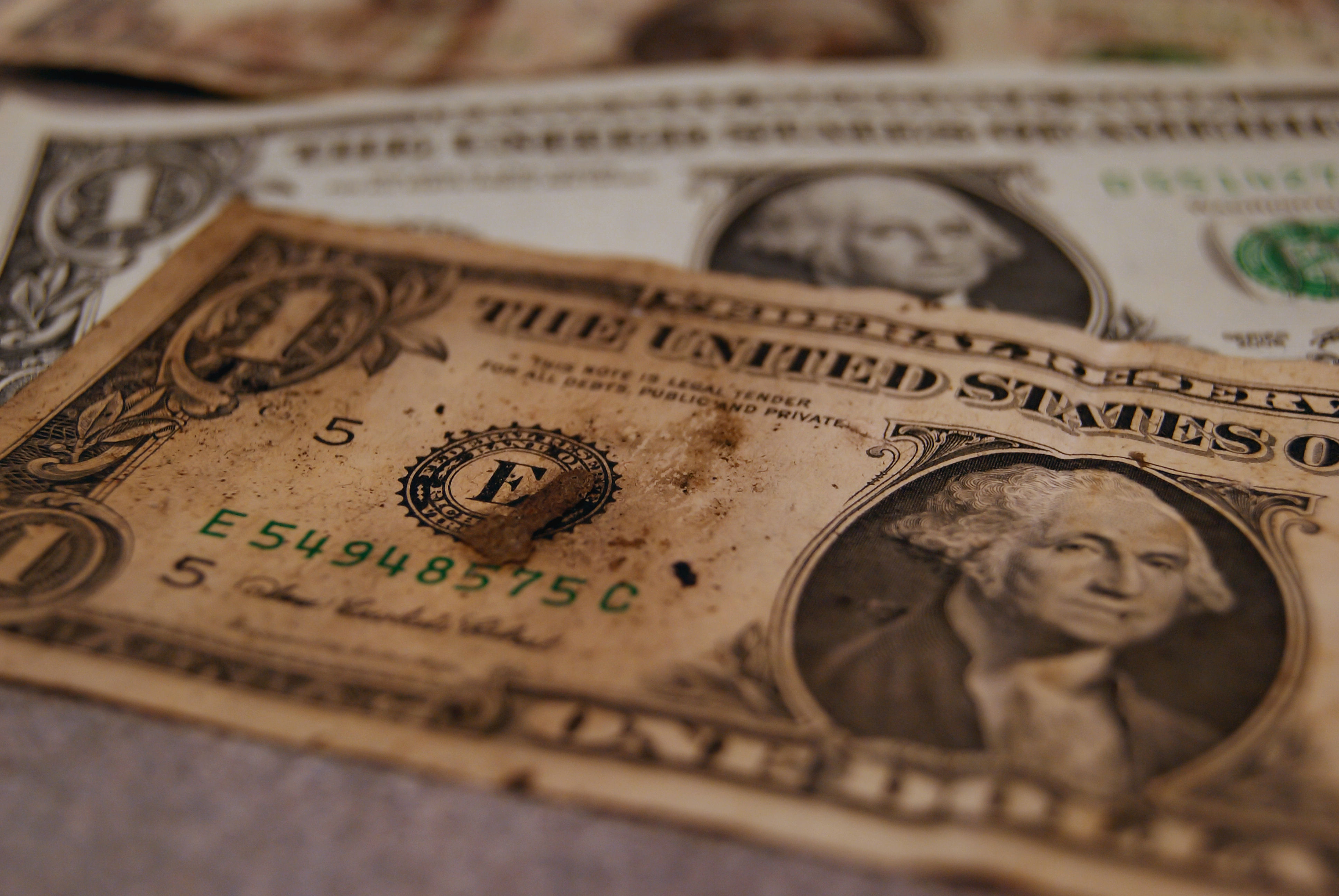
SONY DSCThe phrase “Dirty money” may have different meanings for different people…but as far as microbiology is concerned….have you ever thought about what else you are getting back along with your change when you’re doing your shopping? I’m sure most of us are more concerned about getting the correct change rather than what microbes come for free with our change. For the few who have thought about what else they may be getting, I suspect that even fewer would answer: “pathogenic and sometimes multidrug-resistant bacteria, fungi and human parasites.”

In reality, we shouldn’t be surprised that bank notes and coins are contaminated with various bacteria. After all, we hardly expect them to be sterile. Our own hands are colonized with millions of bacteria and money is the most frequently passed item in the world. All studies that I have come across investigating bacterial contamination on money (paper notes or coins) have found a significant proportion to be contaminated (53-100%). I suspect that the microbiological techniques used in the various studies impacted on the results and my personal view is that the majority if not all money commonly exchanged between people will be contaminated.

The level of contamination and type or organisms on the money vary depending on the country, season, environmental conditions, type of money (paper vs coins), the type of material the money is made off, local community flora, the general hygiene level of the population and who is likely to be handling the money. Also dirty/damaged money (indication of frequent exchange) has been shown to be significantly more contaminated than clean and mint condition currency notes, and low denomination notes were more likely to be contaminated than higher denomination notes (probably reflecting frequency of use and socio-economic factors).1

The question to be asked, given the above, is: does it matter if money is contaminated with organisms? After all, this is not a new problem, as early as 1949, Nisbet and Skeoch2 have highlighted this issue. To answer this we need to look at a number of factors. These include: what type of organisms are on the money, how long are they able to survive and are they able to be transmitted to people and throughout the community from these contaminated currencies.  So let’s look at these factors in more detail:

1-  The type of organisms found on money

It is expected that bacteria will be found on bank notes and coins regardless of which country the money is from. Studies from Mexico, USA, India, Saudi Arabia, Nigeria, Kenya, Burma, China and Turkey to name few have all found significant contamination on their money. The type or bacteria found on money includes [deep breath]: E. coli, Vibrio spp., Klebsiella spp. including K. pneumoniae, Serratia spp., Enterobacter sp., Salmonella spp., Acinetobacter spp., Enterococcus spp., Staphylococcus including S. aureus, Bacillus spp., Staphylococcus epidermidis, Streptococcus pneumoniae, Proteus spp., Pseudomonas spp. including P. aeruginosa, Shigella spp.,  Corynebacterium, Lactobacillus spp., Burkholderia cepacia, Micrococcus spp. and Alcaligenes.

Looking at this list, it is clear that some of these bacteria are common environmental bacteria considered non-pathogenic. However, many are either potentially pathogenic or common human pathogens. For example, K. pneumoniae is a virulent organism and may cause both community and hospital-acquired infections. Even those organisms not commonly associated with disease in healthy hosts can cause clinically significant infections in immuno-compromised and hospitalised patients. These include even the natural inhabitants of the human skin such as Staphylococcus spp.

The story doesn’t end there since a number of studies have found multidrug-resistant and virulent strains on money. These have the potential to cause serious infections that are hard to treat, to disseminate in healthcare and community settings, and to spread antimicrobial resistant determinants to other bacteria. For example, one study3 found substantial S. aureus colonies on all 8 of the $1 and $5 bank notes collected from and around a University hospital in the USA. Tests for the presence of β-lactamases were positive and a significant number of the colonies showed resistance to erythromycin, tetracycline, chloramphenicol and vancomycin. Two isolates showed high-level resistance to vancomycin were found to harbour a plasmid conferring resistance to the drug. Taking that vancomycin is one of the last line antibiotics for treating multidrug resistant infection, this finding is very alarming. [A cautionary aside though – this work was published in the ‘Journal of Young Investigators’, so I can’t help thinking that the high-level resistance to vancomycin warrants some further investigation.] In another study,4 virulence genes were detected in S. aureus isolated from paper currency in India. Four virulence genes (cna, icaA, hlg and sdrE) were found in the isolates with 8 isolated possessing all 4 genes. Isolates harbouring these virulence genes showed higher antimicrobial resistance than those which didn’t contain these genes.

Bacteria are not the only organisms found on money. A number of studies show that fungal contamination of money is also common. Some of these are potentially pathogenic to humans and other life forms including plants. This may have implications far beyond human health to economic consequences if non-native pathogenic species are introduced into different countries via money carried during travel. For example, studies have found Penicillium spp., Aspergillus niger and A. flavus, Candida spp., Fusarium spp., Rhizopus spp., Alternaria spp, Trichoderma virie and white and brown mycelium on money.5.6 Some of these fungi can cause serious infections in humans and diseases in plants. In some countries, even parasites have been identified on bank notes. One study1 from Nigeria found that of the 250 currency notes collected from 4 major cities in the country, 21.6% were contaminated with enteric parasites including Ascaris lumbricoides, Enterobius vermicularis, Trichuris trichiura and Taenia spp. This parasite-contaminated currency was most frequently found in notes obtained from butchers and beggars. In another study,7 60.2% of 103 banknotes and 56.6% of 99 coins obtained from food-related workers in Egypt were found to be contaminated with one or more parasitic species. Protozoa were the predominant parasites, with microsporidia and Cryptosporidium spp. being the most prevalent.

2-  How long are organisms able to survive on money?

The survival of organisms on money depends on the type of the organism and their environmental resilience, the environmental conditions and the type of material the money is made of. Banknote paper is manufactured from cotton fibre, which gives the paper its strength and durability. Other additional elements maybe added to the cotton. Ploymer (or plastic) bank notes were developed to improve durability and incorporate some security features. One study8 investigated survival of MRSA, VRE and ESBL-producing E. coli on various bank notes from around the world including Euro, Croatian Kuna, Romanian Leu, Moroccan Dirham, US Dollar, Canadian Dollar, and the Indian Rupee. They found that the 3 organisms survived on the Romanian Leu for 6 hours after drying and VRE was isolated from the same notes after one day of drying. Other currencies had variable survival rates. Another in-vitro study4 found that S. aureus was able to survive on Indian paper currency for 8 days at room temperature.

3-  Are organisms able to be transmitted from money?

Transmission of organisms from money is highly significant if it occurs. For example, transmission from the community to the hospital setting is relevant because normally non-pathogenic, or opportunistic pathogens can have a serious clinical impact in such settings. On the other hand, transmission from the healthcare environment to the community is relevant when antimicrobial resistant strains (commonly found in hospitals) are involved. A study mentioned above,3 found vancomycin-resistant S. aureus on bank notes. The resistant determinant was located on a plasmid, hence easily transferrable. Notwithstanding my reservations about this study (see above), the interesting point about this investigation was the sources of the bank notes tested. These were collected from a University Hospital’s gift shop, a snack cart outside the hospital’s door and a convenience store near the hospital. The vancomycin-resistant isolates have likely originated from the hospital where the antibiotic is commonly used and had been transmitted to outside the hospital on money. In another study,8 investigators artificially contaminated bank notes of a number of countries with S. aureus and E. coli, and investigated transmission after 3 subjects with disinfected hands came into contact with these notes. Transmission was not successful for the Euro notes but transmission from US Dollars and the Romanian Leu was observed.

So we probably should be concerned with contamination of money especially when virulent, pathogenic or multidrug-resistant strains are concerned. Transmission between the healthcare and community settings can also have important implications. What’s the solution? Disinfection of the currencies in banks with UV light, supersonic or chemical means, producing bank notes from materials which inhibit bacterial growth or material with antimicrobial activity as well as replacement of traditional methods of trading with electronic money transactions,  have all been proposed. Personally I think for now, proper hand hygiene and overall hygiene remain the best ways to counter this problem.

References

  1. Uneke CJ, Ogbu O. Potential for parasite and bacteria transmission by paper currency in Nigeria. J Environ Health. 2007;69:54-60.
  2. Nisbet BR, Skeoch T. Bacteria on bank notes. Med Off. 1949;81:225.
  3. Bhalakia N. Isolation and plasmid analysis of vancomycin-resistant Staphylococcus aureus. J Young Investigators. 2005.
  4. Kumar JD, Negi YK, Gaur A, Khanna D. Detection of virulence genes in Staphylococcus aureus isolated from paper currency. Int J Infect Dis. 2009;13:e450-5
  5. Wanule D, Jalander V, Gachande BD, Sirsikar AN. Currency notes and coins as a possible source of transmitting fungal pathogens of man and plants. J Environ Sci Eng. 201;53:515-8.
  6. Kuria JK, Wahome RG, Jobalamin M, Kariuki SM. Profile of bacteria and fungi on money coins. East Afr Med J. 2009;86:151-5.
  7. Hassan A, Farouk H, Hassanein F, Abdul-Ghani R. Currency as a potential environmental vehicle for transmitting parasites among food-related workers in Alexandria, Egypt. Trans R Soc Trop Med Hyg. 201;105:519-24.
  8. Gedik H, Voss TA, Voss A. Money and transmission of bacteria. Antimicrob Resist Infect Control. 2013;2:22.

Photo credit: Sam Setzler.

Contaminated surfaces contribute to transmission; the question is, how much?

mop

I’ve been asked to write a chapter on the role of the environment in transmission in an Springer book (on the potential role for antimicrobial surfaces in healthcare). So, I’ve been busy updating my 2011 ICHE literature review on a similar topic, drawing on an excellent recent AJIC review by Dr Donskey.

There are some epidemiological associations that suggest an important role for contaminated surfaces in transmission. Most compelling are the studies showing that admission to a room previously occupied by a patient with certain environmentally-associated pathogens increases the risk of acquisition for incoming patients, presumably due to residual contamination. However, in order to really nail a scientific association, an intervention is required. Hence, the environmental intervention studies provide the highest quality evidence evaluating the role of the environment in transmission (see the Table below).

These studies have shown that switching to more effective agents, improving the cleaning / disinfection process or turning to automated “no-touch” room disinfection systems (NTD) can reduce transmission in endemic settings. It’s important to note that some studies report an ineffective environmental intervention. These are important to publish to avoid publication bias. Looking under the bonnet of these studies usually offers an explanation as to why they did not show a significant reduction in transmission. For example:

  • Wilcox 2003. There was virtually no impact on the frequency of C. difficile environmental contamination on the wards using bleach, so it’s surprising that they saw any reduction in CDI!
  • Valiquette 2007. The bundle of interventions, some of which were environmental, was only given a few months to be effective.
  • Wilson 2011. This one is more difficult to explain. Perhaps it was underpowered to detect a clinical impact in the declining prevalence of MRSA in the UK?
  • Dharan 1999. The intervention was focused mainly on improving the cleaning and disinfection floors, which are not exactly a high-touch, high-risk sites.

Believe it or not, I still occasionally meet people who tell me that contaminated surfaces do not contribute to transmission. That rather dated viewpoint is becoming increasingly untenable as the volume and quality of data evaluating the role of the environment in transmission continues to increase. For me, the question has now moved on to how much contaminated surfaces contribute to transmission, and how best to address contamination of the hospital environment.

Table. Intervention studies evaluating the role of contaminated surfaces in the endemic transmission of nosocomial pathogens.

Reference Setting, location Organism Study design Key findings
Mayfield 2000 1 Three units, USA C. difficile 18-month before-after study of a switch from QAC to bleach disinfection. Significant reduction in CDI incidence on the highest risk unit from 8.6 to 3.3 cases per 1000 patient-days.
Wilcox 2003 2 Two units, UK C. difficile 2-year ward cross-over study of a switch from detergent to bleach disinfection. Significant reduction in CDI incidence on one of the units (from 8.9 to 5.3 cases per 100 admissions), but not on the other.
McMullen 2007 3 MICU and SICU, USA C. difficile 2-month before-after evaluation of bleach disinfection of CDI rooms on SICU and 4-month evaluation of bleach disinfection of all rooms on MICU in a hyper-endemic setting. Significant reduction in CDI incidence on both units (10.4 to 3.9 cases per 1000 patient days on SICU; 16.6 to 3.7 cases per 1000 patient days on MICU).
Valiquette 2007 4 Hospital-wide, Canada C. difficile 5-month evaluation of enhanced infection control and disinfection, including a switch to bleach, and a subsequent switch to ‘accelerated’ hydrogen peroxide. Neither environment intervention made a significant impact on the incidence of CDI; a reduction in the use of high-risk antibiotics significantly reduced the incidence of CDI.
Boyce 2008 5 Hospital-wide, USA C. difficile 20-month before-after study on the use of HPV disinfection for terminal disinfection of CDI rooms. Significant reduction in CDI incidence on five high incidence units (from 2.3 to 1.3 cases per 1000 patient-days). Lesser reduction in CDI incidence hospital wide.
Hacek 2010 6 Three hospitals, USA C. difficile 3-year before-after study on switching from QAC to bleach for terminal disinfection of CDI rooms. Significant reduction in the incidence of CDI (from 0.85 to 0.45 per 1000 patient days).
Orenstein 2011 7 Two medical units, USA C. difficile 2-year before-after study on switching to bleach wipes for daily and terminal disinfection of all rooms. Significant reduction in the incidence of CDI (from 24.2 to 3.6 per 1000 patient days).
Manian 2013 8 Hospital-wide, USA C. difficile 3-year before-after study on enhanced terminal disinfection of CDI rooms using HPV and bleach. Significant reduction in the incidence of CDI (from 0.88 to 0.55 cases per 1000 patient days).
Hayden 2006 9 ICU, USA VRE 9-month before-after study on educational improvement of cleaning and hand hygiene. The frequency of environmental contamination and patient acquisition of VRE were reduced  from 33 to 17 acquisitions per 1000 patient-days during the improved cleaning phase.
Datta 2011 10 ICU, USA VRE / MRSA 3-year before-after study of an intervention (fluorescent markers, “bucket method” and education) to enhance daily and terminal cleaning. Significant reduction of MRSA (3.0% to 1.5% of admissions) and VRE (3.0% to 2.2% of admissions) acquisitions; intervention significantly reduced the increased risk from the prior occupant for MRSA but not VRE.
Perugini 2011 11 Hospital-wide, Brazil VRE 4-year before-after study of an educational and observational intervention for cleaners. Significant reduction in VRE infection (from 7.7 to 1.9 per 1000 patient days) and environmental contamination.
Grabsch 2012 12 Hospital-wide, Australia VRE 18-month before-after study of a multimodal intervention (switch to bleach, improved monitoring of cleaners, modification of VRE contact isolation, periodic ‘super-clean-disinfection’ of high-risk wards). Significant reduction of VRE colonization (from 10.7% to 8.0% of patients) and VRE environmental contamination.
Passaretti 2013 13 ICU, USA VRE / all MDROs 30-month cohort study on the impact of HPV decontamination. Patient admitted to rooms disinfected using HPV significantly less likely to acquire an MDRO (15.7 to 6.2 per 1000 patient days) and VRE (11.6 to 2.4 per 1000 patient days).
Mahamat 2007 14 Hospital-wide, UK MRSA 8-year interrupted time series analysis of multiple infection control interventions. Introduction of bleach disinfection, environmental sampling, alcohol gels and admission screening all reduced the prevalence of MRSA.
Dancer 2009 15 Two wards, UK MRSA 12-month cross over-study on the impact of one extra cleaner. Enhanced cleaning was associated with significant reductions surface contamination, hygiene fails and MRSA acquisition.
Wilson 2011 16 ICU, UK MRSA 12-month randomized crossover study on the impact of additional twice daily cleaning of hand contact surfaces. Significant reduction in the detection of MRSA on surfaces and hands, but no significant change in MRSA acquisition was detected.
Dharan 1999 17 5 medical wards, Switzerland 4-month controlled study where 3-wards received an intervention (including an active oxygen based compound) and 2 wards continued current practice. Intervention associated with reduced contamination but not reduced nosocomial infection or MRSA infection / colonization.

HPV = hydrogen peroxide vapour.


References

1.       Mayfield JL, Leet T, Miller J, Mundy LM. Environmental control to reduce transmission of Clostridium difficile. Clin Infect Dis 2000; 31: 995-1000.

2.       Wilcox MH, Fawley WN, Wigglesworth N, Parnell P, Verity P, Freeman J. Comparison of the effect of detergent versus hypochlorite cleaning on environmental contamination and incidence of Clostridium difficile infection. J Hosp Infect 2003; 54: 109-114.

3.       McMullen KM, Zack J, Coopersmith CM, Kollef M, Dubberke E, Warren DK. Use of hypochlorite solution to decrease rates of Clostridium difficile-associated diarrhea. Infect Control Hospital Epidemiol 2007; 28: 205-207.

4.       Valiquette L, Cossette B, Garant MP, Diab H, Pepin J. Impact of a reduction in the use of high-risk antibiotics on the course of an epidemic of Clostridium difficile-associated disease caused by the hypervirulent NAP1/027 strain. Clin Infect Dis 2007; 45 Suppl 2: S112-121.

5.       Boyce JM, Havill NL, Otter JA et al. Impact of hydrogen peroxide vapor room decontamination on Clostridium difficile environmental contamination and transmission in a healthcare setting. Infect Control Hosp Epidemiol 2008; 29: 723-729.

6.       Hacek DM, Ogle AM, Fisher A, Robicsek A, Peterson LR. Significant impact of terminal room cleaning with bleach on reducing nosocomial Clostridium difficile. Am J Infect Control 2010; 38: 350-353.

7.       Orenstein R, Aronhalt KC, McManus JE, Jr., Fedraw LA. A targeted strategy to wipe out Clostridium difficile. Infect Control Hosp Epidemiol 2011; 32: 1137-1139.

8.       Manian FA, Griesnauer S, Bryant A. Implementation of hospital-wide enhanced terminal cleaning of targeted patient rooms and its impact on endemic Clostridium difficile infection rates. Am J Infect Control 2013; 41: 537-541.

9.       Hayden MK, Bonten MJ, Blom DW, Lyle EA, van de Vijver DA, Weinstein RA. Reduction in acquisition of vancomycin-resistant enterococcus after enforcement of routine environmental cleaning measures. Clin Infect Dis 2006; 42: 1552-1560.

10.     Datta R, Platt R, Yokoe DS, Huang SS. Environmental cleaning intervention and risk of acquiring multidrug-resistant organisms from prior room occupants. Arch Intern Med 2011; 171: 491-494.

11.     Perugini MR, Nomi SM, Lopes GK et al. Impact of the reduction of environmental and equipment contamination on vancomycin-resistant enterococcus rates. Infection 2011; 39: 587-593.

12.     Grabsch EA, Mahony AA, Cameron DR et al. Significant reduction in vancomycin-resistant enterococcus colonization and bacteraemia after introduction of a bleach-based cleaning-disinfection programme. J Hosp Infect 2012; 82: 234-242.

13.     Passaretti CL, Otter JA, Reich NG et al. An evaluation of environmental decontamination with hydrogen peroxide vapor for reducing the risk of patient acquisition of multidrug-resistant organisms. Clin Infect Dis 2013; 56: 27-35.

14.     Mahamat A, MacKenzie FM, Brooker K, Monnet DL, Daures JP, Gould IM. Impact of infection control interventions and antibiotic use on hospital MRSA: a multivariate interrupted time-series analysis. Int J Antimicrob Agents 2007; 30: 169-176.

15.     Dancer SJ, White LF, Lamb J, Girvan EK, Robertson C. Measuring the effect of enhanced cleaning in a UK hospital: a prospective cross-over study. BMC Med 2009; 7: 28.

16.     Wilson AP, Smyth D, Moore G et al. The impact of enhanced cleaning within the intensive care unit on contamination of the near-patient environment with hospital pathogens: a randomized crossover study in critical care units in two hospitals. Crit Care Med 2011; 39: 651-658.

17.     Dharan S, Mourouga P, Copin P, Bessmer G, Tschanz B, Pittet D. Routine disinfection of patients’ environmental surfaces. Myth or reality? J Hosp Infect 1999; 42: 113-117.

Key themes from ID Week 2013

idweek

Having somewhat dipped in towards the end of ID Week 2013 due to the overlapping Infection Prevention 2013 Conference in London, I can’t begin to provide a comprehensive overview of such a large event. Instead, I’ve tried to summarize new data on two important areas: the epidemiology and control of multidrug-resistant Gram-negative rods (MDR-GNR) and the role of the environment in transmission. You can access all of the abstracts free online here. Also, the poster abstracts that I cite below are either individually hyperlinked or can be downloaded here.

MDR-GNR

Dr Kavita Trivedi (California Department of Public Health) gave an overview of CRE in the USA, which has now been reported in virtually every state. Whilst surveillance sites, methods and definitions are problematic, CDC are coordinating some useful emerging data. For example, an NNIS prevalence survey indicates an increase in CRKP from 1% in 2001 to 10% in 2011. Also, the Multi-Site Resistant Gram-Negative Bacilli Surveillance Initiative (MuGSI) is beginning to yield some data. Early results from four states indicate that CRE is 10x less common than MRSA in the population, predominantly from urine cultures (85%) from patients with co-morbitities (93%) with a low mortality rate (4%). The CDC CRE toolkit provides a practical overview of recommended interventions. Finally, the challenges outlined by Dr Trivedi included: long-term care; variable prevalence; unknown epidemiological associations of different strains and genes; and colonization duration.

Oral presentations

A featured oral abstract by Bamburg et al. described an outbreak of NDM-producing K. pneumoniae affecting eight patients. The complex transmission map was dissected using whole genome sequencing, reminiscent of the NIH experience.

There was a useful oral session on ‘Identifying and Overcoming Challenges in Preventing Transmission of MDRO GNR’:

  • 1207, Haverkate. A Dutch group found that Klebsiella carrying OXA-48 can appear susceptible in vitro, risking ‘silent transmission’ of both the gene and the organism. The mean duration of colonization was almost one year and modeling indicated that readmission of CRE colonized patients needs to be carefully accounted for.
  • 1208, Mody. A cluster RCT in nursing home residents with urinary catheters or feeding tubes found that enhanced and preemptive isolation; ASC; and education led to a significant reduction in MDROs and CAUTI.
  • 1209, Hayden. A bundled intervention (ASC and isolation; daily CHG bathing; education; and adherence monitoring) significantly reduced CR Klebsiella in three of four LTACs included in the study. The prevalence of CR Klebsiella was remarkably high: 45% of patients at baseline. Environmental contamination was not identified, so no enhanced cleaning and disinfection was implemented, which is different to the experience of NIH.
  • 1210, Lewis. Varying the definition of ‘MDR’ made a profound impact on the proportion of patients requiring contact isolation, from 8-30%. Subsequent discussion with the authors indicated that the proposed MDR definitions developed by ECDC and CDC to be too sensitive for bacteria with less intrinsic resistance, such as E. coli. Perhaps a separate definition for the Enterobacteriaceae and non-fermenters is the way forward here?
  • 1211, Apisarnthanarak. The implementation of chlorhexidine bathing plus a switch to bleach for environmental disinfection brought an outbreak of A. bauamannii in Thailand under control. But which worked?
  • 1212, Barnes. A mathematical model indicated that hand hygiene is twice as important as environmental hygiene for interrupting A. baumannii, MRSA and VRE transmission. Whilst an awful lot of assumptions are required in this model, I can believe this 2:1 ratio in light of the following: “healthcare personnel are like small children: they touch everything and don’t always wash their hands” (Curtis Donskey) and “healthcare personnel hands are like very mobile shared surfaces” (Eric Lofgren).

Posters

  • 740, Jamal. CRE rate: 3% of 2000 Kuwaiti clinical isolate; 15.9% of CRE NDM-1 producers.
  • 746, Koper. A match made in hell between hypervirulent K2 Klebsiella and KPC; in vitro plasmid transfer demonstrated.
  • 1578, Madigan. No CRE detected in 69 international patients at Mayo Clinic; 22% carried ESBLs.
  • 1582, Johns. 50% of 66 MDR A. baumannii cases in Ohio in 2012 presented in first two days of admission, mostly admitted from extended care facilities, illustrating the ‘revolving door’ between acute and other healthcare facilities.
  • 1586, Carrilho. 26% of 157 Brazilian CRE polymyxin-resistant, though polymyxin resistance was not associated with increased mortality.
  • 1603, Drees. Remarkably, a survey from the SHEA Research Network indicates that 6% of hospitals do NOT isolate patients with CRE.
  • 1609. Decker. A study of CRE colonization patterns indicates median colonization of 216 days (range 134-376). One patient was colonized for >500.
  • 1611, Odom. CRE cultured from 12 (4.4%) of surfaces, predominantly sink drains.
  • 1612, Fitzpatrick. Selective broth enrichment added 10% sensitivity for detecting CRE. Is the resulting diagnostic delay worth the wait?
  • 1615, Lin. Chlorhexidine gluconate (CHG) daily bathing significantly reduces the number of body sites growing CRE, but several sites remain colonized.
  • 1618, Cheng. CRE identified in 1.2% of 6533 rectal screens and faecal specimens in Hong Kong, which is lower than I would expect.

Reflections from MDR-GNR research

  • We now have some intervention studies, but many include bundled interventions. We need more resolution on what works.
  • The duration of colonization with CRE seems to be long, probably around 1 year on average. Is this enough for a “once positive, always positive” approach?
  • Prevalence of CRE is variable around the USA, and in other parts of the world.
  • There is poor resolution between the epidemiology of Enterobacteriaceae and non-fermenters.
  • Most would agree that contaminated surface play an important role in the transmission of MDR non-fermenters such as A. baumannii. But is CRE an environmental issue? Some groups have found contamination and implemented enhanced disinfection, others have not.
  • Should chlorhexidine decolonization be part of the intervention for MDR-GNR?
  • Different research groups use different terminology and the meaning is sometimes obscured. International consensus is required.

Role of the environment in transmission

Dr Curtis Donskey (Cleveland) gave an excellent overview of ‘Environmental Controls for the Prevention of C. difficile Transmission’. Dr Donskey is one of the most active researchers anywhere in the world, focusing much of his attention on the role of the environment. Having established the importance of contaminated surfaces in the transmission of C. difficile, Dr Donskey explored emerging themes in addressing surfaces contaminated with spores covering conventional and automated terminal cleaning, and the impact of improving daily disinfection. The current challenges outlined included where to clean, how to validate “no-touch” automated room disinfection systems (NTD) to disentangle product claims from real-world performance, how best to engage environmental services and how to make disinfection easier in order to facilitate compliance.

Posters

  • 347, Livorsi. Patients with a higher nasal burden of MRSA are more likely to carry MRSA at other sites and contaminate their environment.
  • 348, Sitzlar. Useful stratification of MRSA/VRE room contamination rate by patient C. difficile status. Rooms of patients on precautions for CDI 3x more likely to be contaminated.
  • 1393, Deshpande. One hospital found more C. difficile contamination in the rooms of patients who were not on precautions for CDI than in rooms of patients on precautions for CDI!
  • 1394, Kundrapu. Suggests that the result would be better if those tasked with monitoring cleaning performance got their hands dirty and cleaned.
  • 1541, Sunkesula. Reduction in VRE in new unit; attributable to no shared rooms and bathrooms in the new unit?
  • 1685, Rose. A couple of carbapenem-resistant bacteria on public surfaces outside New York hospitals; I bet you it’d be higher in New Delhi!
  • 1685, Havill. Extended survival of CRE on dry surfaces; will surprise some.
  • 1690, Kirk. Almost no MRSA cultured from medication cabinets in isolation rooms. Direct plated swab lacks sensitivity?
  • 1691, Suwantarat. Quantitative assessment of HCP contact with equipment and fomites helps to define high touch (risk?) items; medication chart highest frequency of contact (1 per patient hour) yet possibly also the least cleaned item.
  • 1692, Hirsh. ipads (and other personal electronic devices) can become contaminated with pathogens; contact precautions should include an explicit instructions not to touch these items. (This was implemented at NIH during recent CRE outbreak there).
  • 1695, Williams. Pathogens identified on the clothing of HCP at the BEGINNING of their shift! (Reminds me of Hayden article where VRE commonly found on the hands of HCP BEFORE they entered patient rooms.)
  • 1697, Vassallo. Universal standard precautions didn’t stop impressive trend reductions. Time to abandon contact precautions?
  • 1698, Mann. Cleaning survey response rate of 100% (unprecedented). EVS staff have something to say, if only we’d listen.
  • 1700, Gerba. What’s for lunch in the hospital cafeteria? MRSA, enteric bacteria and spores, apparently.
  • 1701, Wiemken. Wipes are quicker and easier than bucket methods. Why wouldn’t you? (Perhaps only due to lack of wetting reducing efficacy.)
  • 1705, Boyce. The informal ‘standard’ for ‘clean’ is <2.5 cfu/cm2. This equates to 65 cfu/contact plate, which is almost 1/3 of the way to uncountable. Is this an acceptable standard for ‘clean’?
  • 1706, Power. Contaminated neonatal incubator? An hour of UVC should do the trick.
  • 1707, Horn. HPV for terminal room disinfection associated with significant reduction in CDI. Study design controlled for hand hygiene compliance, but time series analysis may have been more appropriate.
  • 1708, Anderson. Is variation in UVC cycle time for room disinfection explained entirely by variation in room size?
  • 1709, Uslan. Assessment of various Cu surfaces; I was unaware that you could apply Cu as a spray though have concerns over durability.

Other highlights

  • Decolonization has been a hot topic since several high-profile articles have been published recently. It’s a shame that universal chlorhexidine was conflated with universal mupirocin in the Huang study; the two should be considered separately in my view. The potential for resistance to mupirocin is extremely high, whereas the risk for ‘resistance’ or continued reduced susceptibility to chlorhexidine is lower. However, an interesting finding from poster 1615 was that the measured CHG skin concentration (20-1200 mg/L) was MUCH lower than the applied CHG concentration (10,000 mg/L). This brings the subtly reduced susceptibility to CHG reported in MRSA into play. Both Dr Aaron Milsone (Hopkins) and Prof Mary-Claire Roghmann (University of Maryland) highlighted the importance of the need to ‘tend the human microbiome’ and to consider the ‘host-microbiome-pathogen’ interaction rather than the ‘host-pathogen’ interaction, remembering that decolonization can cause considerable collateral damage to the host microbiome.  
  • Dr Denise Cardo (CDC) delivered the SHEA Lectureship on HAI Science and Policy. CDC are streets ahead of any other government health agency in leading HAI science through the development of common, simple goals; accountability; transparency; efficiency and strategy. HAI science alone is not sufficient to influence policy; this requires congressional briefings, senate hearings and the use of the scientific and lay press. The recently published CDC threat report outlines how the (somewhat bleak) future may look. Most poignantly, Dr Cardo could not attend the conference and delivered her lecture remotely due to the government shutdown, which signals leaner times ahead for CDC.  
  • BUGG. Dr Anthony Harris (University of Maryland) presented the results of the ‘Benefits of Universal Glove and Gown’ (BUGG) study. This RCT with impressive compliance to screening, gloving and gowning showed a significant 40% reduction in MRSA but no significant reduction in VRE. The a priori primary outcome (a composite measure of MRSA and VRE acquisition) was non-significant. I’m generally not a fan of universal approaches, since compliance in the real world is likely to tail off when the spotlight of a large study fades. Indeed, poster 1696 showing a ‘dismal’ 20% compliance rate with gowning in the field sheds a shadow on the BUGG study.   
  • Dr Brad Spellberg (UCLA) gave a wake-up call on the future of antibiotics and resistance. Reflecting on the three things guaranteed in life (death, taxes and resistance), Dr Spellberg outlined the unfair fight between humans and bacteria: we’re outnumbered to begin with, and multiply much more slowly! Dr Spellberg’s recent papers in CID and NEJM outline the radical approach required to curb and reverse antibiotic resistance including embracing technology, rekindling R&D, preserving effective agents and exploring novel therapies. Dr Spellberg gave a fascinating insight from the 1960s revealing that it’s not the first time the antibiotic pipeline has dried. We need to learn from history and rekindle R&D before the pipeline dries completely. More importantly though, exploring non-antibiotic therapies, or novel applications of existing agents, has a more realistic chance of brightening the future of antimicrobial therapy.   

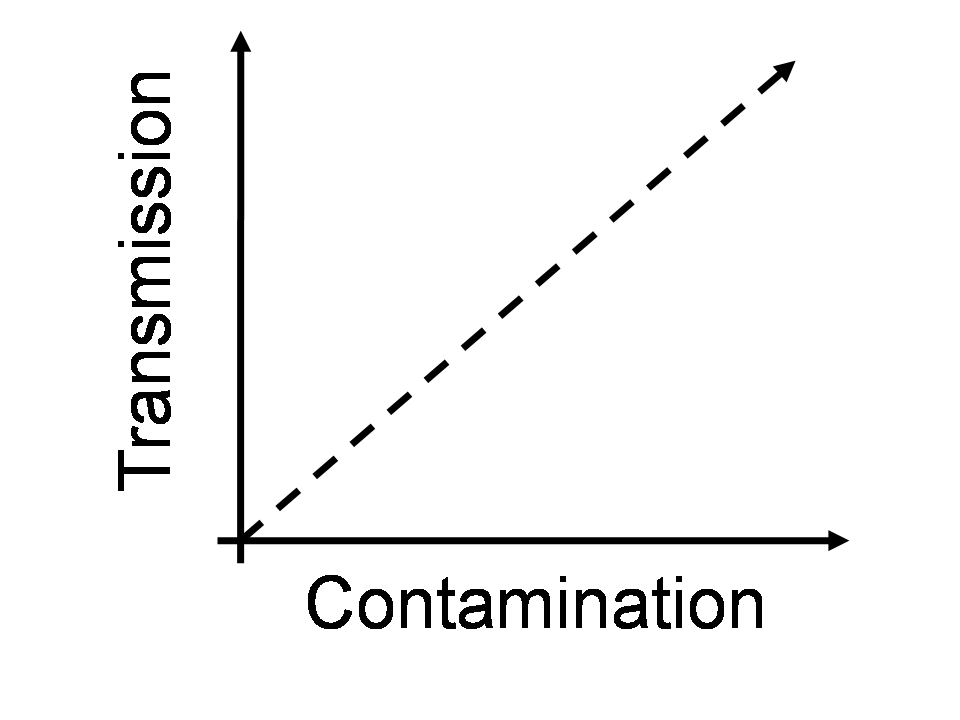
Is there a causal relationship between contamination burden and transmission risk?

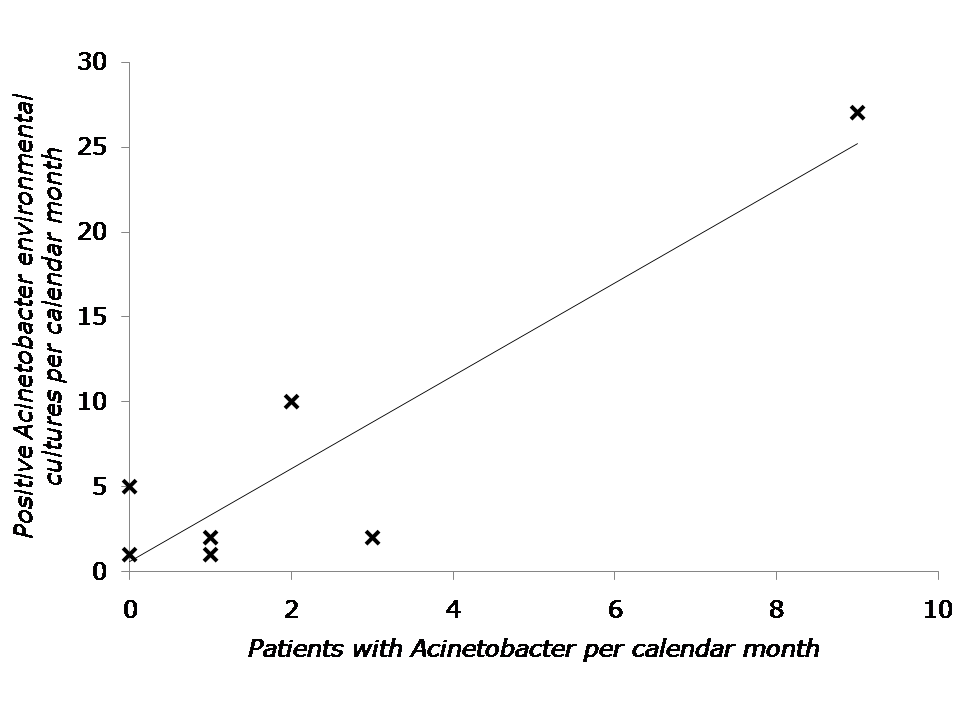
contamination v transmission There’s an age-old problem in science: how do you prove a causal relationship between variables that correlate? Proving that the variables are correlated is the easy part; it’s more difficult to disentangle cause from effect. This can be seen in several studies that identify a correlation between environmental burden and the number of patients that are infected or colonized with pathogens.DentonFigure 1. Correlation between the number of patients infected with Acinetobacter spp. and the number of positive Acinetobacter spp. environmental cultures per calendar month during an outbreak on a neurosurgical ICU.1

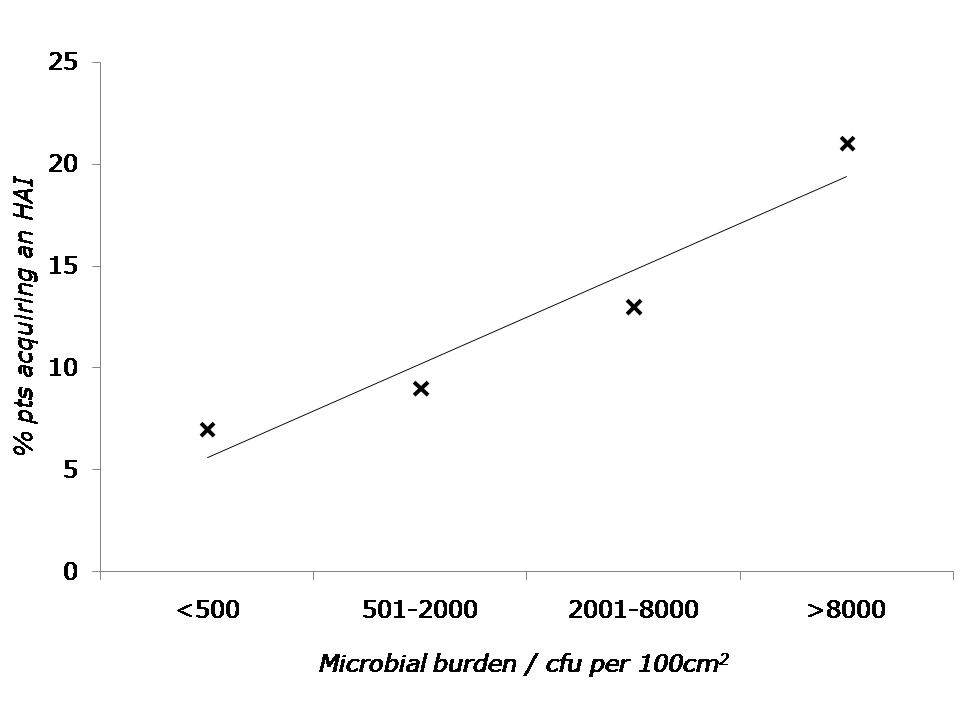
SalgadoFigure 2. Correlation between microbial burden and the number of patients who acquired an HAI in ICUs.2

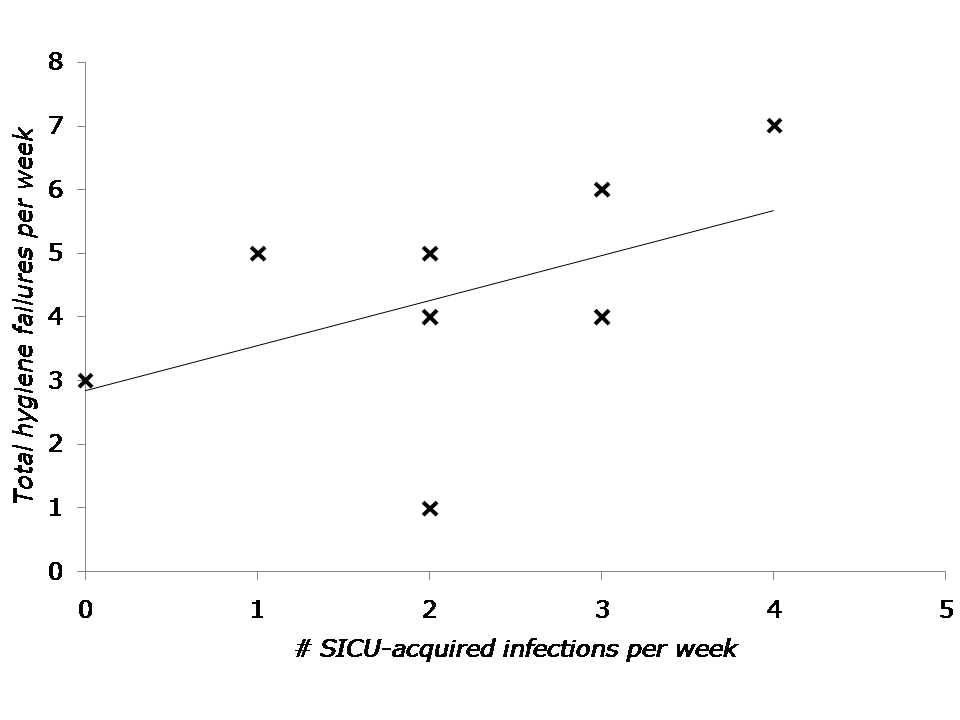
WhiteFigure 3. Correlation between the number of hygiene failures and the number of patients who acquired an infection on a surgical intensive care unit each week.3

So can we conclude that the higher burden of contamination resulted in an increased risk of acquisition? Or is it that more patients were infected or colonized with pathogens, which resulted in more environmental shedding? From these studies, you can’t be sure.

If you were seeking to prove the role of a gene in a process, you’d knock out the gene and demonstrate that the process stopped or changed. So, the only way to disentangle cause and effect in contamination and transmission is to perform an intervention to reduce environmental contamination and show that this correlates with reduced transmission. While the Salgado study evaluated an intervention, the data correlating contamination burden with HAIs was not stratified by the intervention, which would have been one way to assess likely causation.2

There is some further in vitro and epidemiological data supporting that the degree of transmission may be proportional to the environmental burden. An in vitro mouse model established a ‘dose-response’ relationship between the degree of contamination with C. difficile spores and the development of CDI.4 Furthermore, this model showed that disinfectants that achieved a greater log reduction of C. difficile spores were more able to interrupt transmission.

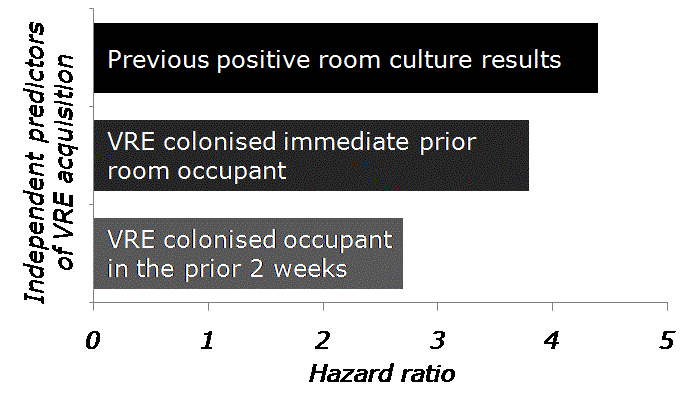
Also, one of the studies demonstrating that admission to a room previously occupied by a patient with VRE increases the chances of VRE acquisition identified something amounting to a ‘dose response’.5 The greatest increased risk was for patients admitted to a room with an environmental culture positive for VRE, and being admitted to a room where the immediate prior room occupant was colonized with VRE carried a greater increased risk than being admitted to a room where any patient in the 2 weeks prior to admission was VRE colonized (Figure 4).

DreesFigure 4. How the increased risk of acquiring VRE from the prior room occupant changes due to patient and environmental factors.5

Is there a causal relationship between contamination burden and transmission risk? On balance, the answer seems to be yes, though it would be useful to have a solid intervention study to prove that an increasing environmental burden causes an incrementally increase in transmission risk.

Article citations:

  1. Denton M, Wilcox MH, Parnell P et al. Role of environmental cleaning in controlling an outbreak of Acinetobacter baumannii on a neurosurgical intensive care unit. J Hosp Infect 2004; 56: 106-110.
  2. Salgado CD, Sepkowitz KA, John JF et al. Copper surfaces reduce the rate of healthcare-acquired infections in the intensive care unit. Infect Control Hosp Epidemiol 2013; 34: 479-486.
  3. White LF, Dancer SJ, Robertson C, McDonald J. Are hygiene standards useful in assessing infection risk? Am J Infect Control 2008; 36: 381-384.
  4. Lawley TD, Clare S, Deakin LJ et al. Use of purified Clostridium difficile spores to facilitate evaluation of health care disinfection regimens. Appl Environ Microbiol 2010; 76: 6895-6900.
  5. Drees M, Snydman D, Schmid C et al. Prior environmental contamination increases the risk of acquisition of vancomycin-resistant enterococci. Clin Infect Dis 2008; 46: 678-685.

The pitfalls of PCR for detecting pathogens on surfaces

PCR has proven an invaluable tool for the rapid diagnosis of a range of pathogens, including MRSA and C. difficile. Several studies have evaluated the potential use of PCR for the detection of pathogens on surfaces and have identified some issues that, frankly, seem pretty terminal for this application using currently available commercial PCR kits.

A study from Cleveland evaluated the use of a commercial RT-PCR test for detecting C. difficile on hospital surfaces. Three composite sites were sampled in 22 patient rooms, 41% of which housed a patient with CDI with the remaining 59% sampled after terminal cleaning and disinfection. Two swabs and a gauze were collected from each site; one swab was cultured directly onto selective agar and the other was tested using PCR. The gauze was cultured using broth enrichment. C. difficile that grew on the selective agar were tested for toxin production and only toxigenic C. difficile were included.

Overall, 23 (35%) of the 66 sites grew toxigenic C. difficile and only 4 of these were detected using the standard RT-PCR assay (sensitivity 17%, specificity 100%). The sensitivity of RT-PCR in rooms that had been cleaned and disinfected was even worse (10%). Increasing the CT threshold of the assay (making it less stringent) improved the overall sensitivity to 52% and did not affect the specificity.

The study has several important limitations. The RT-PCR assay detected only the Toxin B gene, whereas the toxigenic culture methodology would detect both Toxin A and B producers. More importantly, there was a crucial difference in sampling methodology: the gauzes used for broth enrichment culture had a 50% higher positivity rate than the swabs (in line with other findings), but only swabs were tested by both PCR and culture. Thus, if the gauzes are a more effective sampling device, this would make the RT-PCR methodology seems worse than it is. I would have liked to have seen the sensitivity of the RT-PCR assay for detecting C. difficile cultured from the swabs only, but I could not derive this from the data in the paper.

An older study from New Haven, Connecticut provides a contrasting view of the use of PCR to detect pathogens from surfaces. Here, 10 standardized sites were sampled in the rooms of 10 patients infected or colonized with MRSA, and 5 rooms of patients not known to be infected or colonized with MRSA. Swabs were directly plated onto selective agar for MRSA, then DNA was extracted from the swabs before a broth enrichment procedure using the same swabs. In this study, 40 (27%) of the 150 surfaces were positive by culture, but 90 (60%) were positive by PCR (sensitivity 93%, specificity 51%).

Deshpande 2013

Figure 1. Contrasting sensitivity and specificity when using PCR to detect C. difficile and MRSA on hospital surfaces.

It seems then that the sensitivity of PCR is too low for the environmental detection of C. difficile but the specificity is too low MRSA (figure 1). How could this be? Assuming that this is not due to experimental differences between the studies, it could be that the standard extraction procedure used for the C. difficile assay was not robust enough to liberate DNA from the mature environmental spores, resulting in low sensitivity. Conversely, the PCR assay was detecting DNA from dead MRSA on surfaces, resulting in low specificity.

So, in summary, the MRSA assay was too sensitive and the C. difficile assay was not sensitive enough! While the use of these “off the shelf” commercial assays doesn’t seem to be useful for detecting pathogens on surfaces, there may be hope for a PCR assay tailored specifically for an environmental application.

Article citations:

Deshpande A, Kundrapu S, Sunkesula VC, Cadnum JL, Fertelli D, Donskey CJ. Evaluation of a commercial real-time polymerase chain reaction assay for detection of environmental contamination with Clostridium difficile. J Hosp Infect 2013;85:76-78.

Otter JA, Havill NL, Boyce JM. Evaluation of real-time polymerase chain reaction for the detection of methicillin-resistant Staphylococcus aureus on environmental surfaces. Infect Control Hosp Epidemiol 2007;28:1003-1005.