There is a sense of steadily building concern around avian influenza, remembering that an avian influenza outbreak would knock spots off COVID-19 (especially the modern variants) in terms of bad clinical outcomes. A letter in the NEJM relates wastewater surveillance in the state of Texas that has identified H5N1 avian influenza in all 10 cities in the surveillance programme since March 2024. This suggests that avian influenza is out there, and flying under the radar in animal populations. So, now would be a good time to dust down your pandemic influenza preparedness documents…
Continue readingwastewater
How much of a drain are sinks on our healthcare organisations?
The role of wastewater systems in the transmission of healthcare associated infections (HCAIs) has been an interest of mine for several years but it was this paper published in JHI last year which highlighted just how big their contribution could be.
Papers keep coming to support the link between sinks and HCAIs. This recent paper in JHI, examined rates of HCAIs caused by Pseudomonas aeruginosa in six intensive care units (ICUs) in Ontario, Canada. Specifically, the authors investigated the role of sinks in the transmission of P. aeruginosa HCAIs.
The paper was an enjoyable read as there was real rigor in the methodology relating to the microbiological analysis of the ICU sinks, something which Dr Jon Otter and I have discussed the importance of previously. The study used a combination of microbiological sampling and whole genome sequencing as part of prospective cohort study to investigate transmission. I also really liked how the authors defined important terminology used in the analysis, providing clear differentiation between ICU acquired infections and sink acquired infections.
Over the 10-month study there were 4,263 admissions to the six ICUs involved, and 72 (1.4%) P. aeruginosa HCAIs were identified. Unsurprisingly patients who were colonised with P. aeruginosa were more likely to develop and infection and infected patients spent longer in ICU. Analysis of P. aeruginosa HCAIs found that 5-7% of infections came from a sink reservoir. The authors concluded that this rate of infection was likely to be underestimated due to challenges with sampling of the environment and when assessing patient acquisition. The authors also point out that toilets were not included in their sampling analysis, something which I blogged about the risk of recently. I tend to agree with the authors that this infection rate is underestimated given other studies have reported higher infection rates.
To conclude we have another paper which confirms the role of sinks in the transmission of infections. We need to do more to reduce the risk of these transmissions given the burden to patients and the drain on our healthcare organisations. An additional day stay in ICU has been estimated to cost £1621. We need more research into cost effective interventions to reduce the risk of transmission to reduce the sink and infection burden on our healthcare organisations.
Towards standardisation of hospital wastewater sampling
Another guest post from Dr Phil Norville (bio below)…
Very few weeks go by without me reading a paper discussing a multidrug-resistant outbreak that is linked to contaminated water or wastewater systems. The most recent was an outbreak of Achromobacter species in 22 patients which was linked to water in contaminated tubes of a medical pressurizer (used for urology surgery). It was one the reasons Jon and I wrote a letter to the Journal of Hospital Infection calling for a move towards the standardisation of wastewater sampling.
Continue readingLifting the lid on toilets and healthcare-associated infections
Guest blogger, Dr Phil Norville (bio below) writes…
Wastewater systems (sinks, showers and more recently toilets) are attracting attention as their role in healthcare associated infections (HCAIs) continues to gathers evidence. In this blog we take a closer look at toilets and their potential role in transmission, as well highlighting some of the current challenges facing healthcare organisations around wastewater management.
Continue readingThat sinking feeling
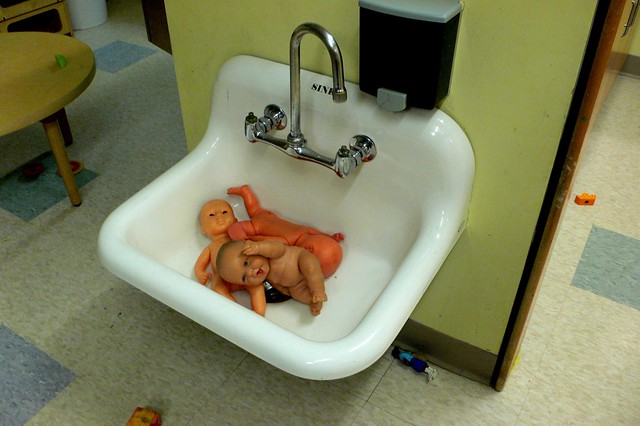
I’m at ECCMID in Amsterdam currently listening to a nice report of an OXA-48 Klebsiella pneumoniae outbreak in Gran Canaria in which sinks were found to be contaminated and replaced. Earlier today I listened to a nice paper on how sinks that drain slowly are more likely to contaminate the local environment for up to 1 metre from Paz Aranega Bou who, together with Ginny Moore and other colleagues has published this nice paper . So many papers on sinks now and I do wonder if we have lost sight of what they do and what they really are.
The best IPC article of 2018: a blogoff with Brett Mitchell

In honour of Infection Prevention 2018, Brett Mitchell and I are having a blogoff so that you can choose the best IPC article of 2018. This post presents my case, Brett’s post (here) presents his case, and there’s a vote below so that you can choose. The results will be published next Monday morning at Infection Prevention 2018…
CPE contamination of hospital wastewater: smoking gun or innocent bystander?
A recent US study has investigated CPE contamination of sinks, drains, and wastewater. Carbapenemase-producing bacteria were identified throughout the drainage and water system, from drains in patient rooms, right through to wastewater sampled through manholes adjacent to the hospital. My main question in all of this is whether this huge reservoir of carbapenemases in hospital wastewater is a risk for patients. The lack of genetic similarity between isolates in hospital wastewater and isolates from patients suggest not, but I suspect there’s an indirect link and these carbapenemases find their way into isolates affecting humans, which is supported by genetic links between the plasmids carrying the carbapenemases.
 Reflections on Infection Prevention and Control