CRISPR-Cas “surgical strikes” against antibiotic-resistant bacteria

surgical strike

We are in desperate need of antibiotic-sparing approaches to antibacterial therapy. Antibiotic resistance is increasing, and we are becoming increasingly aware of the impact of antibotics on the microbiota. I blogged a while ago about CRISPR-Cas systems being used to tackle antibiotic-resistant bacteria on surfaces. But the same approach could be applied to treating human infections.

Continue reading

Community MRSA preys on the poor and deprived

deprivation mrsa

As you can probably tell from the title, this post comes with a warning: it presents some rather “un-PC” data, but I’ll do my best to deliver it calmly and dispassionately! My old research team from KCL have just published a paper in PLOS Medicine on the association between social and material deprivation, and MRSA.

I’ve been interested in the dynamic between hospital-associated (HA) and community-associated (CA) MRSA for years (not least because it was the subject of my PhD thesis). I wrote a review several years ago on how community MRSA should be seen as a genotypic phenomenon with epidemiological implications. Using this framework, it is possible to get your head around CA strains of MRSA beginning to cause hospital-acquired infections. The aim of this study was to use a large collection of MRSA from across several regions of London to explore the transmission dynamics and epidemiological associations of HA and CA types of MRSA.

Continue reading

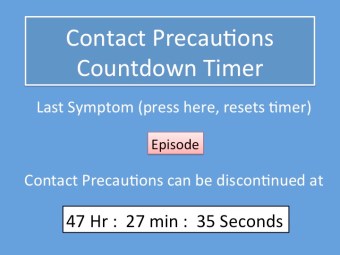
3.. 2.. 1.. Zero. Great, the 48 hours are up!

Slide1We often see those tasked with finding suitable isolation facilities counting down to when precaustions can be discontinued and the ’48 hours clear’ of symptoms of loose stools or vomiting has almost become one of the most welcome statements heard in healthcare settings. No more contact precautions, no more disinfectants sloshing around, normality beckons.. Or should it? Continue reading

Norovirus: to close or not to close?

Noroviruses belong to the genus norovirus and the family caliciv

The Journal of Infectious Diseases has just published a special issue on norovirus, which is well worth reading. When norovirus strikes, there is an inclination to close the ward to new admissions at the earliest available opportunity in order to protect incoming patients. But when should the ward closure trigger be pulled? Not at all, as recommended by latest UK guidelines (risking continuation of the outbreak, fed by a steady stream of new victims…I mean admissions), when you get a single case of vomiting or diarrhoea (lots of unnecessary ward closure) or only when you have a lab confirmed outbreak on your hands (by which time the horse has already bolted and galloped through your hospital). The special issue included a useful modelling study providing some idea of the impact of various approaches to ward closure in response to noro outbreaks.

Continue reading

Crapsules part 2

How do you like your crap? Fresh or frozen?

Schermafbeelding 2016-01-19 om 22.44.47Since Jon’s post on crapsules is one of the most favorite on the blog, I assumed that many of you might enjoy a sequel.

Clostridium difficile infections (CDI), most certainly after the emergence of hypervirulent strains at the beginning of this millennium, have become a major cause of morbidity and mortality in hospital and (to a lesser degree) community patients. One in four patients will suffer from recurrent CDI and treatment options are limited. Consequently, fecal microbiota transplantation (FMT) has become a valuable alternative, but is not readily available. Using frozen FMT would make the logistics far easier and finally something frozen seems to be as good as fresh, according to this JAMA study!

Which is more important? Antibiotic resistance or pyelonephritis?

200 mg generic Ibuprofen from Safeway grocery store.

As we move inexorably towards the end of antibiotics, antibiotic-sparing approaches to the management of infectious diseases become more and more attractive. A study published recently in the BMJ compared the ‘symptomatic’ treatment of uncomplicated UTI in women in the community using ibuprofen with antibiotic treatment using fosfomycin.

Continue reading

Review of infectious disease blogs: survey

blog

A guest post by Imperial College London researchers Rachael Troughton and Dr Gabriel Birgand (bios below):

Blogs have become integral part of academic life for many in the field of infectious diseases. A happy medium between Twitter and an academic journal, they allow fast and easy communication on a global scale between peers and across disciplines. But who are the bloggers behind the blogs? And who reads them?

Continue reading

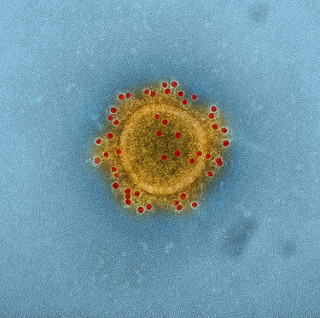
MERS joins the more-environmental-than-you-may-think club

mers

I blogged about a review of the surprising ability of some respiratory viruses (especially SARS-CoV and Influenza virus) to survive on dry surfaces last year. In the review, I predicted that MERS-Cov would also share the same ability to survive on dry surfaces as SARS-CoV – so I was interested to see a recent article in CID demonstrating that MERS is indeed more environmental than you may think.

Continue reading