Christmas 2014 Update

Christmas lights

Now that you have digested your Christmas turkey, I thought that it would be a good time to send out an update. These articles have been posted since the last update:

I’m in a rather reflective mood, so time to remind you of some of the key themes from 2014: Ebola, MERS-CoV, universal vs. targeted interventions, faecal microbiota transplantation (FMT), whole genome sequencing (WGS), carbapenem-resistant Enterobacteriaceae (CRE), and some interesting developments in environmental science. And what will we be still talking about come Christmas 2015? Let’s hope it won’t be Ebola, and I think that WGS will be a lab technique akin to a Vitek machine rather than subject matter for NEJM. But I think we still have ground to cover on whether to go for universal or targeted interventions, FMT, and improving our study designs in infection prevention and control. I can also foresee important studies on the comparative and cost-effectiveness of the various tools at our disposal.

And finally, before I sign off for 2014, a classic BMJ study on why Rudolf’s nose is red (it’s to do with the richly vascularised nasal microcirculation of the reindeer nose, apparently).

Image: Christmas #27.

Who's harbouring CRE?

carbapenemase

Many of us are in the process of developing policies of who to screen for CRE carriage. I’ve recently reviewed the literature for studies of CRE carriage (Table, summarising studies evaluating faecal carriage rate of CRE, below).

Author Year Location Setting n patients n carriers % carriers
Adler1 2015 Israel CRE carriage in post-acute hospitals, 2008 1147 184 16.0
CRE carriage in post-acute hospitals, 2013 1287 127 9.9
Mack 2014 London ‘High-risk’ inpatients and admissions. 2077 7 0.3
Rai2 2014 East Delhi, India Outpatients 242 24 9.9
Zhao3 2014 Fujian, China Stool samples from hospitalized patients 303 20 6.6
Birgand4 2014 Paris, France Patients repatriated or recently hospitalized in a foreign country 132 9 6.8
Kim5 2014 Seoul, Korea ICU admissions 347 1 0.3
Girlich6 2014 Morocco Hospitalized patients 77 10 13.0
Lin7 2013 Chicago, USA Long term acute care hospitals 391 119 30.4
Short stay hospital ICU 910 30 3.3
Villar8 2013 Buenos Aires, Argentina Non-hospitalized individuals 164 8 4.9
Kothari9 2013 New Delhi, India. Healthy neonates 75 1 1.3
Day10 2013 Pakistan Patients attending a military hospital 175 32 18.3
Swaminathan11 2013 New York All admissions to 7 units, including ICU, of 2 hospitals 5676 306 5.4
Nüesch-Inderbinen12 2013 Zurich, Switzerland Healthy community residents and outpatients 605 0 0.0
Armand-Lefèvre13 2013 Paris, France ICU patients 50 6 12.0
Wiener-Well14 2010 Jerusalem, Israel Hospitalized patients 298 16 5.4
The most important question to consider when reviewing these data are whether these are CRE or CPE? The rate of carriage of Enterobacteriaceae that are resistant to some carbapenemens by mechanisms that don’t involve carbapenemase will be higher than CPE. Some studies did not report whether they checked for carbapenemase production, and those that did reported a much lower rate of CPE. For example, Armand-Lefèvre et al.13 reported a 12% carriage rate of imipemen-resistant (i.e. carbapenem-resistant) Enterobacteriaceae in ICU patients but none of these carried a carbapenemase.A number of studies report shockingly high rates of carriage. A point-prevalence study of long-term acute care hospitals in Chicago found that 30% of patients carried CRE.7 High rates of carriage were also found in long-term acute care hospitals in Israel, but a national intervention reduced the rate of carriage from 16% in 2008 to 10% in 2013.1 Perhaps even more concerning are signs that there is a substantial community burden of carriage in the Indian Subcontinent. For example, 18% of patients attending a military hospital in Pakistan carried NDM-1 producing Enterobacteriaceae,10 and 10% of Enterobacteriaceae in stool specimens from 123 outpatients in East Delhi produced a carbapenemase.2

In contrast, most studies from Europe report very low rates of carriage, particular in community residents. For example, a Swiss study failed to identify a single carbapenemase producer in a sample of 605 community residents and outpatients.12 Similarly, data published from the Royal Free in London found that only 0.3% of 2077 ‘high-risk’ patients carried CRE.

So, where does this leave us in developing our CRE screening policies? These data mean that your approach will depend where you are. If you are in the middle of New Delhi, then your approach will be different to those of us in London. It seems that CRE is currently rare in most parts of Europe but the surprisingly high CRE carriage rates in some parts of the US are particularly troubling, and should serve to keep us all on our toes.

Image: ‘OXA-48 like carbapenemase.’

References

  1. Adler A, Hussein O, Ben-David D et al. Persistence of Klebsiella pneumoniae ST258 as the predominant clone of carbapenemase-producing Enterobacteriaceae in post-acute-care hospitals in Israel, 2008-13. J Antimicrob Chemother 2015; 70: 89-92.
  2. Rai S, Das D, Niranjan DK, Singh NP, Kaur IR. Carriage prevalence of carbapenem-resistant Enterobacteriaceae in stool samples: A surveillance study. Australas Med J 2014; 7: 64-67.
  3. Zhao ZC, Xu XH, Liu MB, Wu J, Lin J, Li B. Fecal carriage of carbapenem-resistant Enterobacteriaceae in a Chinese university hospital. Am J Infect Control 2014; 42: e61-64.
  4. Birgand G, Armand-Lefevre L, Lepainteur M et al. Introduction of highly resistant bacteria into a hospital via patients repatriated or recently hospitalized in a foreign country. Clin Microbiol Infect 2014; 20: O887-890.
  5. Kim J, Lee JY, Kim SI et al. Rates of fecal transmission of extended-spectrum beta-lactamase-producing and carbapenem-resistant Enterobacteriaceae among patients in intensive care units in Korea. Ann Lab Med 2014; 34: 20-25.
  6. Girlich D, Bouihat N, Poirel L, Benouda A, Nordmann P. High rate of faecal carriage of extended-spectrum beta-lactamase and OXA-48 carbapenemase-producing Enterobacteriaceae at a university hospital in Morocco. Clin Microbiol Infect 2014; 20: 350-354.
  7. Lin MY, Lyles-Banks RD, Lolans K et al. The importance of long-term acute care hospitals in the regional epidemiology of Klebsiella pneumoniae carbapenemase-producing Enterobacteriaceae. Clin Infect Dis 2013; 57: 1246-1252.
  8. Villar HE, Baserni MN, Jugo MB. Faecal carriage of ESBL-producing Enterobacteriaceae and carbapenem-resistant Gram-negative bacilli in community settings. J Infect Dev Ctries 2013; 7: 630-634.
  9. Kothari C, Gaind R, Singh LC et al. Community acquisition of beta-lactamase producing Enterobacteriaceae in neonatal gut. BMC Microbiol 2013; 13: 136.
  10. Day KM, Ali S, Mirza IA et al. Prevalence and molecular characterization of Enterobacteriaceae producing NDM-1 carbapenemase at a military hospital in Pakistan and evaluation of two chromogenic media. Diagn Microbiol Infect Dis 2013; 75: 187-191.
  11. Swaminathan M, Sharma S, Poliansky Blash S et al. Prevalence and risk factors for acquisition of carbapenem-resistant Enterobacteriaceae in the setting of endemicity. Infect Control Hosp Epidemiol 2013; 34: 809-817.
  12. Nuesch-Inderbinen M, Zurfluh K, Hachler H, Stephan R. No evidence so far for the dissemination of carbapenemase-producing Enterobactericeae in the community in Switzerland. Antimicrob Resist Infect Control 2013; 2: 23.
  13. Armand-Lefevre L, Angebault C, Barbier F et al. Emergence of imipenem-resistant gram-negative bacilli in intestinal flora of intensive care patients. Antimicrob Agents Chemother 2013; 57: 1488-1495.
  14. Wiener-Well Y, Rudensky B, Yinnon AM et al. Carriage rate of carbapenem-resistant Klebsiella pneumoniae in hospitalised patients during a national outbreak. J Hosp Infect 2010; 74: 344-349.

ECDC data shows progressive, depressing increase in antibiotic resistance in Europe

The ECDC recently released their 2013 report, which includes 2013 data. The data are on the whole fairly depressing for more parts of Europe, with high and increasing rates of resistance to important antibiotics in common bacteria. So it was not surprising to see ECDC issue a corresponding press release focusing on worrying resistance to last-line antibiotics.

I’ve chosen a few illustrative countries from this useful interactive database. Carbapenem resistance in Enterobacteriaceae (i.e. CRE) is one of the most concerning challenges facing us right now. So it’s not good to see continued high rates of carbapenem resistance in K. pneumoniae in Greece, and the seemingly inexorable increase in Italy (Figure 1). It’s worth noting that these are invasive isolates, the majority of which would be bloodstream infections. And the mortality rate for a CRE bloodstream infection is around 50%

Figure 1: Susceptibility of Klebsiella pneumoniae invasive isolates to carbapenemsEARS-Net 2014 CRE

In some ways, the steady increase in multidrug-resistant K. pneumoniae from many parts of Europe, illustrated in Figure 2, is even more concerning than the sharp increases in CRE in some parts of Europe. If you draw a mental trend line for Italy and Portugal, it doesn’t look good.

Figure 2: Multidrug-resistant Klebsiella pneumoniae invasive isolates (resistant to third-generation cephalosporins, fluoroquinolones and aminoglycosides)EARS-Net MDR Kleb

The picture for P. aeruginosa (and I suspect the other non-fermenters like A. baumannii, which isn’t included in EARS-Net) in terms of carbapenem resistance is different to the Enterobacteriaceae (Figure 3). Rates are high in Greece, intermediate in Italy and Portugal, and low in the UK. But the trend is stable.

Figure 3: Susceptibility of Pseudomonas aeruginosa invasive isolates to carbapenemsEARS-Net 2014 CRPA

And let’s not forget about MRSA (Figure 4). The UK and some other European countries have done a tremendous job in reducing the transmission of MRSA. This has had an interesting and somewhat unexpected effect on the rate of methicillin-resistance in S. aureus, which has also reduced considerably. I suspect this is a consequence of interrupting the transmission of MRSA, but failing to prevent the spread of MSSA. Put another way, if MRSA and MSSA fell in tandem, the rate of methicillin-resistance in S. aureus would remain constant. The impressive reductions of MRSA reported in the UK have not been replicated everywhere in Europe. Portugal in particular increased from less than the UK in the early 2000s to more than the UK today. There is some evidence that the national campaign in Portugal to reduce healthcare-associated MRSA is making some impact, with a notable reduction in MRSA rate in 2013.

Figure 4: Susceptibility of Staphylococcus aureus invasive isolates to methicillin (i.e. MRSA rate)EARS-Net 2014 MRSA

In summary, it’s not all doom and gloom. The reductions in MRSA in the UK and elsewhere show that reducing the transmission of these antibiotic resistant bacteria can be done. But it takes considerable investment and national focus. Without this, it’s difficult to see the trends in antibiotic resistance, including to last-line agents, continuing to increase in some parts of Europe.

Is deliberately seeding hospital rooms with Bacillus spores a good idea? No, I don’t think so either!

A fascinating Italian/Belgian multicentre study introduces us to the idea of “biocontrol” for problematic surface contamination. They test using “live” cleaning products that deliberately seed hospital surfaces with Bacillus species spores in an attempt to reduce the ecological space for pathogenic microbes through a “competitive exclusion” approach. Ridiculous as it sounds, there’s some logic to this idea. We’re just beginning to understand the potential of complementing a depleted microbiome in human health, so perhaps the same theory goes for the “environmentome”?

The study design is on the one hand impressive and ambitious, with more than 20,000 surfaces samples collected from the three hospitals. However, it is also messy and confusing, with different intervention and sampling protocols in the three hospitals. In particular, it’s a real shame that areas were not randomized to receive the “live” vs. conventional cleaning agents. It seems clear that this was not a carefully planned multicentre study using a standardized protocol – it reads more like three separate studies shoe-horned together.

That said, the results are impressive. Areas treated with the “live” cleaning agents were significantly less likely to be contaminated with coliforms, S. aureus, Candida albicans, with a more moderate impact on C. difficile. However, it’s difficult to determine the scale of the reduction since the relative rather than actual load reductions are reported.

A neat sub-experiment at one of the hospitals is perhaps the most convincing part of the study, where conventional and “live” cleaning agents were alternated (Figure). You can clearly see that the microbial load tracked downwards when the “live” agent was used, and rebounded when the conventional agent was reinstated.

vandini bacillus sporesFigure: Bacterial load of coliforms (black circles) and S. aureus (white circles). Black arrow = beginning of the “live” cleaning agent; black dotted arrow = conventional cleaning agent.

Notwithstanding the impressive reductions, this approach is ringing some alarm bells:

  • Do we really know what we’re doing by deliberately seeding the hospital environment with bacterial spores? Almost all microbes can be pathogenic to immuno-compromised patients. Plus, whilst you know what you’re putting down, you don’t know what it will become when exposed to the selective pressure of hospitals. The authors did take a look at this, using antibiotic susceptibility testing and a PCR assay to show that Bacillus species identified from the original cleaning agents and from hospitals surfaces during study did not differ in their carriage of antibiotic resistance genes. However, this is only scratching the surface of a complex risk.
  • Where do all the pathogens go? Having an environment that is full of Bacillus spores does not make a scrap of difference to the amount of pathogens that are shed into the environment. So, either the Bacillus spores somehow reduce the amount of time that these pathogens survive on surfaces, or offer them a more complex hiding place. I suspect the latter is more likely.
  • Related to this, recent work has identified established biofilms on dry hospital surfaces with important implications. Won’t a daily dose of Bacillus spores only serve to promote the buildup of this biofilm?
  • The authors proffer some potential reasons for the lower bacterial counts, including competition for nutrients and quorum sensing to destabilize biofilms. I think these are very unlikely, because they rely on the Bacillus spores germinating on the surfaces. I suspect that the spores remain firmly as spores, and the reductions are explained by occlusion and competition for space.
  • Ethics can be a pain, but it’s there for a reason – to prevent our patients from unnecessary harm. The outcome of their ethical submission was surprising: “The two Ethics Committees stated that a formal authorization was not necessary because the probiotic products would not be directly administered to patients but exploited for cleaning of hospital surfaces only.” Applying a soup of Bacillus species spores to a patient’s room is pretty much the same thing as applying the soup directly to their skin. Personally, I’d like to choose whether or not I’m admitted to a room deliberately seeded with Bacillus spores!
  • The authors insist on calling the “live” cleaning agents ‘probiotics’, which seems misplaced. To me, ‘xxx-biotics’ implies something that is administered to a patient.

The use of “live” cleaning agents provides an interesting alternative approach to antimicrobial surfaces, or chemicals with residual biocidal activity. However, I am not sure I accept the authors stark choice as their final conclusion: When it comes down to risk management, one has to decide whether a patient should stay in an environment dominated by food grade microorganisms or in an environment harboring an elevated level of increasingly resistant pathogens.’ Personally, I’d prefer to be cared for in an environment with minimal levels of bacterial contamination, and free from contamination with pathogens. Is that too much to ask?

Article citation: Vandini et al. Hard Surface Biocontrol in Hospitals Using Microbial-Based Cleaning Products. PLoS One 2014;9:e108598.

Filling the gaps in the guidelines to control resistant Gram-negative bacteria

I gave the third and final installment of a 3-part webinar series on multidrug-resistant Gram-negative rods for 3M recently. You can download my slides here, and access the recording here.

During the webinar, I provided an overview of the available guidelines to control CRE and other resistant Gram-negative bacteria. I then identified gaps in the guidelines, in terms of definitions of standard precautions, outbreak epidemiology and who should be on the guidelines writing dream team. Finally, I discussed some controversial areas in terms of effective interventions: patient isolation, staff cohorting and selective digestive decontamination.

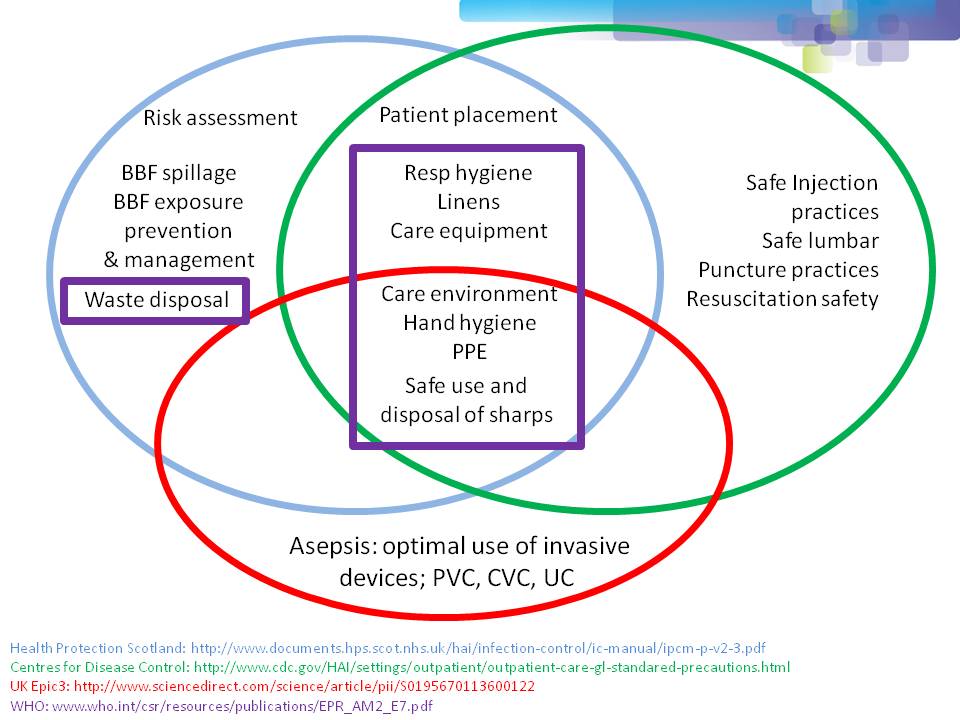
One of the most important points when considering infection prevention and control guidelines is the issue of ‘standard precautions’. What do we apply to every patient, every time? As you can see from Figure 1 below, ‘standard precautions’ is far from standardized. This is problematic when developing and implementing prevention and control guidelines.

Figure 1: differences in the definition of ‘standard precautions’.

filling gaps std precautions

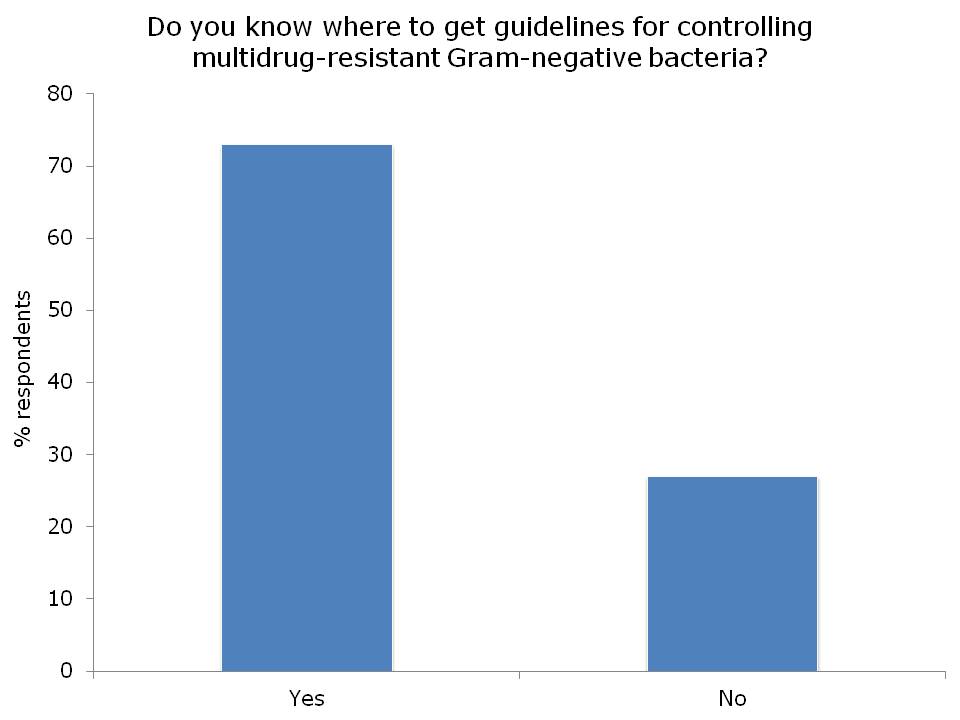
I had the opportunity to ask the webinar audience a few questions throughout the webinar, which are outlined in Figure 2.

Figure 2: response to the questions from the 120 or so participants.

filling the gaps1 filling the gaps2 filling the gaps3

I was somewhat concerned but not that surprised that more than a quarter of the audience did not know where to access control guidelines for MDR-GNR. I suppose this means that we need to do a better job of signposting the location of the various guidelines available. Here’s a non-exhaustive list for starters:

There was a fairly even split between active and passive surveillance to detect outbreaks. The problem with relying on passive surveillance (i.e. clinical cultures) is that there’s a good chance that the ‘horse will have bolted’, and you have a large outbreak on your hands, before a problem is detected. For this reason, I favour active surveillance.

But who to screen? In the case of CRE, I was pleased to see that virtually nobody said nobody. There was a pretty even split between everybody, high-risk individuals or all individuals in high-risk specialties. Accurately identifying individuals who meet screening triggers is operationally challenging, as outlined by the “backlash” to the UK toolkit, so I think screening all patients in high-risk specialties (e.g. ICU) makes most sense.

So, what works to control MDR-GNR transmission? We don’t really know, so are left with a “kitchen sink” (aka bundle approach) (more on this in my recent talk at HIS). We need higher quality studies providing some evidence as to what actually works to control MDR-GNR. Until then, we need to apply a healthy dose of pragmatism!