The Department of Health announced last week their intention to halve the rate of E. coli BSI by 2020. Whilst this is a move that should be embraced, it will be an enormous challenge to achieve. The reduction that has been delivered with MRSA BSI could be seen as a model for success (and I suspect that if you were a politician, you would see it this way). However, it is vital to recognise that E. coli BSI and, more broadly, Gram-negative BSI (GNBSI) are not the same as MRSA BSI, and will require a different reduction strategy.
Year: 2016
Antibiotic Awareness in the Netherlands
Tomorrow is the European Antibiotic Awareness Day: one of these days in that the Dutch feel proud…., when the rest of (most of) Europe recognizes and acknowledges that the Netherlands do a fantastic job in controlling antibiotic resistance. How? Difficult to say, and may be the “diagnosis” should be established by exclusion. Here are at least 3 reasons that did NOT contribute to our success (although many think otherwise)….. Continue reading
Superfungus (Candida auris)
The Royal Brompton in London report a 50 case outbreak of C. auris, and a range of IPC measures that you would expect to prevent further transmission, but failed to do so. What’s so special about Candida auris? Is it a superfungus?
Reflections from FIS/HIS 2016: Cauliflower, Clostridium, cash, and Candida
A very enjoyable few days in Edinburgh this week for the Federation of Infection Societies / Healthcare Infections Society (FIS/HIS) meeting. Some reflections follow…
Tired of MRSA and CPE? The new superbug has arrived and it’s a yeast!

All of a sudden, Candida auris seems to become the “new” global super villain. Antimicrobial Resistance and Infection Control recently published the first, large European outbreak of C. auris in London with 50 cases (Schelenz et al.) and CDC just published the first 17 US cases (Vallabhaneni et al.). While I believe that C. auris deserves our full attention, as it is a multi-resistant yeast, with increased MICs to all three major classes of antifungals, likes to evades traditional diagnostic methods, seems to be difficult to eradicate from the hospital environment, and causes invasive nosocomial infections with high mortality, I am still amazed by the fact that – despite the global society we live in – this “new” villain first has to come to Europe or even more important the US, before becoming a recognized “superbug”.
C. auris was first described in 2009 in Japan and cases of candidemia have since been reported from South Korea, India, South Africa, and Kuwait, in addition to unpublished reports from Colombia, Venezuela, and Pakistan. While “global migration” may come to mind for the rise of C. auris, it seems unlikely, as different continents and countries seem to have their own clones. Selection pressure due to the increasing use of antifungals in healthcare, livestock, and agriculture might be a more feasable explanation, but the true reasons for the recent emergence are still unknown.
I assume that many countries will issue guidelines with regard to diagnostic methods, reporting to health authorities, environmental cleaning and infection control, but as that might take time, those of us in infection control should get prepared and stay informed, not to be surprised to see C. auris emerging within their own setting.
Literature and links
Schelenz et al. First hospital outbreak of the globally emerging Candida auris in a European hospital, Antimicrobial Resistance & Infection Control20165:35
Chowdhary et al. Multidrug resistant Candida auris: New kid on the block in hospital associated infections? Journal of Hospital Infection August 2016, DOI: 10.1016/j.jhin.2016.08.004
Satoh et al., Candida auris sp. nov., a novel ascomycetous yeast isolated from the external ear canal of an inpatient in a Japanese hospital. Microbiol Immunol, 2009;53:41-44
Lee et al., First three reported cases of nosocomial fungemia caused by Candida auris. J Clin Microbiol, 2011;49:3139-42.
Chowdhary et al. New clonal strain of Candida auris, Delhi, India. Emerg Infect Dis, 2013; 19:1670-73.
CDC Q&A
Counting the cost of CPE
CMI have just published an article outlining the whopping cost of our CPE outbreak, costing the hospital group in question around £1m over 10 months. We split the costs into ‘actual expenditure’, which would affect the hospital’s financial bottom line, and ‘opportunity costs’ (such as staff time and missed revenue), which can be quite tricky to account for. The large cost of the outbreak and its management accrued over a short time period make a strong financial case for investment in IPC.
WHO guideline on SSI prevention: more clear than feasible?
The WHO guideline for SSI prevention was launched as if it were the iPhone8. I immediately went looking for what I think is the intervention with the strongest evidence: pre-op nasal mupirocine and CHX bathing, see why here. After an interesting read I’m pleased that the guideline is clear, but I missed an evaluation on feasibility and the evidence for simplification is turned around.
Are CA-MRSA more virulent than HA-MRSA?
Community-associated MRSA (CA-MRSA) are characterised by the ability to cause infections – and sometimes serious invasive infections – in previously healthy individuals without healthcare contact. We don’t see this clinical manifestation in healthcare-associated MRSA (HA-MRSA), so it’s is logical to conclude that CA-MRSA are somehow more virulent than HA-MRSA. However, a recent study published in the Journal of Medical Microbiology shows that CA-MRSA strains were no more virulent than HA-MRSA strains in a battery of laboratory tests. This suggests that CA-MRSA’s ability to cause infections in healthy individuals without healthcare contact has more to do with transmissibility than virulence. And this explains the curious phenomenon that CA-MRSA seem to cause the same spectrum of disease as HA-MRSA when they infiltrate a healthcare setting.
WHO global guidelines on the prevention of surgical site infection
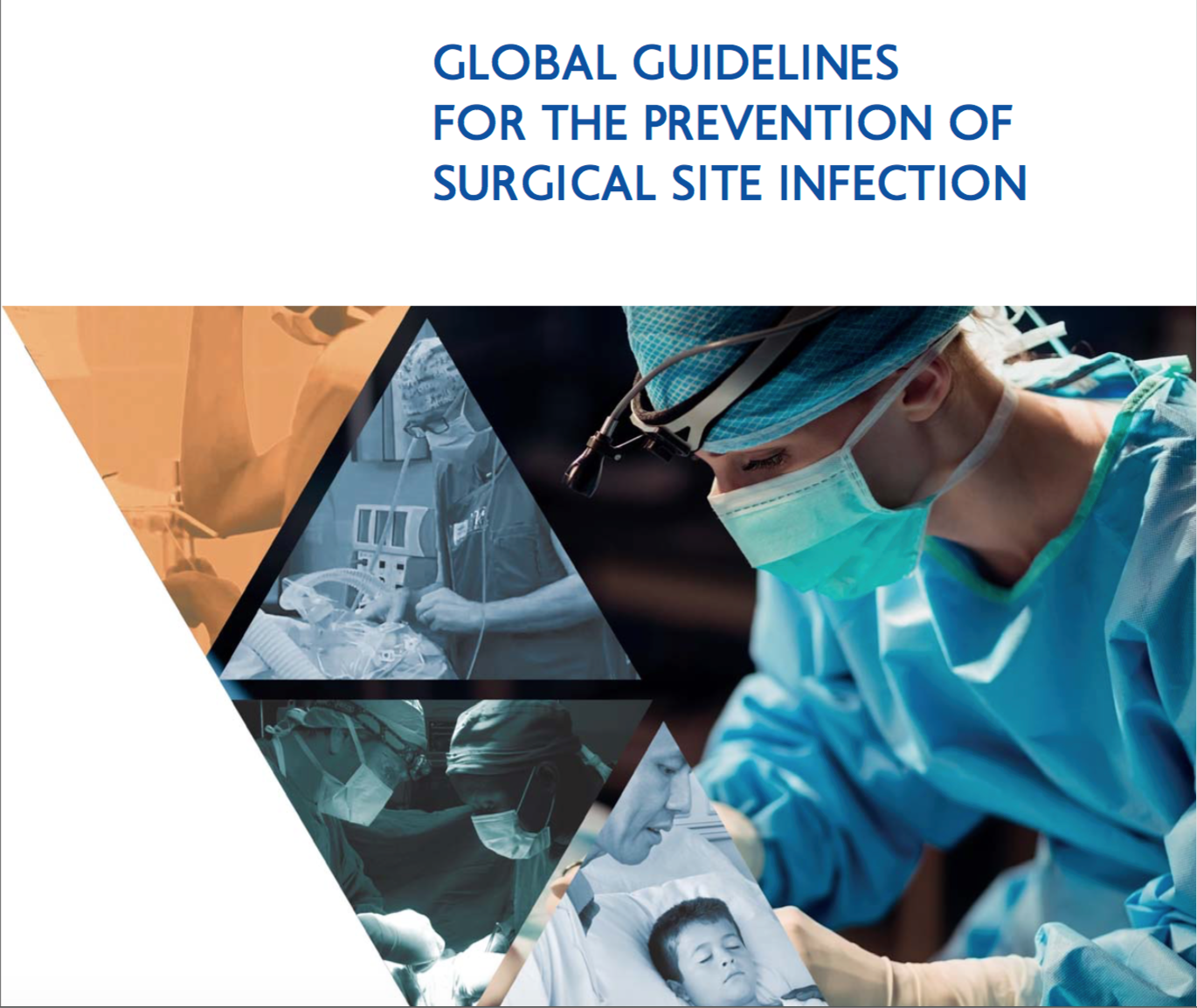
After years of no recent international guidelines to prevent SSI, today (November 3rd,2016), WHO published the first ever Global guidelines for the prevention of surgical site infection. They include a list of 29 concrete recommendations that are available on the WHO website (link). The recommandations are also available as publication in Lancet ID, split into 2 documents: 13 recommandations specific tot he pre-operative period (link); 16 recommendations specific to the intra-operative and post-operative periods (link). I have seen drafts of the HICPAC guideline and would assume that this guidelines should be released soon, too, which will be interesting as I can’y wait to see the differences.
Science in transition, or not?
Something is happening in my university. My dean, prof. Frank Miedema (H-index >70), and friends discovered that the blibliometric way of evaluating quality of science (of a person or an institute) is wrong. (Especially) Young researchers are pursuing – for the wrong reasons – a high H-index (many papers cited frequently) and the publication pressure distracts them from doing the better things for patients and society. So, they decided to break free, and they tell their story this week in Nature (high impact factor, isn’t that what they call irony?).
I whole-heartedly agree with the philosophy of “Science in transition”. The impact system is sick, see. In Nature, also the story of Mark Ferguson, former dean of biology at the University of Manchester: as a predecessor of the Science Transitioners he decided 20 years ago that professor applicants should, instead of their impressive publication list, submit what they considered their 3 most important publications, with motivation.
That made me think. What would I submit? Here they are:
The recognition that the number of other patients with VRE in a ward is the best predictor for new acquisitions, see. Bob Weinstein named it colonization pressure, and the subsequent recognition that this number in the ward is influenced not only by acquisitions, but also by admitted and discharged patients got me on a plane to Oxford to learn about mathematical modelling and that the dynamics of AMR in a hospital are quite similar to malaria (healthcare workers being mosquitos). Today, I still enjoy working with mathematicians.
Two years later we had the first 2 outbreaks with VRE in the Netherlands. We studied these isolates, together with a bunch of isolates I took home from Chicago and other outbreaks across the globe. Rob Willems and Janetta Top discovered that all outbreak isolates contained the esp-gene (and others did not), see. Now we know that a subclade of E. faecium, containing esp and much more, is responsible fort he global pandemic of ampicillin-resistant and vancomycin-resistant E. faecium. Today, I still enjoy working with molecular biologists.
Six years ago we thought of ways to bypass the hurdles that killed clinically relevant research for treating community-acquired pneumonia (CAP); antibiotics before randomization to study antibiotics and enrolling only a fraction of those actually treated for CAP. Inspired by a previous study we used a cluster randomized approach and changed the hospital antibiotic policy every 4 months, see. The 3 options were – without preference – recommended by our national guideline. It took us 3 years to get funding and IRB approval, but in the end we were among the first to integrate randomized comparative effectiveness research with patient care, see. I firmly believe that this type of research is the future for infection prevention.
Not sure if I would have been hired, since all 3 studies were published in respectable journals (and were cited). My point, science must transit, but it should not stop us from publishing our work in journals that are read by many colleagues, as I am convinced that these studies would not have received the same attention if published in non-peer-reviewed journals. I trust my dean & Science in Transition are with me on this.
I wrote this blog while listening to my playlist on Spotify, and at the end of writing Carly Simon sang “You’re so vain”.