Six weeks ago I introduced the ESBL-predict study that Tim Deelen from our group coordinates. Every hospital in the world can participate through a user-friendly electronic CRF (in a secured environment). My blog-invitation to particpate worked and some sites already started. In June >1,000 episodes were entered! Here is a short update and info for those that want to join. Continue reading
Exposed: Dutch clinical microbiologists
Exposed; that’s what we are. We, Dutch clinical microbiologists. Globally acknowledged for our capacity to control antibiotic resistance, prevent hospital-acquired infections (HAI) and practice the most rational and restrictive antibiotic policies. That we are self-confident, loud and arrogant is taken for granted, as most do with Christiano Ronaldo. But it is with great sadness that I have to announce that it was all FAKE. The balloon was pricked by professor Marcel Levi. Continue reading
Real-time whole genome sequencing (RT-WGS) & spread of resistant bacteria
At last weeks’ ICPIC I crossed arguments with John Rossen on the question whether RT-WGS helps us to control the spread of resistant bacteria. The setting is the hospital and the definition of RT is “in time to guide essential decision making”. Is RT-WGS a “need-to-have” or a “nice-to-have” thing? Continue reading
HAP: In the ‘too difficult box’?

I’ve had an enjoyable time at ICPIC. Sessions (abstracts here) have been great, speakers excellent, meeting well-organised but one session rattled my cage. Point prevalence surveys (PPS) and their value was an interesting session, however at the end of it I was wondering whether this was ‘Surveillance in action’ or ‘Surveillance inaction’. Continue reading
The rocket-science of a CPE screen & isolate policy
Last weeks’ blog from Jon Otter on the practice of CPE screening and isolation raised some interesting comments (on twitter) emphasizing the difficulties in policy making for infection control. The two comments that struck me were: (1) … screening for CPE sounds logical “but does it work in long-term care facilities with high-levels of endemicity?” And “I use it in my hospital, but face difficulties in convincing others because of lacking scientific evidence for CPE.” Continue reading
The ethics of MDRO screening

I heard an interesting talk by Dr Michael Miller last week on the ethics of screening for MDROs. Whilst we need to think carefully about the ethics of all medical procedures (great and small), I think the benefits to the individual and the population generally outweigh downsides for MDRO screening programmes.
Water, water everywhere (or nowhere?)
 A new paper by Hopman and colleagues (Andreas is also another author but is being modest) has evaluated the effect of removing sinks from the ICU. The trigger for this intervention was an outbreak caused by an ESBL-Enterobacter that could be related to contaminated sinks. The study looked at what happens if you remove all water sources from the ICU, and all water-related activities were migrated to a tap water-free solution. Continue reading
CPE screening Q&A: the who, when, and how
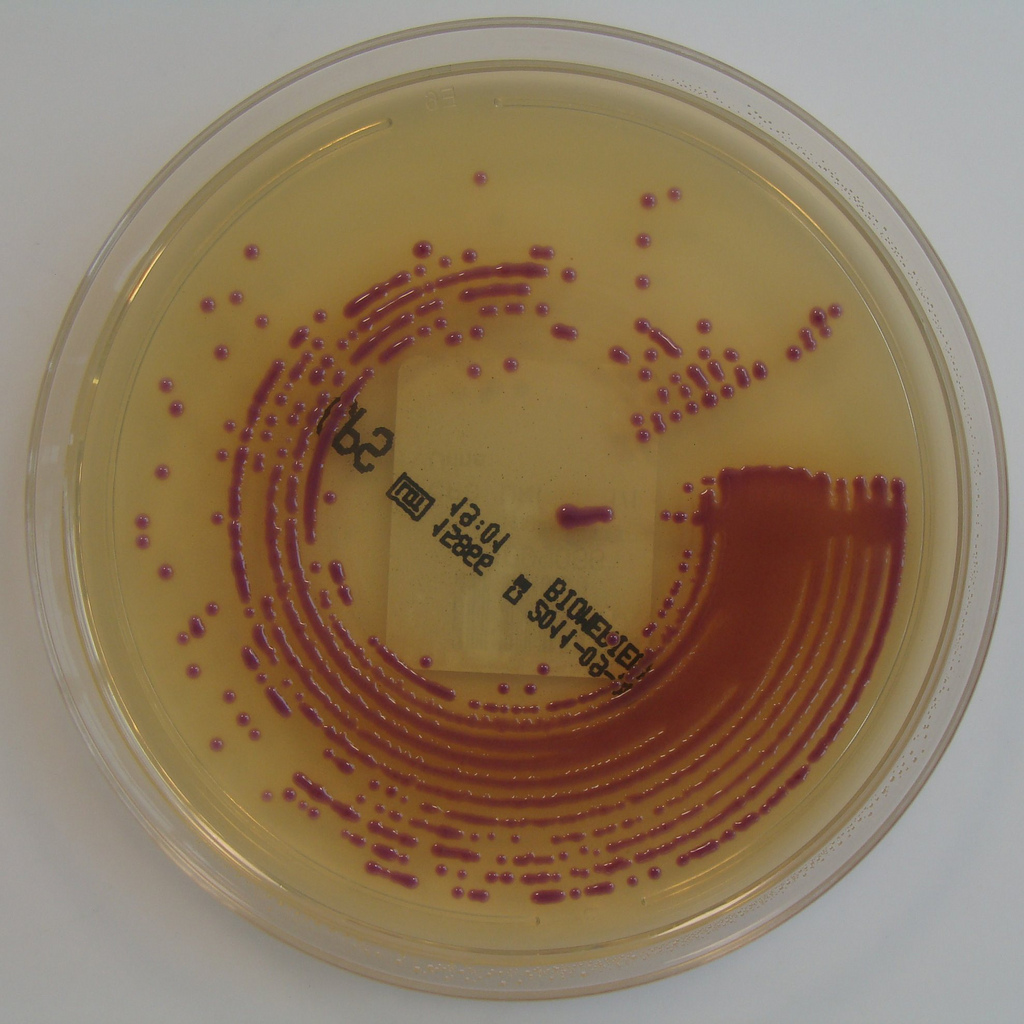
I gave a talk yesterday as part of a PHE London event on the whys and wherefores of screening for MDROs – my talk was focussed on CPE, and you can download my slides here: “CPE: seek and ye shall find”. I thought a quick Q&A would be the best way to summarise the content.
The Big C
 I’ve blogged before about compliance. It’s a big thing for me. If I had a pound (actually after the last week, if I had a dollar) for every time that I think I’ve implemented some intervention to find after a while that it has not been embedded I’d be on a yacht in the Med. But I’m not, instead I’m reading the very nice meta-analysis of the effectiveness of bundles in preventing CLABSI recently published in the Lancet ID. Ok, so the conclusion is that bundles work, but it’s not that which interested me, as a glance at the figures made me consider whether we should move on from effectiveness to implementation. Continue reading
Does reducing spore contamination on high-touch surfaces reduce C. difficile transmission?
Curtis Donskey’s group recently published a multicentre randomised trial in 16 US hospitals to evaluate the impact of an enhanced cleaning programme (including fluoruescent markers, environmental cultures, and feedback to cleaners) on the transmission of C. difficile. The intervention resulted in an increase in the removal of fluorescent markers, a reduction in environmental contamination with C. difficile, but no reduction in healthcare-associated CDI!
 Reflections on Infection Prevention and Control