WHO global guidelines on the prevention of surgical site infection

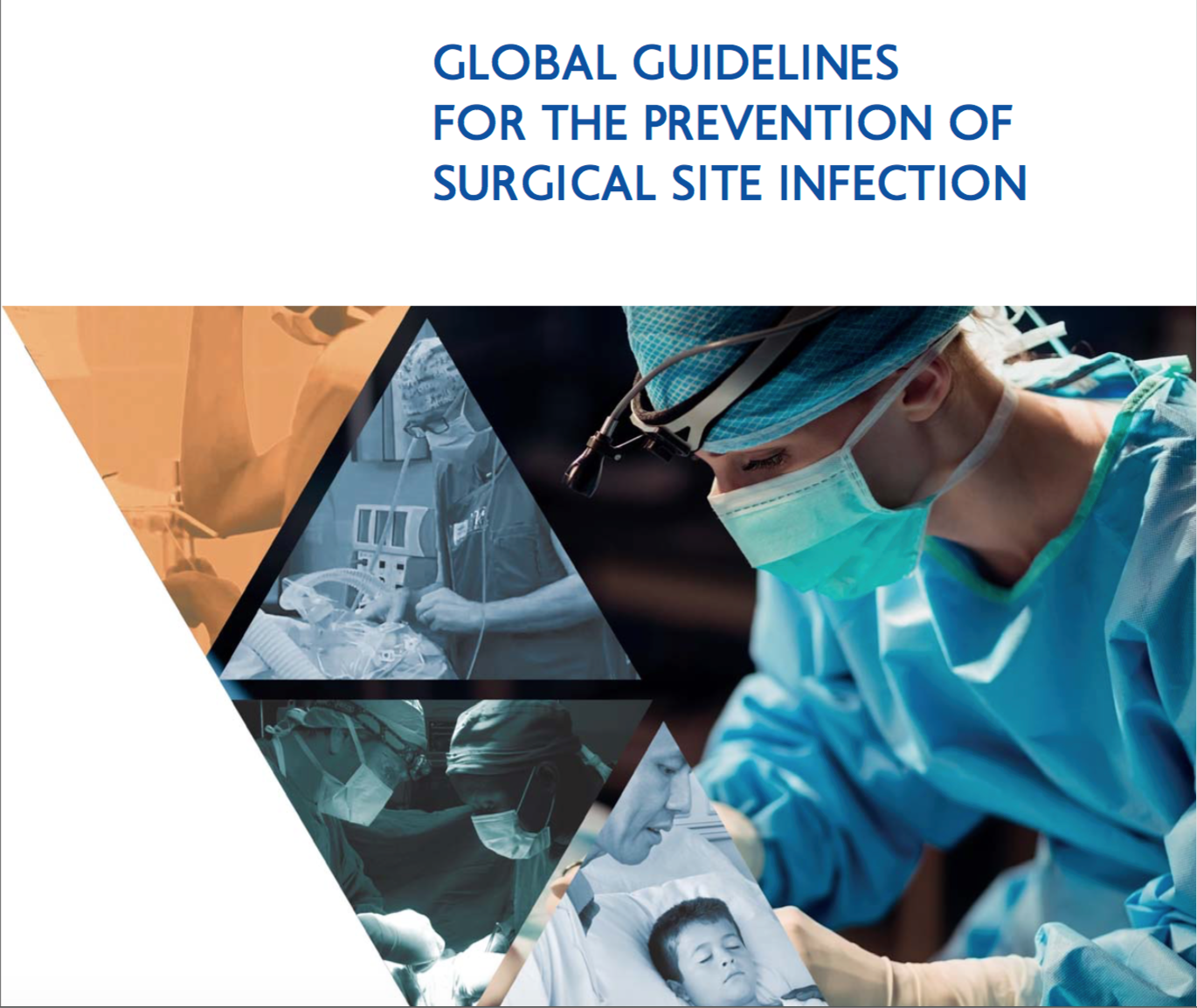
schermafbeelding-2016-11-03-om-09-46-56After years of no recent international guidelines to prevent SSI, today (November 3rd,2016), WHO published the first ever Global guidelines for the prevention of surgical site infection. They include a list of 29 concrete recommendations that are available on the WHO website (link). The recommandations are also available as publication in Lancet ID, split into 2 documents: 13 recommandations specific tot he pre-operative period (link); 16 recommendations specific to the intra-operative and post-operative periods (link).  I have seen drafts of the HICPAC guideline and would assume that this guidelines should be released soon, too, which will be interesting as I can’y wait to see the differences.


Back to the floor..

flooringA little while ago I blogged about the excellent study from Nottingham that demonstrated significant VRE and MRSA contamination on socks used to prevent falls in the hospitalised elderly. This has been followed by another paper suggesting that shoe coverings undurprisingly become contaminated. So, what? How does this really impact on transmission? A new study from Curtis Donskey’s group has looked at hand contamination in patients directly relating to floor contamination. Continue reading

Something’s afoot..

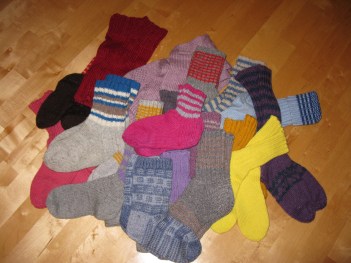
Woolen_socks_on_the_floorWorking on the principle that what goes up must come down is logical and I was interested to see the result of a small investigation into non-slip socks, currently in vogue for reducing harm due to falls. Nik Mahida and Tim Boswell collected socks from seven wards over two hospitals, collecting 54 pairs and sampling them the same day. The results were interesting. Continue reading

Hand hygiene in healthcare (or the lack of it)

Schermafbeelding 2016-05-19 om 12.01.35I had posted about Sanjay Saint’s great TED talk. He now wrote an article for the general public – based on his talk: “Hand washing stops infections, so why do health care workers skip it?”

While I am a big fan of hand rubbing (we don’t have the time to hand wash) I still feature his picture he included in his article. Have fun reading his article:
https://theconversation.com/hand-washing-stops-infections-so-why-do-health-care-workers-skip-it-58763

Course in Healthcare Epidemiology and Infection Control

Schermafbeelding 2016-04-30 om 22.13.56

In the mood to up your epi skills?  This is the new ESCMID-SHEA course that was given for the first time in Australia last year (at least the first two tracks). It consists of a plenary part and 3 separate tracks. The first track is a practical exercise how to analyze a high rate of surgical site infections. Based on the results you have to draw conclusions and decide on an intervention. Finally you will determine if this has been effective.

The second track is a practical exercise how to analyze a possible outbreak with Clostridium difficile. Based on the results you will identify possible risk factors and routes of transmission. Finally you will take control measures and determine the effects.

The first two parts will require the use of a laptop with SPSS (for at least some of the participants) as participants will actually solve the problems. Don’t worry help is around, data-sets cleaned and the syntax is (just in case) written. It is actually a great way to get back into SPSS use.

The third track consists of four interactive master-classes. Faculty members will show some practical situations, which they have encountered during their careers. It will include outbreaks, high endemic rates of healthcare related infections, infections in the operating theatre and other topics.

Have a look at the folder:  Training Course in Healthcare Epidemiology and Infection Control. While part of the faculty, Eli and I will probably not be around this year, as we transfer the old course (October 2016, Vietnam) to a new faculty of (even) younger colleagues.

PPE for preventing highly infectious diseases

Schermafbeelding 2016-04-27 om 15.32.54

The use of PPE and the protection of HCWs against highly infectious diseases was (and is) a topic of major importance, around the globe. The recent Cochrane review by Verbeek et al. was probably hoping to offer this “vital” information.

Unfortunately, they found no studies on the effects of goggles, face shields, long-sleeved gloves or taping on the risk of contamination. All they found was very low quality evidence, with high risk of bias and uncertain estimates of effect, that:

  • More breathable types of PPE offer more comfort without increasing the risk of contamination
  • Double gloving and CDC doffing guidance appear to decrease the risk of contamination, and
  • Active more than passive training in PPE use may reduce PPE and doffing errors.

Their conclusions are obvious: we need high-quality studies of the materials, their use and protective effects, safe ways of doffing, and the most adequate training to achieve safe use of PPE for HCWs in the presence of highly infectious diseases or those (even less infectious) that may cause severe harm to HCWs.

But what to do until than? My personal opinion is that we should only use PPE, we are used to and know how to use. First-time users, even if supplied with the best available products, will inevitably fail to remove the PPE without error. Consequently, institutions should have a stable selection of PPE, and in the case of preventing highly infectious diseases, a selected group of HCWs with continuous active training, as it is too late to start when the next epidemic is hitting our healthcare centers.

Schermafbeelding 2016-04-27 om 14.47.06

Hand hygiene – social norms and compassion

Schermafbeelding 2016-04-26 om 21.00.15

I just saw Sanjay Saint’s TEDx UofM-talk and have to say that I was impressed. The message is clear, the characters portrayed recognizable, and the conclusion something we all have to agree with. I “love” his final thoughts (and if you watch the talk to the end you know why I used “love”) and I share his views on compassion. Intentionally we branded our campaign for better infection control as “iCare”.Schermafbeelding 2016-04-26 om 21.02.03

Hope you enjoy Sanjay’s talk as much as I did: http://www.youtube.com/watch?v=U3MtvvNjUR4&sns=em

LA-MRSA: The Never-ending Sequel

Over the last years, we have been getting used to the fact, that commercial pig, veal, and chicken farms, as well as horse breeding, is associated with a risk of animal to human transmission of livestock-associated Methicillin-resistant Staphylococcus aureus (LA-MRSA). In the line of suspects, chicken were the last to be conformed as true source of LA-MRSA. Van Duijkeren et al (J Antimicrob Chemother 2016;71:58-62) investigated addition feathered suspects, namely dugs and turkeys.

Schermafbeelding 2016-04-23 om 16.20.16First of all lets get Donald & friends of the list of suspects. In only one of 10 duck farms that were investigated, MRSA was found in the samples from the animals and duck houses. None of the humans living or working on duck farms, nor any part of their residence, was MRSA-positive. It therefore seems save to conclude that ducks pose no danger for transmission of LA-MRSA.
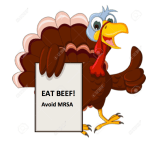
 

Schermafbeelding 2016-04-23 om 16.16.27Unfortunately, the story about turkeys seems to be different. Overall, 3 of the 10 turkey farms harbored MRSA. In addition, MRSA was found in 16% of the humans and 31% of the farmhouse samples. The highest risk was seen among the turkey farmers themselves (45.5% MRSA-positive), but employees and family members (6.3%) weren’t free of risk, either. Significant risk factors found by the investigators were: having physical contact with the animals and visiting poultry houses.

In 2 out of 3 frams in which MRSA was found among the animals and the humans, whole genome mapping showed >95% homology, corroborating the strong evidence for animal-to-human transmission of MRSA on turkey farms.
Adapt to adopt | Didier Pittet | TEDxPlaceDesNations

Schermafbeelding 2016-03-21 om 22.42.44

Just as another way of sharing here the link to Didier’s TEDx PlaceDesNations talk: http://tinyurl.com/AdaptToAdopt or click on the picture.

We’ve got a policy, so that’s alright then..

3812343931_71e99a144d_z

I’m always interested in why people don’t do what they know that they should or why things don’t happen as we think they will. Interventions that are demonstrably effective, evidenced in the literature and incorporated into guidelines are not implemented even though ‘it’s in the policy’. We have to remember that implementation often has many sides. We can spend a lot of time designing an effective intervention based on the most robust evidence and then it just doesn’t happen on the shop floor. Sometimes this is failure to engage the staff that will actually implement the measure, but what about the involvement of those to whom the deed is done? A simple two-letter word can stop healthcare provision in it’s tracks. That word is ‘No’.

Continue reading