We have blogged a fair bit recently about the risk of antibiotic-resistant Gram-negative bacterial contamination of sinks and drains. A new study offers a novel approach to this problem: by repurposing a balloon catheter to extend the duration of contact between a disinfectant and the sink-end of the pipe.
We know that sinks and drains become contaminated with antibiotic-resistant Gram-negatives, and that these bacteria can find their way from sinks and drains to patients. But what to do about this issue? A few solutions have shown promise: use a foaming disinfectant, or even take the sinks and drains out of the clinical areas! Another, slightly less radical option than removing the sinks and drains altogether is to cleverly repurpose a balloon catheter to extend the duration of contact between a disinfectant and the sink-end of the pipe.
The urinary catheter was inserted to a depth of 6 inches and then inflated. The disinfectant was then applied (OxyCide, a sporicidal disinfectant that mixed peracetic acid and hydrogen peroxide) and left for 1 hour. For a control, the same volume of disinfectant was poured down the drain. The mean concentration of Gram-negative rods cultured from a depth of 1 inch from 12 test drains and 8 control drains shows a pretty impressive impact from this approach, sustained over a couple of weeks.
Figure: Impact of disinfecting a drain by pouring down a disinfectant vs. a 1-hour contact time using the balloon catheter on contamination with Gram-negative rods at a depth of 1 inch below the strainer.
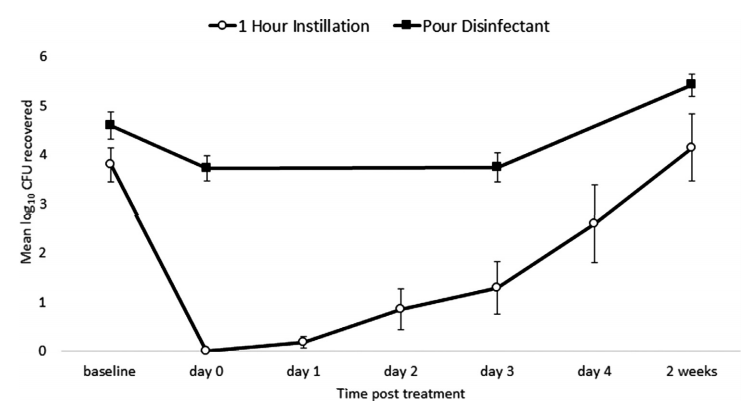
Importantly, 4 of the test drains had to be excluded because the balloon either popped or leaked. It goes without saying that these catheters were not designed for this job – but this study works as a proof of concept that there could be a similar product designed to improve the efficacy of drain disinfection.
Discover more from Reflections on Infection Prevention and Control
Subscribe to get the latest posts sent to your email.
 Reflections on Infection Prevention and Control
Sengstaken tube ?
Interesting concept and preferable to sink removal.
LikeLike